
Is a Foreign Degree Accepted by US Medical Schools?

It is difficult for anyone to get into medical school, regardless of the school from which an under-graduate degree is conferred. But if you are a student who has received a foreign degree, your chances of acceptance into a US medical school drop dramatically. If you’re looking to transfer in a foreign degree, be prepared to do a lot of research and to take many extra steps to set yourself up as well as possible for admissions success. Asking questions and doing research on the topic is always your first and most important step. This article will answer many of your questions, but will pose many more as you navigate the process of entering medical school. Nothing can replace calling the schools which interest you and having conversations with their representatives to get the details. And be prepared emotionally, and financially, to make application to as many as 25 different schools. Even applications from U.S. university graduates will apply to 10 or 15.

Part I – Initial Steps

US medical schoolsWhat type of non-U.S. bachelor degree do you need?

Although there are many possible degree programs in the United States and abroad, when applying to US medical schools most admissions committees are looking for programs heavy in the sciences that pertain to medicine and the psychological and social nature of humans. This means that your undergraduate degree will have a complement of knowledge across biology, chemistry, mathematics and physics. Incorporated into these broad categories are computer literacy and statistics. Without these types of courses in your undergraduate degree program, your application to medical school is not likely to be accepted.

In addition to the science and math portions required in your curriculum, it must also  demonstrate you have an adequate knowledge base in social sciences, including cultural and behavioral facets of people.

Softer skills such as analytical and critical thinking, problem-solving skills, effective learning capabilities and strong verbal and written communication skills must also be threaded throughout your program.

The program and major you select in your undergraduate degree will have to demonstrate high rigor. Most students matriculating into medical school majored in a discipline dealing with biological, physical or social sciences. Organic chemistry, molecular biology, biochemistry, and microbiology are some examples. It’s not unusual for schools to offer a course of study called pre-medical.

However, if you’re undecided about which area of science to enter, take a look at the following type of curriculum components. Most US medical schools reviewing your academic credential are looking for programs that largely reflect the following type of courses:

Courses Specifics within Courses
Biology

Course should include elements of the following types of content: genetics and cell biology, molecular biology, cellular metabolic function, energy transfer, etc. The emphasis should be on human biology and the system principles of biology.

At least one year, including some lab experiences.

Cellular and molecular components must be present.

Note: Advanced placement credits are generally not permitted.

Chemistry or Biochemistry

Courses should include elements of the following types of content: general chemistry, organic chemistry, inorganic chemistry and biochemistry.

Two years. This usually means four courses.

Lab experience is required.

Note: In some schools advanced placement credits may replace one course, but generally no more than that.

Physics

Courses should include elements of the following types of content: biologically relevant areas of electricity and magnetism, optics, quantum theory, kinetics, mechanics, etc.

At least year is required.

Lab experience preferred.

Note: In some schools advanced placement credits may replace one course, but generally no more than that.

Math

Courses should include elements of content that familiarize students for quantitative reasoning and  analytical perspectives. Statistics is necessary so students in any medical program can understand the literature of science and medicine. Development of skills relating specifically to biology should be a main focus.

At least one year, including calculus and statistics.

Biostatistics is preferred.

Note: In some schools advanced placement credits may replace one calculus course, but only with a specific score.

Writing

Expository writing should be a focus. This experience can be obtained through most courses in the social sciences or humanities where substantial essay writing is required.

At least one year.

Writing intensive courses are preferred.

Note: Advanced placement credits are not permitted.

If all of these elements are contained in your program, and can be documented in your official transcript(s), then you have taken an initial step toward the potential transfer into a U.S. medical school with a foreign degree. But keep in mind this is just the first step in many more.

Are there advantages of transferring into a U.S. medical school?

  • The most important advantage of transferring into a U.S. medical school may be improved residency opportunities. Although students with a foreign degree in medicine can fit the criteria outlined in U.S. residency programs, there is a much higher percentage of matches by U.S. medical program graduates. A U.S. medical degree improves your chances of residency placement dramatically.
  • Licensing is easier for student from US medical schools. Non-U.S. medical graduates have to take some additional steps before applying. The first of these is becoming certified by the Educational Commission for Foreign Medical Graduates (ECFMG). These students may also have to complete additional U.S. practical rotations to be eligible for licensure, and their applications often take much longer to process. Delays in processing these applications result in foreign medical graduates being asked to leave training programs after their second or third years.

Are there challenges to consider?

  • For students with a foreign degree, there exists a low likelihood of acceptance into medical school. Transferring between schools is difficult even for U.S.-degreed students. Medical licensure pass rates and other evaluation measures are normally tied to the school offering the program, so they are strict with the knowledge base students have acquired. US medical schools lose a certain of confidence in the material an undergraduate student may know, or not know, coming into a medical school program. This can make the program difficult for the school, and for the student. This playing field can sometimes be balanced by mandating international transfer applications possess higher grade point averages than their counterparts from a U.S. premed or medical program.
  • Training time for international students may be extended. Even if the transfer of a degree is permitted, education or training time when transferring from an international to an American medical school may be lengthened. Again, this has to do with a school’s confidence in the curriculum being transferred in. Even between U.S. schools, curriculum differs. These differences are wider when considering international curriculum. Repeating certain classes, or practical training experiences is often the result of any kind of transfer . This is very time-consuming for students, and it can become very expensive, especially for non-U.S. citizens who are not eligible for Federal financial assistance.

Are there U.S. medical schools that will accept an international undergraduate science degree?

There may be a few you’d like to consider investigating. But first it’s important to note that the medical school system in the United States is fairly rigid and it has to do with accreditation. Reputable colleges are always accredited by an outside organization. In addition to institutional accreditation, there are also agencies that accredit programs within those institutions.

Medical education in the United States is accredited by an organization called The Liaison Committee on Medical Education (LCME©) and is recognized by the U.S. Department of Education. The purpose of the LCME is narrow. They provide quality assurance and accreditation for medical education that leads to one thing – a medical degree in the United States. Their scope is also very precise since they only do this for schools geographically located in the United States and Canada. Almost all medical schools in America require that your undergraduate degree be from schools with medical education programs accredited by the LCME. Unfortunately, they do not accredit any international schools.

If your hope is to avoid taking any U.S.-based prerequisite courses and go straight into a U.S. medical school with your foreign degree (assuming it’s one based in the sciences), then your very best option is to take a look at the Bachelor of Medicine/Bachelor of Surgery (MBBS) degree offered by the University of Queensland School of Medicine. They have a cooperative relationship with Louisiana’s Ochsner Health System and operate the Oshsner Clinical School in New Orleans. Your first two years of schooling are spent in pre-clinical work at the University of Queensland in Brisbane, Australia. The second two years, which are clinical, are spent at the Ochsner Clinical School stateside. One of the chief benefits is you’ll get is clinical experience in both countries.

If you’d like to attend a pre-medical program in Canada, as of the date of this article, you can take a look at the following schools, all of which are accredited by the LCME.

University of Alberta, Alberta University of Ottawa, Ontario
Cumming School of Medicine, Alberta University of Toronto, Ontario
University of British Columbia, British Columbia University of Western Ontario, Ontario
Max Rady College of Medicine, Manitoba Laval University, Quebec
Memorial University of Newfoundland, Newfoundland McGill University, Quebec
Dalhousie University, Nova Scotia University of Montreal, Quebec
McMaster University, Ontario University of Sherbrooke, Quebec
Northern Ontario School of Medicine, Ontario University of Saskatchewan, Saskatchewan
Queen’s University, Ontario


If you find yourself in the unhappy position of not being accepted into a U.S. medical school with your foreign science degree, the following Canadian universities may consider your medical school application:

Laval University, Quebec University of Montreal, Quebec
McGill University, Quebec University of Sherbrooke, Quebec
McMaster University, Ontario University of Toronto, Ontario
Queen’s University, Ontario


Even though Puerto Rico is closely connected to the United States, the LCME does not accredit any of their medical programs.

The bottom line is, there is no shortcut to taking all the steps required if your degree comes from outside the United States.

What if your science degree is from a country other than the U.S. or Canada?

If you’ve decided you’d like to attempt the process, there is an existing database of U.S. medical schools that may consider applicants with foreign degrees. It’s kept by the Association of American Medical Colleges (AAMC). This database provides the school’s location, their Medical College Admission Test (MCAT) score requirements, ranking, and even the percentage of students with non-U.S. undergraduate degrees who applied and were accepted. As an added bonus, this database also provides each school’s current transfer of credit policies. This is a terrific place for you to start, but as always, it’s best to confirm with the individual school for the most current information.

Although these US medical schools will consider a foreign science degree, they may have additional criteria you must meet. Nevertheless, this is a list to start with.

Albert Einstein, New York Baylor, Texas
Boston University, Massachusetts Case Western Reserve University, Ohio
Central Michigan University, Michigan Chicago Franklin University, Illinois
Columbus University College of P&S, New York David Geffen UCLA, California
Duke University, North Carolina Emory University, Georgia
George Washington University, District of Columbia Harvard, Massachusetts
Howard University, District of Columbia Icahn Mt. Sinai, New York
Johns Hopkins University, Maryland Keck USC, California
Loma Linda University, California Louisiana State University, Louisiana
Mayo, Minnesota Meharry, Tennessee
Michigan State University, Michigan New York University, New York
Northwestern University Feinberg, Illinois Penn State Hershey, Pennsylvania
Oakland University W. Beaumont, Michigan Rutgers New Jersey, New Jersey
Perelman UPenn, Pennsylvania St. Louis University, Missouri
Rutgers Robert W. Johnson, New Jersey Stony Brook University, New York
Stanford, California T. Jefferson University S. Kimmel, Pennsylvania
SUNY Upstate, New York Tulane University, Louisiana
Tufts University, Massachusetts University of Hawaii John A. Burns, Hawaii
University of Chicago Pritzker, Illinois University of Louisville, Kentucky
University of Kentucky, Kentucky University of Pittsburgh, Pennsylvania
University of Maryland, Maryland University of Utah, Utah
University of Texas Houston, Texas UConn, Connecticut
University of California Davis, California University of North Carolina Chapel Hill, North Carolina
University of California San Francisco, California Vanderbilt University, Tennessee
University of Virginia, Virginia Warren Alpert Brown University, Rhode Island
Virginia Commonwealth University, Virginia Wayne State University, Michigan
Washington University St. Louis, Missouri West Virginia University, West Virginia
Weill Cornell, New York Yale, Connecticut
Wisconsin, Wisconsin

Source: MSAR 2014/2015, 2015 U.S.News Best Medical Schools Rankings, and websites of respective universities

Bridgework – additional course requirements for students with a non-U.S. science degree

It’s common for medical schools to have different course requirements for those who have not attended a U.S. college. These requirements may be in addition to the degree you already have

If you are transferring into a US medical school, you may have to meet at least one of the following requirements if you do not have a U.S. bachelor’s degree. Bear in mind that no other type of academic bridge will get you where you want to go.

  • Possess an advanced degree in the U.S., such as a master’s or PhD.; or
  • Possess 30, 60, or 90 semester hours in the U.S., (or one or two years of post-secondary education). Depending upon the school, these can be all undergraduate courses. It’s possible they may also accept higher level courses; or
  • Take prerequisite courses in the U.S. Individual schools have different requirements, so call for specifics; and
  • Be a U.S. citizen or have an appropriate visa.

To be sure you accurately and appropriately meet one or more of these basic requirements, or even additional ones, spend time talking to individuals in your school of choice. Since criteria is always changing, make sure the information you have on hand is very current.
Although it is rare, some non-U.S. degrees or credits are acceptable. Each school is different, so your best option is to call all the U.S. schools that interest you. There may be some commonality among guidelines, but there will also be some unique criteria.

Even if you have a U.S. degree, some medical schools won’t transfer in some credits. Age of the degree/credits, types of courses, and even grades received can block a transfer. Since it is always up to the receiving institution about what transfers in, or not, checking with the receiving medical school is always the first step before attempting any transfer process.

The good news is that with some effort, if you completed enough coursework in the U.S., you may be able to transfer into a US medical school with your non-U.S. undergraduate degree. But it’s preferable if you have an advanced degree in the United States.

Part II – Next Steps

Once you have established your non-U.S. science degree may be acceptable, and/or you’ve met other bridging eligibility requirements, there is more work to do. What follows is a general information guide on how to go about it.

Where to apply

The next strategic initiative is making a list of the schools you’d like to attend. Research their requirements to narrow it down to the ones where you meet the eligibility requirements. You can prioritize this list in one of several ways.

  • List the ones with a higher percentage of accepting your foreign degree.
  • List the ones you’d most like to attend to the ones you’d least like to attend.
  • List the least expensive to the most expensive.
  • List the ones where the programs take less time (if you’d like to be expedient and get into practice quickly).
  • List the ones that have a higher percentage of residency placement.

After making your initial list, consider other factors that can make a difference in your final decision. What you’re looking for is the best fit in a medical school for you. Factors you can include are:

  • Overall quality of the medical school –  The best information you can get is from students who have gone to these schools. This is readily available in student forums.
  • Rankings – Among all the other factors you can include the ranking of the school in comparison to others. As a caution, do not consider ranking alone. This one factor is insufficient upon which to make a decision.
  • Academic match – What is your desired medical specialty, or area of study? Some schools are better at pediatrics while others are well-known for cardiovascular surgery. Find the ones that will cover the area(s) you’re most interested in studying.
  • Academic faculty – Are there faculty members or medical experts associated with some schools, but not others (or even associated with some hospitals, but not others)? This may be important to you. If so, take a second look at those schools.
  • Test scores – Tests scores (MCAT) vary from person to person. So do test scores medical schools require. Do your test scores fit within the ranges your desired school accepts? If not, unfortunately those medical schools should be eliminated from your list.
  • Geographic Location – Maybe you like year-round sun. Maybe cold weather is something you enjoy. Do you want to remain in the same area where you attend medical school? On a long-term basis, location may become very important to you.
  • Financial assistance – Medical school is expensive. It’s not unusual for a medical student to be unable to pay the full cost of tuition and other education expenses. The burden for foreign students is heavier since Federal assistance is an unlikely option. Private loans are costly, and applying for one is a complicated process all by itself. With detailed research, you can learn if any school you’re considering offers financial support for international students.

Characteristics of successful medical school applicants

Just like U.S. applicants, an applicant with a foreign science degree needs to demonstrate a certain amount of well-roundedness. This helps admissions committees determine your readiness to enter medical school.

There are three major categories they consider.

  • Academic record – This includes your grades as well as your grade trends. They also take into account your MCAT scores, your leadership experiences, honors courses, independent studies and even your involvement in research.
  • Personal growth and development – This category encompasses your level of maturity, leadership abilities, interpersonal skills (which are also demonstrated in any admissions interview you may be invited to), community involvement, cultural diversity, tolerance for differences, sensitivity, critical thinking and communication. Take a look at your co-curricular transcript to see if you have any kind of sports, volunteer, cultural or community activities. Are you a member of any clubs at your school or hold an office in any of them? Have you received any honors or awards? Include any presentations you’ve given at conferences, even if they are poster presentations. They all count.
  • Professional development – This one is critically important for a student wishing to enter a U.S. medical school with a non-U.S. degree. Medical schools want to see that you have experience in healthcare settings. This provides them with confidence that you understand contemporary issues of healthcare and many of the scientific and ethical dilemmas facing the medical community. It also gives them some idea of how you’ll perform under the pressures (internal and external) of medical school and a medical career, including your coping skills. Since past performance indicates future behavior, committees take a serious look at this.

As a student with a foreign degree seeking admission into a United States medical school, familiarity with the U.S. healthcare system is something you want to prove. You can obtain clinical/practical training exposure in the U.S. Even if you have done some work overseas, adding volunteer clerkships or shadowing in a U.S. healthcare setting enhances your professional development attributes. If you can do this, your chances of being accepted may improve.

Medical College Admission Test (MCAT©)

As with most medical training programs, including medical school, you will have to take a standardized admissions test administered by a third party. The Medical College Admission Test (MCAT) is the one almost all medical schools require. When taking it, you will have to meet a minimum score to be considered a viable applicant. This applies to everyone.

The eligibility requirements to take the MCAT are relatively few. They are:

  • You plan on applying to a health professions school (includes allopathic, osteopathic, pediatric and veterinary medicine).
  • Through a personal, written statement, you verify your intention to apply to a health professions school.

Students with foreign degrees are eligible to sit for the MCAT as long as they meet these two requirements. You do not need any additional coursework to sit for MCAT. If you have followed the undergraduate curriculum recommended by medical schools, you will find much of the content on the MCAT to be similar.

Other things to keep in mind when registering for your MCAT:

  • Take the MCAT a full year prior to when you plan entering medical school. For example, if you apply in 2018 for entrance to medical school in 2019, take the MCAT in 2018.
  • Although your undergraduate curriculum goes a long way toward helping you pass the MCAT, there are review courses and books that can help you even more. Many even cover how questions are asked and how to approach them. Test taking strategies can go a long way keeping your relaxed throughout the exam.
  • If you are uncertain if you’ll pass the MCAT in your first attempt, plan to take it early in the year so you’ll still have another opportunity to retake it and still meet your intended timeline.
  • Scoring of the MCAT takes anywhere from 30-45 days. You’ll need to allow for this time when pulling together all the documents you need for medical school application.

Fees

There are many fees associated with the process of making application to medical school. They are largely the same for graduates with U.S. degrees or foreign degrees.

Fees to prepare for are:

  • Primary application fee – Since most schools use the American Medical College Application Service for the common application, prepare to set aside money for this. The 2018 AMCAS fee is $160 for the first school you want to them to send it to. For each additional school, the cost is $39. Since not every school accepts this common application, double check the requirements for each school you’re applying to.
  • Secondary application fee – If your primary application moves forward to the next step, you may need to make a secondary application. There is a fee for this and it ranges anywhere from $0 to $150 each.
  • College service fees – Occasionally there will be a fee for your undergraduate institution to send official transcripts to the medical schools you’re interested in. And, if you’re requesting a letter of recommendation, there may be a small charge for them to send it. But the largest college fee you’ll encounter is the one to take your MCAT test. The basic registration charge of $310 covers the cost of the exam and distribution of scores. Other fees could come into play, including testing at international sites.
  • Additional expenses – If you are fortunate enough to be invited for an in-person medical school interview, there will be travel and hotel costs. You may also want to purchase MCAT preparation materials.

All of these are out-of-pocket expenses, so if your long-term plan is to transfer from a school abroad to one in the United States, it’s best to set money aside in the early planning stages of your strategy.

American Medical College Application Service (AMCAS®)

Since you’ll be applying to more than one medical school, you’ll be glad to learn that for the most part, you’ll only have to fill out one common application. The American Medical College Application Service (AMCAS) supplies that for you. Once you fill it out according to their guidelines, they will send it to the medical schools you indicate on the application. The AMCAS is run by the Association of American Medical Colleges.

It’s possible foreign coursework will not be verified by the AMCAS. You will have to call the medical schools you’re interested in to confirm if the AMCAS common application is what they accept. Since it may required, what follows are tips to filling out this application that may make it easier for you to complete the paperwork.

Things to Watch for When Using the AMCAS

Like many applications, it’s tempting to just glance at the fields you have to fill out. As a result you may find yourself rushing which results in making mistakes. Every mistake can cause delays in the verification process. Since verification is your objective, take your time. But here are some tips designed to help you avoid errors and make your verification run a little smoother.

Take detailed care filling out the coursework section

It’s not unusual for applicants to enter as many as 62 or more different courses in this section. They can all come from one school, or from two or three different ones. Use your official transcript(s) as a reference. Using it to accurately fill out all your courses, as they are named, will help you avoid common errors. Remember, omissions or coursework data entered incorrectly will delay the verification process.

Other things to keep in mind while working this section:

  • Include all coursework taken from all post-secondary institutions – Even if you didn’t receive credit, took it as a Pass/No Pass option, or even withdrew, it must be included. Be sure to remember any college-level courses you took in high school.
  • Repeated courses – Many colleges have what is known as a “repeat methodology.” This means if you unsuccessfully completed a course, you have the opportunity to retake it. If this applies to you, enter all your attempts, and their corresponding grades. It doesn’t matter if the lower grades are forgiven. They still need to be on there.
  • Transcript order – Transcripts follow a very logical sequence. Post the data in the application in the exact order it appears on your official transcript(s). Then double check to make sure it’s all there. Taking the time to do this will help you avoid unintentional errors and omissions.
  • Show coursework once – Coursework does not need to be shown more than once. If any coursework was transferred into another school during your undergraduate tenure, do not list the transferred credits. List the coursework under the school where you first attempted and earned the credits.
  • Combining lecture and lab hours – It’s acceptable to combine lecture and lab hours if you received the same grade for both. However, if your lab grade is Pass and it also is assigned zero credit hours, simply list the lecture and its corresponding grade.
  • AMCAS corrections – Be prepared for the AMCAS to make corrections on your application if they feel it’s necessary. If your application contains 10 or more omissions, which can include missing grades and/or credit hours, AMCAS is required to kick the application back to you. Needless delays ensue and could very well cause you to miss other deadlines further along in your medical school application process.
  • Joint Service Transcript – For U.S. citizens seeking to transfer a non-U.S. bachelor degree into a United States medical school, a Joint Service Transcript (JST) needs to be submitted along with any other official transcripts. This is only If you took courses while serving in the military.
  • Current/Future section – You will note an option entitled, “Current/Future.” List only those courses you’re currently enrolled in or plan on taking.
  • English – Bare in mind all coursework must be entered in English. If your non-U.S. Institution(s) can prepare your official transcript(s) in English, have them do so.
  • Transcript legend – Your official transcript(s) will contain a legend that explains what each alpha or numerical grade means. It will also define each symbol that may appear on your transcript. Just like with your coursework, enter this legend exactly as it appears on your transcript(s). Such diligence to detail will allow the AMCAS verification staff to more easily review the information and convert it accordingly.

Understanding the transcript request process

Availability of official transcripts only helps you. Lack of them will cause delays in processing and verification. You are required to send transcripts from every post-secondary institution at which you were enrolled.

When making transcript requests, pay attention to the following guidelines:

  • Instruction manual – The AMCAS provides an instruction manual so you know to obtain transcripts. It also supplies an official AMCAS transcript request form, guidance on which schools you will need to provide transcripts from, and what measures to take if a school no longer has your transcript available.
  • e-transcripts – AMCAS does accept certain e-transcripts if a school provides them. Call your school’s record office or check their website. An e-transcript can simplify the transcript request process, but only if you follow the criteria set by AMCAS.
  • Transcript identification – As you are probably aware, transcripts contain specific ID codes, numbers or some other unique identifying feature that connects a transcript to you. Make sure you have the right identifier when making a transcript request. Mix-ups in names, or even transposing of numbers can create delays in the process.
  • Submitting transcript(s) – Before sending any transcripts to AMCAS, initiate your application process.

Submitting the AMCAS application

When you have completed all the sections of the AMCAS application, and you are sure there are no errors in it, you can submit it. Part of the submission process is agreeing to the certification statements within the application and paying all the necessary fees.

Your application is not considered as “submitted” until all of this is done.

  • Submission Deadlines – The AMCAS application is due no later than 11:59 p.m. ET United States on the date of the specified deadline for that cycle. The verification process comes after submission; so don’t worry if you have not been verified by that date.
  • Submission Extensions – Although individual schools may grant deadline extensions, AMCAS does not. They don’t make any exceptions to this rule. If the school in question will grant you an extension, they will notify AMCAS. It’s in your best interests, however, to view every single deadline in this process as non-negotiable.
  • Handling Post-Submission Errors – Once you personally certify that the information you entered on your application is correct and hit the submit button, your opportunity to make corrections is severely curtailed. If you notice an error on your application after you submit it, check the AMCAS Certifying and Submitting your Application section in the instruction manual for allowable changes.

From time to time you may discover discrepancies on your verified application. In that instance, you can submit an Academic Change Request (ACR). See the AMCAS instruction manual for more information.

Reapplication (current applicants who applied and submitted an AMCAS application in a previous cycle)

Much of the information you entered in the previous cycle’s application will roll over. After making any necessary updates to your reapplication, once again check everything for accuracy before submitting. If your previous application was verified, please retain all changes the AMCAS verification team made to any part of your application.

Other notable transcript information

Even if the AMCAS verifies your non-U.S. institution’s coursework, your grade point average in the AMCAS will be calculated from only your U.S. coursework.

If you need to submit transcripts from non-U.S. colleges, you’ll have to have them officially evaluated. The reason for this special evaluation is to determine how comparable that program is to a U.S. degree program. There are many well-respected evaluation firms that can do this for you. If you go with a firm that is not acceptable to your receiving institution, they will not accept the evaluation. So, as with nearly every step in this process, double check.

Typical steps in a third-party source evaluation are:

  • Follow the specific steps required by the country to have your transcript delivered to your chosen evaluation firm.
  • The organization evaluates your academic records and prepares an official credential evaluation report.
  • This report is then delivered to any academic institution now, or in the future, that you desire.

If you are asked by a US medical school to have your degree evaluated, be prepared to pay for this yourself. Transcript evaluations are quite expensive and fees are required up front. It may take as little as seven days for a full evaluation, or it could take as long as six weeks. You’ll have to know this time frame in order to meet other medical school application deadlines.

Research and mentorship – your guides on the side

When establishing your strategy, do all your research first. This makes planning much easier for you and will help you avoid needless frustration and delays. While this primer is a good start, it does not give you individual details about your specific schools. Plus, things are fluid in the medical school application process, so you want to ensure you have the most current information.

In this phase, it is also necessary to be in touch with a pre-medical advisor at your undergraduate institution. This resource is indispensable and in many respects a necessary one. You can also gain more specific information about different schools or pose individual questions on various forums that are out there by and for other people like you.

Two popular forums are:

  • org – a rich information database site for both undergraduate and graduate education in the U.S. Although it’s general, it does contain very specific topics for pre-meds as well
  • StudentDoctor – a forum focused on medical education

Caution: Note the dates of any threaded discussions in these forums. You don’t want to follow information that is outdated and wind up disappointed later.

Plan your work and work your plan precisely

You want your medical school application strategy to give you the best chance of success. The path you take is the one that works best for you. It must include what you may already have accomplished, the remaining time you have available to hit your planned enrollment date, and the financial resources at your disposal.

Remember, for students seeking to transfer into a United States medical school with a foreign country’s degree, there are many steps in the application process. Creating a timeline of what needs to be done by when is the best place to start once you have decided on your top schools.

Start with with the application deadline of your medical schools and work backwards. Since you’ll be applying to more than one, you may have subsections within your timeline that apply to each school’s individual deadlines. Regardless, a timeline that you have visible to you on a daily basis tells you where you are at any given time. It also ensures you won’t miss any deadline you’ve established. Start working by knowing exactly how much time you need to get through the process. Keep in mind things may not go exactly according to plan, so include buffer times.

Below is a sample of a what a typical timeline looks like if you are attempting to transfer in from a non-U.S. medical education school. The entire process takes over a year without any additional steps you may have to take due to your international undergraduate degree. If you have to take any U.S.-based courses, add at least a year to the beginning of your timeline.

The following general timeline ends with a medical school enrollment date of Fall 2020. Deadlines may vary slightly, but this represents a fairly typical task/deadline table. Adjust the dates according to your own personal schedule.

TASK TIME RANGE/DEADLINES
Medical School, Eligibility Criteria Research August-September 30, 2017
Complete any required U.S.-based coursework October 2017-September 2018
Start studying for MCAT – allow for 3-4 months October 2018-June 2019 (allows for multiple test dates; see their website)
Prepare list of co-curricular activities End of November 2018
Complete draft of application essay End of December 2018
Take MCAT January 1-September 30, 2019
Finalize list of medical schools to apply to End of March 2019
AMCAS resources released (check their website) April 1, 2019
Request letters of recommendation End of April 2019
Send letters of recommendation June 1, 2019
AMCAS application opens (see their website) May 1, 2019
Open AMCAS account End of May 1, 2019
AMCAS application submission opens June 4, 2019
Submit primary AMCAS application

Note: Don’t be too eager. Avoid sending it on the first day simply to avoid connection problems due to so many submissions at the same time

June 10, 2019

Application includes list of schools you’re interested in, list of extracurricular activities, grades, transcript request and your essay.

Start sending secondary applications June 2019
Secondary application “open” period

This is when medical schools will begin opening any requests they have for submission. Check individual websites to see if any of your schools have done so. (Check websites for specific processes.)

June 1-July 31, 2019

Note: Do not take more than 2 weeks to submit yours. Remember, you’re showing your interest.

Primary applications deadlines for medical schools September 1-December 20, 2019
Early decision deadline

Note: Not everyone will want an early decision, but those that do will have to meet this deadline.

August 1, 2019
Schools send out invitations for interviews August 1, 2019-January 31, 2020
AMCAS regular decision deadlines

Note: Dates are specific by school.

September 1-December 20, 2019
Admissions decisions are released Beginning March 1, 2020

Note: If you are waitlisted, that’s a step in the right direction. You may be admitted later, even as late the very beginning of the school year.


Conclusion

One of the most difficult and lengthy admissions processes that exist in higher education is the transferring into an American medical institute with a non-U.S. undergraduate degree. Because of this, study the academic criteria of the medical schools you are most interested in. Then do an honest assessment of your academic record and future objectives. Being candid with yourself is important. Due to the rigor of the application process of medical schools, your academic credentials may fall within the top percentages of candidates. But they may not.

If your ultimate objective is to attend medical school in the United States, you may want to reconsider obtaining an undergraduate degree from abroad. It’s best to know your risks and likelihood of success beforehand. You don’t want to be halfway through a process that ends up providing no acceptable outcomes.

As you consider this criteria, also consider if there are alternatives to medical school that may better fit your needs, talents and interests. Talk with a higher education professional about your grades and other factors that can impact your future. It could be that something else is equally compelling for you, but is a better match for who you are.

Resources available to interested U.S. medical school applicants

National Advisory of Advisors for the Health Professions, Inc.

Liaison Committee on Medical Education

American Association of American Medical Colleges

I really want to become a Doctor – Is there anything I can do straight away?

Check out the Foundation Medical Course on Apprentice Doctor Academy.

Is Your High School Curriculum Preparing You for a Medical Career?

You know you want a medical career, but aren’t confident your high school curriculum is preparing you for it. You may even be unsure what type of healthcare career you want, so the curriculum question is more confusing.

You get bombarded with options – far too many to name. You may feel pressure and stress about making decisions right now. How can you without more information?

This article will help you make informed decisions about your medical career opportunities and what curriculum in high school best prepares you for any career in the health sciences. It will also outline curriculum you can expect to see in college-level healthcare programs.

medical careerIs There a Future in Healthcare?

You’ve probably heard how Generation Baby Boomer is in need of health care. Pharmaceutical ads on television are as prevalent as car ads. But anecdotal evidence may not be enough to convince you of the ongoing, and increasing need for all kinds of medical professionals.

Going to the Bureau of Labor Statistics provides data that supports all the stories and theories about the future of medicine. Under the heading of “Healthcare Options,” the site states, “Employment of healthcare occupations is projected to grow 18 percent from 2016 to 2026, much faster than the average for all occupations, adding about 2.4 million new jobs. Healthcare occupations will add more jobs than any other group of occupations. This growth is expected due to an aging population and because federal health insurance reform should increase the number of individuals who have access to health insurance.”

So, if you’re thinking about healthcare as a profession, you can be confident it’s good direction for your future.

Can You Prepare for a Medical Career While You’re Still in High School?

Most medical fields require education beyond high school. Nevertheless, high school can provide a good foundation for any health science career.

If your high school offers a curriculum that prepares you to enter college, or even allows for advanced placement that can also provide college credit, that’s the curriculum path to take. Some preparatory courses may not appear to be directly related to the medical field. However, they are because they give you the foundation you need to be successful in college, and in your career.

Although each high school is different, most will offer the kind of curriculum you need. A sample of categories is below:

  • English (basic, practical and written communication) – all four years. This includes composition and literature. These kinds of courses improve your communication methods as well as allow you practice critical and analytical thinking. You must have these skills when going into a medical field.
  • Math (algebra, trigonometry, calculus, statistics, and geometry) – all four years. Math courses follow a linear pattern. Most medical fields require you to use math. This can include counting pills as a pharmacy technician to writing code for medical health record databases. You don’t have to love math. You simply have to know it.
  • Science (biology, microbiology, physiology, anatomy, physics, chemistry) – all four years. All medical fields require you to know anatomy and physiology and a certain amount of biology. To provide direct care to patients, or even know how to fix machines that test patients, you have to understand how the body works. Then, depending upon your entry-level position, or advancement beyond that, chemistry and microbiology come into play.
  • Spanish – two to four years. While your high school may offer other foreign language options, if you are serious about healthcare, being able to communicate in Spanish gives you an advantage over English-only speaking candidates. It’s far easier for some whose native language is Spanish to tell you what’s wrong with them in their own language. Since you want as much detail from them as possible, knowing their language makes you a better employee.
  • Advanced Courses – Not every high school offers advanced placement. But if your does, take one or more classes at an advanced, or college level. English, math and natural sciences courses best prepare you for a medical field.

Mapped out over four years, your high school curriculum may look like this:

Freshman (Year One) Sophomore (Year Two) Junior (Year Three) Senior (Year Four)
Literature Literature Literature Literature
Composition I Composition II Writing (could be business writing, creative, fiction, non-fiction, etc.) Writing (could be business writing, creative, fiction, non-fiction, etc.)
Algebra Geometry Algebra II/Trigonometry Calculus/Physics
Physical Science Biology Chemistry Microbiology
Spanish I Spanish II Spanish III Spanish IV
Health/Physical Education Health/Physical Education Elective Elective
Elective Elective Elective Elective


If your high school offers electives, take some soft science courses like psychology or sociology. In the alternative, take some business courses like accounting, marketing, or organizational leadership. All of those support the courses leading to healthcare careers. You will see them again at the college level. When in doubt go with a STEM course. STEM stands for science, technology, engineering, and math. Every one of those disciplines are found in the medical field.

Medical Career Specialties – College or Not?

Imagine you are in your junior year in high school and looking at colleges. You know you want to go into healthcare, but aren’t sure what kind of job you want. Your options are limitless. The first thing you want to ask yourself is how quickly do you want to get to work? If you ‘re going to be a doctor, dentist, chiropractor, pharmacist, or other highly trained professional in a very specialized field, it could be eight or ten years before you’re practicing. These careers are very rewarding, but take a lot of time.

If you prefer to get into your field of choice sooner, don’t worry, there are plenty of other careers available in healthcare support occupations. Even if you don’t want to provide direct patient care, or hate needles and blood, there’s plenty of room for administrative and computer specialists.

Although you can enter some health science careers with a high school education, most require an associate degree or higher. Here are just a few you can consider:

  • Dental and medical assistants
  • Healthcare and nursing home administrators
  • Health information systems technicians
  • Occupational and physical therapy assistants
  • Diagnostic medical sonographers
  • Home health aides
  • Medical transcriptionists
  • Surgical technologists
  • Biomedical equipment technologists
  • Insurance, coding and billing specialists


If you’ve taken the recommended high school preparatory curriculum, you’ll have a firm foundation entering the next level of education required to secure your dream job. The only limiting factor you face is knowing your options and picking one.

Research becomes your best friend at this point. The Bureau of Labor Statistics site becomes your second best friend. It gives you an overview of what each occupation does and the type of education necessary. Regardless of what you end up selecting, many of these professions have basic courses required for a program’s curriculum. Here is a list of some of the common ones:

What Courses Are Common to Most Entry-Level Medical Careers?

Once you’re in college, you may wonder what you need now. Registration for college classes can be done for you once you pick field or job to concentrate on. If you’re still unsure what kind of job you want in healthcare, you can always select beginning curriculum common to many medical positions.

  • Anatomy and Physiology – In the case of dental and medical assistants, this will be a single semester course giving you an overview of bodily functions. In the case of professions like nursing and surgical technology, this area may be split into two or three courses which you’ll take over the course of a year. If you elect to go into physical or occupational therapy, the anatomy and physiology courses will be functional in nature. In other words, you will spend more time on how the body works and how it can adapt if certain parts of the body don’t.
  • Medical Terminology – For many students, medical terms, especially pharmaceuticals, are new. Spelling them correctly and knowing their abbreviations are crucial, so a particular course within the curriculum is required.
  • Medical Ethics – Decades ago Einstein said that our ethics have not yet caught up with our technological advances. That’s still true today. While his quote doesn’t cover all the elements of ethics, knowing the most ethical choices to make in the medical field is an important part of your education. Generally speaking, you’ll be given a story of something that happens in the medical field. Once you’re familiar with the scenario, you’ll be asked questions about how you would handle it. Then you’ll talk about the choices people have made in the past, and could make in the future. It’s easy to make the wrong call when you’re starting out, but far easier to review options in the safe environment of a college than in a real-world situation.
  • Biology/Microbiology – There is no getting around the need for one or both of these courses in a medical curriculum. If you’re wondering if dissection is involved, sometimes it is. More often you’ll study pre-made slides. You’ll see how blood looks under the microscope, how diseased cells cause abnormalities and even how medicines may correct chronic conditions.
  • Medical Administrative Practices – Although doctors’ offices, clinics and hospitals have their own way of doing things, there are some standard practices similar from place-to-place. Curriculum courses of this type give you introductory information on about typical practices so your first day on the job won’t feel so alien to you.
  • Medical Math and Calculations – Here is math, again. That’s why it’s important to have as much math as possible while you’re in high school. Medical math courses teach you math unique to the medical field. If you are dispensing medications as a registered nurse or a pharmacy technician, you’ll have to know how to calculate and measure dosages of pharmaceuticals. You will have to know how read the injection measures on a syringe. You may also have to know how much saline solution, or other life-saving drug a patient needs during a hospital stay. In this case, if a doctor has written it on a patient chart, you’ll have to know what the measurement means and how to dispense it.
  • Phlebotomy & Hematology – These courses are not across the board, but are common in medical assisting jobs which are prevalent in the health industry. If you particularly like this kind of curriculum content, you may choose to branch off into phlebotomy. Patients always appreciate a kind, compassionate, and fantastic phlebotomist.
  • Clinicals – Clinical, fieldwork, or externship courses are a necessary component of all medical curriculums. Some professions, like nursing, surgical technology, occupational therapy, or even health information system technicians have required numbers of hours you must work in the field in order to graduate and take licensing exams. Those hours range anywhere from 500-1200 or more. Your college may help you find these placements and they replace or may be in addition to classroom hours. These courses allow you the opportunity to practice everything you’ve learned in your degree program while still under the guidance of the school system and specialized mentors. In the case of nursing, occupational and physical therapy and surgical technology, you’ll have certain rotations you have go through, just like doctors. You may experience a pediatric rotation, an older adult rotation, or a cardiovascular rotation. The advantage of so many hours in so many different departments is you can get a taste of different options available to you within the field. If you like to work with kids, you’ll know that at the end of a pediatric rotation. If you don’t like to work with children, you’ll know that, too.

What Are Some Examples of Courses/Curriculum for Specialized Fields?

Once you have taken courses common to many medical fields, the concentration of curriculum varies depending on your specialization. Here are just a few examples:

  • Surgical Technologist – This specialization delves into surgical techniques, surgical procedures, pharmacy for surgical technologists, and even advanced surgical techniques. Many of these are performed in college labs designed to look like the actual operating rooms you’ll be working in.
  • Occupational Therapy Assistant – In this professional curriculum, you’ll be introduced to practices in therapeutic media, intervention in pediatrics and adolescents, intervention in neurological rehabilitation and intervention in geriatrics.

These are only two examples. Ever medical degree program has specialized courses unique to those practices. All of them will be in your “major,” which is the program you’re in leading to the job you want.

What About General Education Courses?

Like it or not, general education courses are required in college like they are in high school. They are important to being a well-rounded, thought-provoking medical professional. Each one in your college curriculum supports the courses and future practices existing in your major, or field of concentration. Some, like composition, literature, psychology, and algebra are in almost all medical programs. But others, like statistics, physics, business communications, or even database applications are included in programs where they best support the vocation. For example, physics is not a good supporting course for a medical assisting curriculum. But it is a great supporting course for biomedical equipment technology, which is a computer/electronics medical field.

Can You Get a Degree in One Program and Then Use it to Move into Another?

While taking the courses common to many medical degrees, you may draw the conclusion that you can get a degree in one medical discipline and then transfer your courses into a different medical program. For example, college freshmen may believe they can obtain a degree in medical assisting, or surgical technology, and then transfer those courses into a nursing degree. Sadly, this is not the case.

Today’s world of science and medicine are highly specialized. It is rare for the curriculum in one specialized program to transfer into the curriculum of another one. More often than not you’ll find yourself taking many additional medical courses. Let’s use medical assisting and nursing as an example of what this kind of mistake could look like.

Nursing programs don’t have much overlap into any other medical curriculum. With the possible exception of a psychology course, medical assisting courses do not transfer into nursing degrees. You end up doubling your time in school and maybe tripling your tuition expenses. If nursing is a career you are serious about, don’t stair-step into it. Go straight into a nursing program. The same is true for dental assisting, surgical technology, occupational therapy assistant, or even medical administrative programs. Research what you want to do, then go for it.

What Medical Careers Involve Computers and Technology?

What if you don’t want direct patient care? What if blood, needles, or other medical situations make you feel faint? Are there still healthcare jobs for you? Absolutely.

One ever-growing field is biomedical equipment technology. This is actually an electronics program that allows you to work with machines in the medical field. Since medical equipment is far too expensive to replace, hospitals require people on staff, or even outside specialists, to fix the machines that break down, need to be cleaned and/or routinely maintained.

Initially, you will take some standard medical curriculum like medical terminology and anatomy and physiology. Beyond that, you’ll take electronic and computer courses such as fundamentals of electronics, solid state electronics, and biomedical technology and instrumentation.

General education courses are in this curriculum, too. One important characteristic of an individual going into this field is the ability to communicate with all kinds of employees. Many general education courses give you the skills to do this. You have to be able to tell upper management what’s wrong with the machine, how long it will take to fix, and the cost of parts and labor. You may also have to show employees how to use new machines that you’ll install and maintain.

If you don’t want to involve yourself in equipment repair, there are health information technicians. These are individuals who maintain electronic medical records. You may even want a career in the computer network security department, or medical billing and coding. There are also medical transcriptionists and insurance specialists.

The curriculum for these programs are all mainly computer-based and technical in nature. Individuals in these positions provide vital support to direct-care professionals in hospitals, offices, and clinics.

What Medical Careers are in Business Administration and Management?

If you are a person interested in managing a medical department, a skilled or assisting nursing center, or even running a home healthcare business, there are multiple opportunities for you. Any position existing in the business world can also be found in the medical world. The difference in curriculum is that instead of general business courses, the business courses will be specific to the medical industry.

Curriculum for these vocations can be found on-ground, or on-line, and rarely, if ever, include direct patient care. While there are associate degree programs in healthcare administration, gerontology, and medical executive assisting, if you want to go into mid- to higher-level management, you’re probably looking at a four-program.

In a four-year program, the first two years will consist of basic medical courses such as medical terminology, medical ethics, and some classes about human diseases. You will also take many, if not all of the general education curriculum common to most associate degrees.

Once you get into the last two years of a four-year degree, the curriculum gets right into the heart of healthcare management. You’ll learn about the many healthcare delivery systems, issues in public healthcare, the economics of healthcare, and even healthcare marketing. You’ll learn about finance as it applies to medical care. Added to this will be human resources and payroll. Risk management, a form of insurance, is something else you’ll be introduced to. By the end of a medical business program like this, you’ll have encountered most of the practices and information you’ll see on the job as an entry-level manager in healthcare.

If you want to go into business for yourself (such as running a home healthcare agency), you may want to take a few additional courses such as entrepreneurship, marketing, advertising, and labor relations law. There are more basic courses, too, such as setting up a website and establishing yourself as a sole proprietor. Curriculum in these areas is available at many colleges.

What About Foreign Language?

For all medical professions, the ability to speak Spanish will put you ahead of your competition when looking for a job. Understanding basic Spanish or even enough to understand if someone’s arm, or leg, or throat hurts provides you with intrinsic value workers who only speak English won’t have. In high school take your Spanish courses seriously and take all that are available.

Can I Become a Doctor, Physician’s Assistant or Nurse Practitioner?

The answer is YES. But becoming any of these, or a neurologist, or surgeon or other type of professional in these areas takes many, many years. In some cases, you’ll have to take qualifying exams in order to get into the various post-graduate schools. Curriculum in these programs is rigorous and intense. Like with entry-level medical professions, do your research first. Determine if you have the time, and finances, to pursue any of these careers. If you can’t do it immediately, start out smaller. If you want to be a nurse practitioner, go into nursing. If you want to be a dentist, become a dental assistant. If you want to become a pharmacist, become a pharmacy technician. Double-check that the curriculum flows from one into the other so that you are not taking unrelated courses. However, transferring in credits from one of these programs to another may not be possible. That’s why research is so important.

What if You Want to Work with Animals?

Working as a veterinary technician is a very popular entry-level vocation. In some cases you can even start out with a high school diploma. Nevertheless, while many veterinary practices will hire veterinary technicians with a high school degree, you’ll have more value as an employee if you get an associate’s degree in veterinary technology. An associate degree may enable you to take a national exam. Passing it gives you the edge over someone with only a high school degree.

College-preparatory curriculum for working with animals is no different than what you need to work with people. Biology, anatomy and physiology, pharmacology, algebra (or other math courses), and general education courses are the same ones as for all the other medical professions. When you get to college, curriculum requirements change. The courses you need are geared toward animals. You’ll learn the anatomy and physiology of animals, and what types of pharmaceuticals to use with them. You’ll even help with surgeries on animals just like a surgical technologist does for people.

How Do You Know if a Medical Career is for You?

There are certain characteristics you need to possess if you are going into a medical career. There are some you need if you expect to provide direct care to patients. Others are required if you don’t expect to interact with patients very much. There are also some common to either type of position. The chart below helps you know which category of healthcare works best your personality and preferences.

Characteristics of People Going into Direct Patient Care Characteristics of People Going into Indirect Patient Care Characteristics of People Going into either Direct or Indirect Patient Care
Empathy – The ability to understand the point of view of the patient, or the patient’s family. Technical knowledge and skills – There is some technology all people in the health sciences have to use. However, individuals providing indirect care have to know how to use computers, medical equipment and all kinds of software. Excellent communication skills – Communicating both verbally and on paper to patients, colleagues, upper management or other types of employees is vital in health care settings.
Offering support for decisions made by patients or their family – There are reasons people refuse medical care. When they do, you don’t have to understand it to support it; and you’ll be expected to provide it. Good management skills – A health care professional must be self-motivated and require minimal supervision. You have to manage yourself, and sometimes you’ll have to manage other people. Detail-oriented – Writing details in a patient chart, or reviewing dollars and cents in a financial spreadsheet, or fixing a piece of medical equipment requires attention to detail. This skill will be used daily.
Engage in continuing education – Almost all medical professionals dealing directly with patients must be involved in continuing education. You must be willing to learn new things in your field all the time. Focused on results – Whether it is reaching a financial goal, a compliance goal, or computer deadline, most medical jobs are about results and your performance will be measured by them. Ability to work with teams – Many people are involved in running medical organizations. You have to work with all of them in many roles. They’ll possess all kinds of personality traits and opinions. High tolerance of differences is necessary to people in medical careers.
Giving freely of your time – No patient wants to feel rushed or brushed off.  Even if you feel stress and pressure, you must be able to give as much time to a patient as he or she needs. Ability to handle conflict – In positions that provide indirect medical care, you are apt to hear complaints. You must be able to address them without becoming frustrated or angry. Excellent follow through – Do what you say you’ll do.
Good coping skills – Some patients may discover they have an illness from which they can’t recover. From time to time you’ll face these uncomfortable situations. They are stressful, and you’ll have to find ways to cope with it within your own support system without expecting the patients, or their families, to help you. Initiative – When you see something needs doing, and you can do it, then take action. Don’t wait to be told.
Patient care – You must be able to physically interact with people. You may be asked to give a shot, draw blood, or even work with blood in an operating room (e.g. a surgical technologist).  If these situations make you uncomfortable, you will find direct patient challenging. Sharp problem-solving skills – The medical industry is all about solving problems. You have to be able to provide solutions to problems whenever possible.
Ethical behavior – You are dealing with people and accrediting and compliance regulators. You must always behave with the highest standard of ethics.
Flexible and adaptable – The medical industry is always changing. You have to be willing to adjust to changes and minimize your resistance to it.


What Are Your Next Steps?

There is no doubt that healthcare is an ever-growing field that you can go into regardless of your interests. While you never to have to stick with anything forever, having a solid idea of where you want to start sets you on a path to success much sooner.

Here are basic steps you can follow to prepare yourself for a career in the medical field:

  1. Determine if you have a set of characteristics that allow you to be successful in the healthcare field.
  2. Take college preparatory courses in high school. When choosing electives, place your emphasis on science, math, and other STEM courses.
  3. Talk to different medical professionals and ask them what they like about their jobs. Plus, ask what they would have done differently early on when choosing their field.
  4. Talk to your guidance counselor or other trusted mentor. Find out what you need to do now to prepare for later. If you weren’t planning on college, remember that college admissions boards look at later trends in your high school career; not what happened when you first started high school. It’s never too late to go in a different direction.
  5. Join professional medical associations open to students. Members of these groups (or forums) are very helpful. Networking is a valuable tool to learn now. It will serve you well when looking for a job later.
  6. Research, research, research. This means research the field, the job, potential salaries and career trajectories. Take and keep notes. Make your decision with as much information as possible.
  7. Carefully consider various college options. If you are going into direct patient care, you will need to attend an on-ground college. If you are going into computers or administration, you may be able to find an online college.
  8. Try to select a college that provides career services when you’re nearing your graduation point. Employees working in career assistance departments know more people than you. Their help will lower your frustration levels when looking for your first job in your field.
  9. Find out about financial aid that may be available to you in college. Apply for grants and scholarships. Follow through immediately on tasks given to you by employees in this campus department.
  10. Establish a support system for yourself, including how to get to and from a college campus. Not having a support system may delay entry into your field.
  11. Follow your dream and dedicate yourself to it.

If you have done all your homework preparing yourself for securing your dream, you’ll find yourself achieving it much sooner. Things won’t always be easy, but it will always be worth it.

I really want to become a Doctor – Is there anything I can do straight away?

Check out the Foundation Medical Course on Apprentice Doctor Academy.

Also, explore the Future Doctors Kit on Apprentice Doctor Kits.


Explore Your Options in Allied Health

allied health

Lots of people dream of becoming a doctor. I think it has crossed the minds of nearly everyone at some point their lives. Kids are gifted with toy medical kits to nurture that kind of a dream. As kids grow, they may envision themselves running around in a lab coat, transplanting hearts, testing tumors, delivering babies, and being paged with emergencies.

If you are in high school, or even a young adult searching for a career, you may consider becoming a doctor for the first time; or you may rethink the dream you had in childhood. You have a better idea of what it means to be a doctor and may see yourself covered in blood, suturing wounds, and saving the life of an important ambassador. But more than a third of the population who consider this career find a reason, or an excuse, why medical school won’t work for them.

The reasons for denying yourself medical school are endless. Maybe you’re worried that you can’t fit it around a family. You might think you’re not smart enough. You may even wonder if you have the right kind of people skills. Whatever the reason, if it works, another potential doctor is lost to to the field. It could have been an individual able to ease extreme pain, restore functionality, heal souls and save lives.

What happens to the dream, then? It is forgotten under a pile of a person’s busy life. The spark is only remembered in the doctor’s office, or on the street when someone wearing scrubs walks down the block. That makes that long forgotten dream burn in the chest.

Even if medical school is not an option for you, your dream of being a healthcare professional needn’t die. That spark can be fanned into something real. There are plenty of other careers in the medical field.

If you originally wanted to be a surgeon but couldn’t follow through on that, you don’t have to be an idolized transplant physician to be involved in the OR. Maybe a surgical technologist is an acceptable substitute. You may not be idolized, but you can make a big difference in people’s lives. And, because you’ll interact more with patients, your people skills can make the career even more rewarding.

Life is filled with more than one dream. If your passion was to be a doctor but it didn’t pan out, shift that passion into all allied health. You will still help people return to the best quality of life possible.

What is allied health?

The field of allied health is a segment of healthcare that describes professionals who are not doctors, dentists or nurses. These individuals work to prevent, diagnose and treat a range of conditions and illnesses and often work within multidisciplinary health teams to provide optimal patient outcomes.

Some reasons why it may easily work for you:

  • Many courses do not require an undergraduate degree.
  • Tuition is affordable.
  • Fewer years of training means you can start a job right away.
  • A lot of programs have flexible hours.
  • The Bureau of Labor Statistics continues to predict healthcare jobs are in demand.
  • Not all states and positions require certification.
  • Some programs don’t even require a high school diploma.

You’ve heard stories of people returning to school, or starting new careers in their 40s, 50s, and even 60s. They all say something to the effect that the time was going to pass anyway, so why not go for it? The same is true for you. You can start any of these careers at any time in your life.

There are dozens of careers in allied health. By exploring what’s available, you may find a career that is personally satisfying.

Some allied health careers of interest

  • Phlebotomy Technician

Read more

The Process of Becoming a Doctor – How Many Years Does It Take?

How to Achieve the Greatest Honor

So you wanna be a doctor…

You know it’s going to take years to become licensed, but how many exactly?

After you have gone to high school, and:

  • earned your bachelor’s degree
  • graduated medical school
  • completed a residency

at least 11 years would have passed.

Here is where the years go:

Before The Game: Earn a Bachelor’s Degree – 4 years

Two Surgeons in Surgery
Four years to prepare your brain for the harsh education in medical school. Hence the “pre-med” — which  is the title for an aspiring doctor in undergraduate school. You don’t have to major in a science subject to be a “pre-med,” as long as the required classes are being taken. Yet majority of those students who are becoming a doctor generally major in a medical-related subject since the subject matter interests them enough to want to go to medical school.

Intense Training: Medical School – 4 years

Becoming a doctor will involve getting your brain blown up with never-ending facts. You may possibly regret every decision you’ve ever made, every medical show you’ve ever watched, every minute you’ve spent researching schools. The days are long and the studies are never-ending. Yet those who survive get the greatest honor one can imagine – the white coat.

The first two years are mostly excruciating study hours with information beyond what you thought existed. Initially you’re taught about the healthy body. As you enter the second year you’re pushed even further with classes on abnormalities.

For every year, every semester that makes you feel it isn’t worth it, you also experience the rewarding excitement that switches the burden to a fulfilling journey. Discoveries throughout the process are mind-blowing, and remind you of why you wanted to become a doctor to start with. The amazement is what keeps you moving through the impossible parts. The wonder of the body, of advanced medicine, of the beauty of a single life, are all are studied — not only with endurance, but with enthusiasm.

After you’ve learned the “basics,” you start being able to make connections and think like a doctor. That in itself is a major goal. It doesn’t earn a certificate, but is the reason you push onward to receive one at the end.

In the third and fourth year rotations, you finally get to play along and practice up close. You get to stand in a premium spot next to the operating table or freshly born neonate, and observe your future – what you might officially be doing in just a few years. No other person can ever get a chance to carry out all those tasks without a license. Yet you can. You can because you are in medical school. And suddenly, the impossible has been passed.

In The Ring: Residency – 3+ years

Your residency training in the hospital is for your specialty. Because you have passed the tests and earned your license for becoming a doctor, more hands-on training is required before you can officially become autonomous and take responsibility for the patient. Here is where you’re finally able to do what you’ve been dreaming of.

In the first year of residency you are considered an intern. The rest of the years – up to 6 (depending on the specialty) you are referred to as “the resident.” It’s also the years when you finally start getting paid.

This (possibly hardest) step attempts to break down what’s left of your body, and demands hours of focus despite the time, the temperature, and even your ability. It murderously kills the crumbs that are left of your stamina, and tests it up until where the stress would crush you. You’ll get the worst hours there are, and maybe endure abusive treatment from the attending physician. All you can do at that point is suck it up, focus on the patient, and keep pushing for the final goal. You’ll remember that once you open up your private practice, it can’t get any worse. It will help your survival through this brutish end-of-training marathon. Residency is standing in the midst of chaos – horrifying for most people, but beautiful for you.

Rematch: Fellowship – 1 or 2 years

After completing residency, a doctor, which is what you’ll be at this point, may finally choose to begin his/her practice. Other doctors who are in no rush might want to expand their education and skills. Those will become a “Fellow” and get additional training in a sub-specialty.

For example, a pediatric urologist’s process: Dr John Doe, Pediatric Urologist

Doctor in white coat

How he got his title

After graduating med school, he got the “Dr” added to his name.

Five years of residency gave him his “urologist” title.

Completing a year of fellowship earned him his “pediatric” extension.

The Winner:  Ready for Practice

Medicine is a practice. It is not something you can study for and then just move on. Even after graduation, physicians have to be re-certified every few years.  Keep on practicing and using your experiences to become a better physician.

So technically, yes, becoming a doctor takes eleven years. But during the first few years, you are already getting to do what you have always wanted to. It’s the journey itself that makes it so rewarding. And the U.S. Bureau of Labor Statistics indicates it is also financially rewarding. The Bureau reports that as of 2017, you could earn up to $200,000 annually. The profession itself is also growing at a rate of 13%, which is faster than average.

Then, once the white coat is on, your back has never been straighter because you have earned the greatest honor.

Once you are a doctor, you may want to learn how to be a surgeon.

I really want to become a Doctor – Is there anything I can do straight away?

Check out the Foundation Medical Course on Apprentice Doctor Academy.

Also, explore the Future Doctors Kit on Apprentice Doctor Kits.


Alive, or Just Breathing?

Last week I completed my Forensics rotation, which is essentially a 5th year medical student’s first exposure to a fresh dead body – 3 cases a day for 5 days. I sound like a bit of a psycho emphasizing the fact that the bodies were, in fact, fresh dead bodies, but allow me to contextualize.

I remember standing in the anatomy dissection hall as a 2nd year surrounded by cadavers covered in white plastic, and reeking of Formaldehyde. An eerie sobriety fell over us as the lecturer told us to uncover – and meet – our cadaver for the first time. I was terrified; my only aim was not to pass out or throw up. A few students failed in that regard, on that fateful day – but we won’t mention names.

Those dissections proceeded to kick my butt for the following 4 weeks, and because I was such a wonderful student they allowed me to continue for another 8 weeks when I didn’t promote, so that I had the luxury of sitting the exam. I’m sure you can visualise the pain involved – for both me and my cadaver. Needless to say, most of us survived and dissections are now but a distant memory for us all.

Although this time around we only had to observe the autopsies, you never know how you’re going to react until you’re there, and a fresh body is a whole different ball-game. Needless to say I had a few nightmares leading up to the rotation, but handled the rest like a pro – with only mild breakdowns on an hourly basis throughout that week [joking!].

People give you tips: “View it academically!”, and “Don’t get emotional”, but as I watched the pathologist on duty [who could also pass as the most gentle butcher you’d ever meat …sorry, I couldn’t resist], my stomach churned. I nervously glimpsed to the left and right, and then the sign on the wall caught my eye: “The living close the eyes of the dead, and the dead open the eyes of the living. BING! I had a realization:

It’s not about me. It’s about them.

The variety of cases we saw – all unnatural deaths – were people who once breathed and also had favourite colours and who filled roles such as father, and sister. I refused to view them merely as ‘academic cases’, because their new roles were so obviously ones of teachers in forensic pathology now. Viewing it like this made a world of difference, and if you ever have such an opportunity, I hope that you can also realise the privilege it is to be witness to people who are in the most vulnerable position you can ever be in as a human being – dead on an autopsy table.

As a med student you will hold a newborn baby in your arms, and you will hold a human brain in your palms, and you will hold hope in your abilities as you grow into a ‘bigger Doctor’ each year. From now on, however, I will always hold dear the ‘dance with death’ we witnessed during that cold, rainy week of our Forensics Rotation.

Don’t live a dying life


Written by Nadine Hugo, 5th year MBChB

I really want to become a Doctor – Is there anything I can do straight away?

Check out the Pulse Oximetry Mini Course on Apprentice Doctor Academy.


Visual Memory for Medical School – You See What You Want to See

What do you see? Stare the picture straight in the face and complete the image.

Do you see this?

What about this?

This is what medical school students see.

Medical school students see it everywhere, in everything, and it’s not a choice. It’s merely a package deal that they all must face. The pressure and overload of information twists their minds so that everything screams, “STUDY!” Because when studying is the main priority, a tomato is not a tomato anymore. A finger is not a finger. And never again will a watch be just a watch.

Instead of just seeing the time, they are subconsciously reminded of the aneroid blood pressure gauge (sphygmomanometer). This leads them to mentally review the healthy blood pressure range for each age group. Take a finger for another example. It’s not a finger. It’s a digit with three phalanges, DIP and PIP joints, and attaches to the flexor and extensor tendons. Others take it all the way and mentally list the eight carpal bones. It’s one long chain that’s hard to stop, and it’s the medical school memorization paranoia who’s to blame. Even on a day off, compulsive flashbacks of facts and information is a forced study guide.

Take a look at this: A medical school student had something similar happen to her on her “A Day in the Life of a Second Year Medical School Student” YouTube video.

(It’s approximately 6 minutes and 15 seconds into the video.)

One moment captured, while the rest of the delusions stay locked away in the minds of those who are constantly fixated on success in school.

Those who don’t see medicine at random should. To be reminded of a pumping heart every time you eat a tomato is haunting for some, but it’s also what will make a student doctor apply his education to his actual practice, which is what the goal of every medical school student should be. Because knowing how the respiratory sounds should be and actually hearing that something is wrong, takes the “application skill.” It’s also true when it comes to labeling the bones in the human body.

After the first year of medical school, students should already excel at this. That being said, being able to identify them on a diagram or even x-ray is a lot simpler than knowing where to spot them on a person. For example, would the physician know which bone is the problem when a patient comes in with pain in his wrist?

Using this skill takes practice, but graduates who are able to see “medicine” all around them have this advantage. Medical school memorization paranoia is the easiest tool for the application skill. It’s a gift. It is a  constant reminder for students that medical school can’t be just something that I do, it is the thing I do.

I really want to become a Doctor – Is there anything I can do straight away?

Check out the Foundation Medical Course on Apprentice Doctor Academy.


What Triggers Sneezing?

sneezing

Need a Tissue?

Aah… aah… aah… Waiting for the choo? It’s a horribly annoying feeling to feel a sneeze coming up, but not actually showing up. Some people would advise you to look at bright light. That’s because they’re not doctors. Or aspiring doctors (like us). Or maybe they just don’t know.


Autosomal Dominant Compelling Helio-Opthalmic Outbursts Syndrome. Say it. Say it once. Say it twice. Say it backwards. Say it faster. Say it again. Hard? Right. That’s why doctors shorten it to ACHOO Syndrome, (Or maybe they just had a humorous moment.) better known as photoptarmosis, or photic-sneeze reflex. This is a condition when people sneeze when they are exposed to bright light, especially after being in the dark first.

It’s fairly common; about one out of three people have this condition. (So I guess those advisors are only wrong two thirds of the time they advise.)

Here goes a question: Is this the reason why we say achoo when we sneeze? Or is this because we say achoo when we sneeze?

man-sneezingThe term was actually altered to the ACHOO acronym in 1978 by W.R. Collie. He created it with the acronym ACHOO ready in mind, and used words which describe the characteristics of the photic-sneeze reflex.
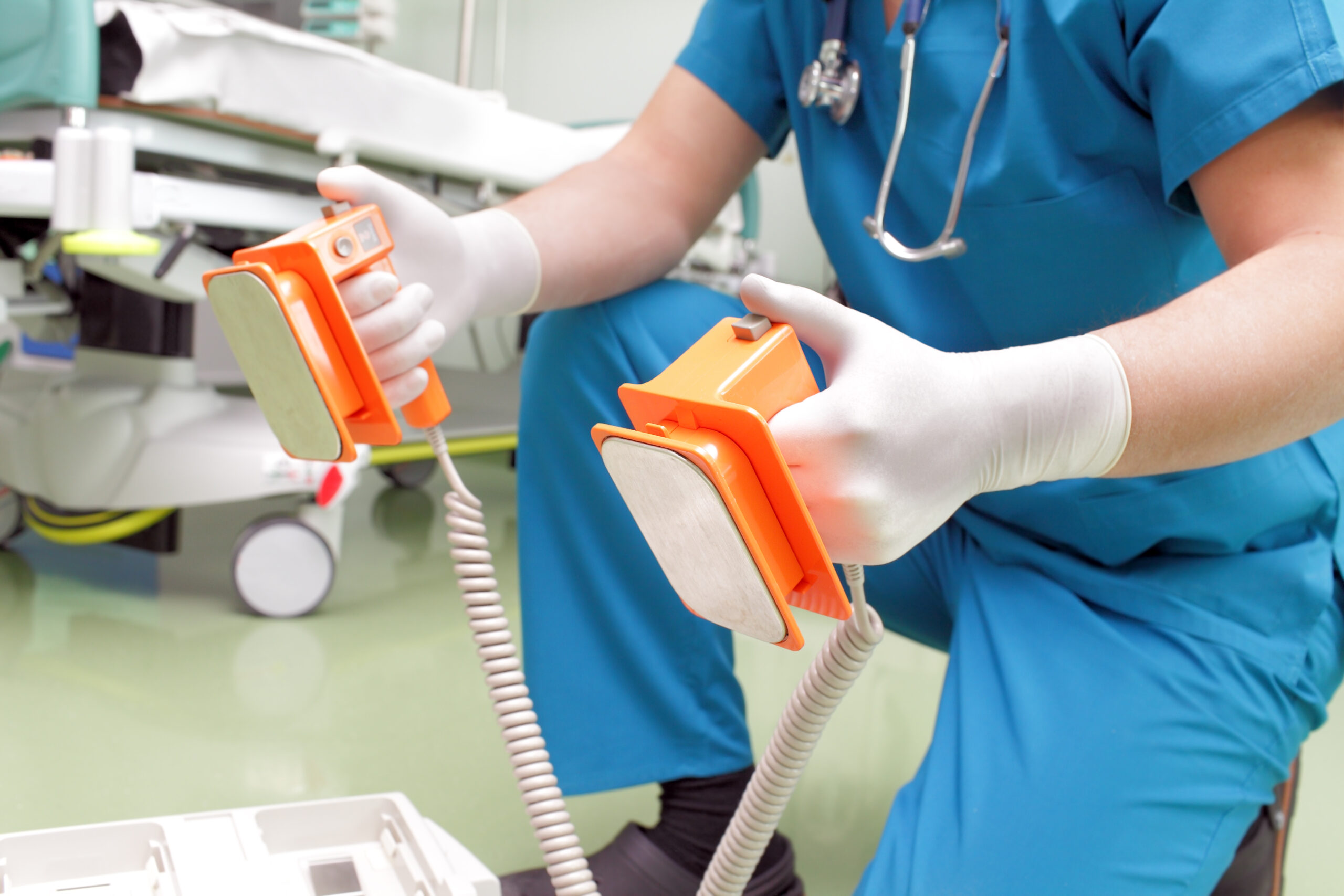

  • A- Autosomal Dominant. This means that if one parent has the condition, their children have a fifty percent chance of inheriting it. In other words, one gene is enough to pass it on.
  • C- Compelling. This is not so accurate because not everyone is compelled to it. Some people can resist until they deliberately look straight into bright light.
  • H- Helio. Helio is the Greek word for sun.
  • O- Ophthalmic. This means eye. There was an English philosopher Francis Bacon who proved that one has to see the light in order to trigger the reflex. When he only faced the sun with his eyes closed he did not sneeze.
  • O- Outburst. What is a sneeze if not an outburst?

This leaves yet another question. Why achoo? Babies don’t ‘achoo,’ they sneeze. Neither do the deaf people make that sound.

Requirements: Something that usually makes you sneeze. Try pepper, tickling your nose with a feather… Or maybe, if you are ‘every third person’ look straight into a bright light ; )

Now sneeze. Do it. Don’t cringe, DO IT. Ah…! Feels good? Again, but this time try making different sounds. Can you say your name? Experiment with other items and words. Be careful! Sometimes when you close your mouth, your palate may hurt from the build-up of pressure.

Is it really only possible to say the actual ‘achoo?’ No, no it isn’t. Different cultures make different sounds when they sneeze. Sure they may have something similar to the ‘achoo’ but that’s just basic logic. A sneeze is the effort of the body to eliminate irritation from the nasal cavity.

To do this, you first take a quick deep inhale causing the ‘ah.’ Then when the air reaches the nostrils, the pressure will produce a ‘ch’ like sound. And the ‘oo’ is just the air being expelled from the lungs via the nose or mouth. So basically any short word can be said if you alter it a bit and allow a kind of ‘ch’ somewhere in the middle. Achoo really is an evolutionized word like saying ow when hurting.

Do you need a tissue?


Author: B Green

I really want to become a Doctor – Is there anything I can do straight away?

Check out the Medical Microbiology on Apprentice Doctor Academy.

Emergency Medicine Doctor – Is it for You?

An ambulance’s siren wails as it drives up to the to the hospital’s emergency room door. Two nurses and a doctor wait as the stretcher is rolled out. The (Emergency Medicine) doctor quickly examines the patient, determines their need – and saves the person’s life.


This can be you! A doctor who daily saves lives; a person who is almost constantly in the midst of high action. Emergency medicine doctors (EMD) work in emergency rooms or trauma centers and treat patients who need immediate care. These professionals specialize in advanced cardiac life support, trauma care and management of other life-threatening conditions. [1]Emergency medicine doctors must be able to make quick decisions and lead a team of other medical professionals during intensely stressful situations. On a daily basis, EMDs…


  • Handle Virtually Any Emergency. Trained to handle virtually any crisis, Emergency Medical Doctors (EMD) have the tools needed to begin the management of every acute medical condition or injury that comes their way.
  • Make a split second/lifesaving diagnosis. Armed with quick thinking skills and a strong knowledge base, EMDs consistently make accurate decisions that save lives.


There are many advantages of being an EMD, a few of them are listed below:

  • See a variety of patients. EMDs see a variety of patients, including: babies and elderly patients; the critically ill and the worried well; pregnant patients and psychiatric patients. In other words, people from every walk of life.
  • Have a flexible schedule. EMDs typically work 8-12 hours at a time, with days off in-between. Most EMD practices do not have on-call time, which allows them to have the time to pursue outside interests.
  • Earn a decent salary. [3]The median salary for an EMD is $246,452. A small number of EMDs receive earning up to $500,000 or more!


The following image shows the [4]US National Average salary for EMDs:

pic


If you are thinking of becoming an Emergency Medicine Doctor (EMD) you will face many challenges

Do you think you are up to it?

  • Stress level. EMDs work very hard, often managing many critical patients at one time. Some patients die in front of them. EMDs see patients who are victims of child abuse, rape, or other terrible situations.
  • Difficult patients. EMDs handle more “difficult” patients than most other specialties. Patients and their families are typically under strain from their acute medical conditions and therefore sometimes treat the EMD inappropriately.


To become an EMD you must have the following additional education after receiving your bachelor’s degree

  • Medical School: Study the major systems of the body, diseases and techniques in patient care.
  • Residency Program: Be introduced to the broad aspects of emergency medicine, such as critical care and trauma, and then perform rotations in specialties, such as toxicology or pediatrics.
  • Fellowship Program: Learn your emergency room specialty.


References

[1] https://education-portal.com/articles/ How_to_Become_an_Emergency_Medicine_Doctor_Education_Requirements_and_Career_Roadmap.html
[2] Choosing a Specialty’ Emergency Medicine: The Good, the Bad, and the Ugly; Mark Reiter, MD; Disclosures; September 30, 2011; https://www.medscape.com/viewarticle/750482
[3] MD Salaries; Emergency Medicine Physician Salary; https://mdsalaries.com/2011/08/23/emergency-medicine-physician-salary/

[5] Medscape Med Students > Choosing a Specialty’ Emergency Medicine: The Good, the Bad, and the Ugly; Mark Reiter, MD; Disclosures; September 30, 2011; https://www.medscape.com/viewarticle/750482
[6]Emergency Medicine Doctor: Educational Requirements; https://education-portal.com/articles/Emergency_Medicine_Doctor_Educational_Requirements.html

I really want to become a Doctor – Is there anything I can do straight away?

Check out the Control Bleeding on Apprentice Doctor Academy.

Also, explore the Control Bleeding Simulation Practice Kit on Apprentice Doctor Kits.


Are You Thinking About Becoming a Doctor in America?

We often lose sight of the bigger picture while clamoring to pursue our goals. It’s not easy to become a doctor in America, and often factors such as perseverance, expense, family, and time have to be considered before making such a life changing decision.


For some people, the decision to walk this path is a very easy one and goes straight from high school, through college and finally into medical school, never once considering other professions. For others though, the decision is a little bit difficult for it requires an unbiased look at the profession in general, and an objective look at the personality and abilities they possess.


Am I Too Old For Medical School?

For years, nearly all students to be accepted into medical schools were generally 22 or 23 years old, and fresh out of college. Non-traditional students were rarely accepted unless proven to hold an outstanding academic record, and years of research or a similar experience.


This trend has changed now, since more and more applicants for medical schools are older students who had decided to pursue medicine, even after having a different career or any other reason. While, older students often ask of themselves before setting down on his road, it is common to find medical students coming from all ages and backgrounds.


Do You Have What It Takes to Become a Doctor?

It takes a lot of time and years of study to become a doctor.  In addition to the necessary four years of undergraduate study, it takes another four years of medical school then 3-8 years of a residency or fellowship.  While it is possible to begin in your 30s or 40s, but anytime after that is not even heard of.


The reason for this is, to get through medical school requires a certain amount of intelligence, and although good study habits and organizational skills are just as important and can make a huge difference in tipping the scales between a mediocre student and a brilliant one.


Academically speaking, the steps of becoming a doctor in America are the following:

  1. Get at least a high school diploma.
  2. Finish a 4 year pre-med program in college/university.
  3. Give a MCAT test in the final year of college/university.
  4. Apply to medical school of your choice, or according to the scores in the test.
  5. For the last step, refer to the AMCAS website.


What is AMCAS?

The American Medical Application Service is a centralized and non-profit processing service application, for those who need help with finding the best possible medical schools in the country.


Ensuring a good medical school education is one of the most competitive demands that are faced today, just as there is immense competition in the profession itself. It’s quite a challenging task to provide the necessary resources, qualifications, and degree to attendees so that they are able to practice medicine.


You can read more on becoming a doctor by clicking here.


What do you think? Leave us a comment below. Please share this article if you liked it 🙂

I really want to become a Doctor – Is there anything I can do straight away?

Check out the Foundation Medical Course on Apprentice Doctor Academy.

Also, explore the Future Doctors Kit on Apprentice Doctor Kits.


Fundamentals of Clinical Pharmacology

Fundamentals of pharmacology - Pharmacology medicinesWhat is Pharmacology

Definition: Pharmacology is the scientific study of drugs and how they are used in medicine.


Introduction to Pharmacology

For most medical students a pharmacology lecture is usually not the highlight of the day, to put it mildly. In the minds of medical students, the study of pharmacology is kind of a “necessary evil” to become any type of doctor.


In reality most doctors, especially generalists like family practitioners, physicians and pediatricians, are, to a great extent clinical pharmacologists. Let’s look at an example of a typical consultation.


Fundamentals of pharmacology - medical consultationThe process of examining a patient:

  1. Main complaint
  2. Medical history
  3. Physical examination
  4. Special examinations
  5. The diagnosis
  6. The treatment


In a majority of cases, treatment comes in the form of a prescription. A prescription for medication is frequently the recommended treatment or at least part of the therapy recommended by the clinician for treating the diagnosed disease or condition.


Even other disciplines, such as anesthesia, an in depth knowledge of drugs is of utmost importance to administer a safe anesthetic to your patients. See: A Difficult Day in Theater.


Fundamentals of pharmacology - prescriptionA thorough knowledge of pharmacology is essential for successfully practicing medicine and surgery and to offer patients the best treatment outcomes possible. Treating patients is a team effort and the pharmacologist is a central part of this team.

Fundamentals of Clinical Pharmacology

Study the following document. Click here: Pharmacology


The definition of pharmacology, as given above is a very important – “Pharmacology is the scientific study of drugs and how they are used in medicine.”
A doctor trained in scientific medicine should refrain from prescribing dubious alternative “natural” medication as well as the majority of homeopathic medications as these drugs/medications are often not thoroughly tested by scrutiny of modern scientific methods. Let’s look at one of these mostly unregulated, natural, homeopathic drugs – Arnica.


Fundamentals of pharmacology - arnica flowerArnica is recommended by its proponents as an anti-inflammatory cream or tablet to be used after injury and before and/or after surgery. It’s frequently recommended to be taken orally 3 days before removal of wisdom teeth, apparently to limit swelling and bruising.


Fundamentals of pharmacology - wisdom teeth
The truth is that as a cream or ointment it will actually increase the pain and if taken orally before surgery it will increase the risk of post-operative bleeding! It is quite toxic and may cause severe side effects. If used in excess it can even have a fatal outcome. Users of this homeopathic medication are putting their trust in a drug which has very few scientific, clinical studies (if at all) proving the claimed benefits. Some studies are claim quite the opposite of the listed benefits. See: WebMD Article.


Remember, as a doctor you are firstly a scientist. Do not fall into the realms of unscientific medicine or mysticism.


 Pharmacology Module: Practical Project

You may be thinking how on earth we are going to suggest an ethical and safe drug experiment for you? Luckily certain pharmacological agents are quite prevalent in various types of foods and beverages. An ideal one to experiment with is caffeine. If you are a minor and your parents will permit you to have coffee, you may proceed.


By the way – there is evidence that caffeine in moderation may be quite beneficial to your health. Read more about how caffeine affects your health. See: Effects of Caffeine.


Fundamentals of pharmacology - caffeine moleculeThe Effects of Caffeine on the Heart and Central Nervous System

For Future Doctors | PROJECT Mod. 9.1


Fundamentals of pharmacology - coffeeYou will need:

  • Filter coffee (preferably). Ensure that it is not decaffeinated coffee
  • A mug or suitable container
  • A computer / tablet / smartphone with Internet access
  • Pen and paper – or use a note pad on your electronic device


Follow these steps:

  1. Ensure that you abstain from caffeine for at least 8 hours (no tea, coffee, coke or chocolates).
  2. You may have a light (caffeine-free) snack and some water prior to starting the project, but a full stomach is not recommended.
  3. Follow the link for the Tic-Tac-Toe game. Click here.
  4. It is a very popular and easy game. Choose one player and play against the computer.
  5. Play the Tic-Tac-Toe game ten times before taking any caffeine containing food/beverage. Make a note of your score (no practice runs permitted!)
  6. Take your own pulse rate (see Project 21 in the FOR FUTURE DOTORS Course) and make a note of your pulse rate in beats per minute (bpm).
  7. Now make a fairly strong cup of filter coffee (will contain about 100 mg of caffeine) and drink the coffee then wait 40 -50 minutes.
  8. Play ten games of Tic-Tac-Toe again 40-50 minutes after the coffee (caffeine). Make a note of your score.
  9. Take your own pulse rate (see Project 21 in the FOR FUTURE DOTORS Course) and make a note of your pulse rate (beats per minute).
  10. Compare your Tic-Tac-Toe game scores before and after the caffeine. Compare your pulse rate before and after the caffeine.


Important note: This project is quite suitable to perform in a group – in fact it will work much better in a group setting. Add-up all the scores and pulse rates before and after taking the dosage of caffeine then divide by the number of participants to get the average result (score and pulse rate).

Fundamentals of pharmacology - brain stimulation

Interpretation of results: Caffeine is a central nervous system stimulant – and one should be more alert after consuming caffeine – and thus one should get a higher score after taking caffeine as opposed to before.


Caffeine being a stimulant should slightly increase the pulse rate (if all other factors like physical activity stay the same).

Pharmacology careers:Fundamentals of pharmacology - heart stimulation

  • Pharmacologist – private/hospital and retail
  • Drug research and drug development
  • Pharmacy/pharmacist’s assistant
  • Medical representative
  • Veterinary pharmacology
  • Medicine – especially general practitioner, physician, pediatrician, psychiatrist, etc
  • The spectrum of clinical and academic medicine
  • Emergency medicine and paramedics


Conclusion
Pharmacological agents form the backbone of therapeutic medicine, and an in-depth knowledge of pharmacology is an essential requirement for the effective treatment of conditions and diseases in modern medicine.


The message is clear – if you want to be an excellent doctor then you should have an excellent knowledge of pharmacology – especially the pharmacological preparations within your field of practice!

I really want to become a Doctor – Is there anything I can do straight away?

Check out the Foundation Medical Course on Apprentice Doctor Academy.


IMPORTANT! A major website update has been made. Any issues, notify us instantly by pressing the "Quick Help" button and leaving a short description of what you experienced.