The Importance of Simulation Training in *Medicine

*The term “medicine” equally refers to “emergency medicine” and “surgery.”


1989: Reporting for duty!


As a Maxillofacial and Oral Surgery Registrar, I can remember as if yesterday the words of my senior registrar when I walked into the OR on my first day of training. Dr. Thomas Johnston said, “I am going to teach you surgery by SEE ONE – DO ONE – TEACH ONE”, and that is exactly what he did. The first week he operated and I assisted. The next week I operated and he guided me while assisting. Then, by the beginning of the next month, a new junior registrar entered the OR, which made me the senior registrar, and I explained to him how things are going to work: “I am going to teach you surgery by SEE ONE – DO ONE – TEACH ONE!”

This is, of course, the Apprentice Teaching Model, which has been used by barbers over the centuries, teaching their apprentice barbers the finer details of hairdressing, shaving, etc. This is also an indication of the roots of surgery – not in medicine – but in the barber industry during the European Middle Ages*.


*The “era of barber surgeons” generally refers to the period from the 12th to the 18th centuries in Europe, where barbers and surgeons were often the same individuals. They performed a range of tasks, from basic barbering (haircuts, shaves) to more complex medical procedures like bloodletting, wound treatment, and even tooth extraction. This combined role was common due to the lack of formalized medical training and the need for practical medical care, especially in less populated areas.


Starting a new venture in 2007


Let’s fast forward to 2007, and the educational scene for surgeons has changed dramatically!  It is also the year when The Apprentice Corporation was formally established.

Surgical training has now moved to primarily simulation training, instead of apprentice-style teaching. Yes, the surgical fraternity has learnt from the aviation industry. Pilots learn to fly and perfect their skills in a simulator. Only when they have perfected their skills and proved that they can handle a variety of emergencies will they be moved to the cockpit of an airplane, of course, under strict supervision and guidance by an experienced senior pilot.

Imagine getting into a large passenger plane and the pilot proudly announces, “Ladies and gentlemen, I have seen how to fly a plane a couple of times, and today I am going to fly this plane for the first time”. Surely, you will be looking for the closest exit door!


The rationale of simulation training

Memory

The three broad categories of human learning based on sensory perception are visual, auditory, and kinesthetic (or tactile/motor) learning. Most medical skills, including surgical skills, fall in the latter category: kinesthetic learning. One cannot learn these skills out of a handbook, and even virtual and augmented reality (while having a role to play) falls short of the goals of learning skills. Motor memory is something that musicians understand a lot better than most other people. Muscles, aided by the supplying motor nerves, will – through training – remember a sequence of functions, and eventually, it will become automated. The constant sensory feedback is of utmost importance.

Learning in a simulation environment takes advantage of kinesthetic learning. It allows the student to reach a certain level of proficiency before being allowed into the clinical setting, like in the ER or OR. It also offers the mentor (I intentionally use the term “mentor” instead of “teacher”) the opportunity to objectively assess the level of proficiency in mastering a particular skill that the student has reached. This gives both the student and the mentor an indication of readiness to begin working on actual patients.


The opportunity to make as many mistakes as you wish!


The simulation environment has another significant advantage: it is super-forgiving! It allows the student to make any number of mistakes on a simulator rather than on an actual patient.

I did my first wound suturing on a patient many years ago, and that was not ideal. Firstly, I was super nervous, and I am sure my patient perceived this. So, I did my best – but it was a far cry from the level of excellence that I wanted to offer my patient. Students should practice their suturing techniques repeatedly, reaching a high level of proficiency, before working on animal or human patients.


Automated response and automated roles


If I wake you up at 3 am and ask you the question: “How do you stop a bleed in an emergency scene?” You should immediately answer: “pressure, packing, tourniquet!” and then sleep further.

Why do one need to learn a relatively straightforward sequence of actions like those used in Cardio-Pulmonary Resuscitation (CPR) and Stop the Bleed (STB) in a simulation setting?

These types of emergencies may be common to the emergency medicine practitioner (EMT/Paramedicine/Emergency Room Physician and Trauma Surgeon). Still, for most other medical and Healthcare Professionals, these types of medical emergencies may never present themselves, or only a few times over a lifetime. To be prepared and to do the right things in the correct sequence, one needs to have automated the response. This only happens by repetition and actual simulation of the emergency in a simulation environment.

In a team setting, each team member also needs to know their specific role and the procedures to follow, and the order in which they should be done. I like to remind my students: Leadership is not taking over – it is ensuring each role player knows what to do and when to do it (and that includes you as the team leader).


Types of medical simulation


There are essentially three types of medical simulation applications:

  • Simulation using a basic simulator
  • Simulation using an advanced (intelligent/AI-enhanced) simulator
  • Simulate the scene using volunteers
 
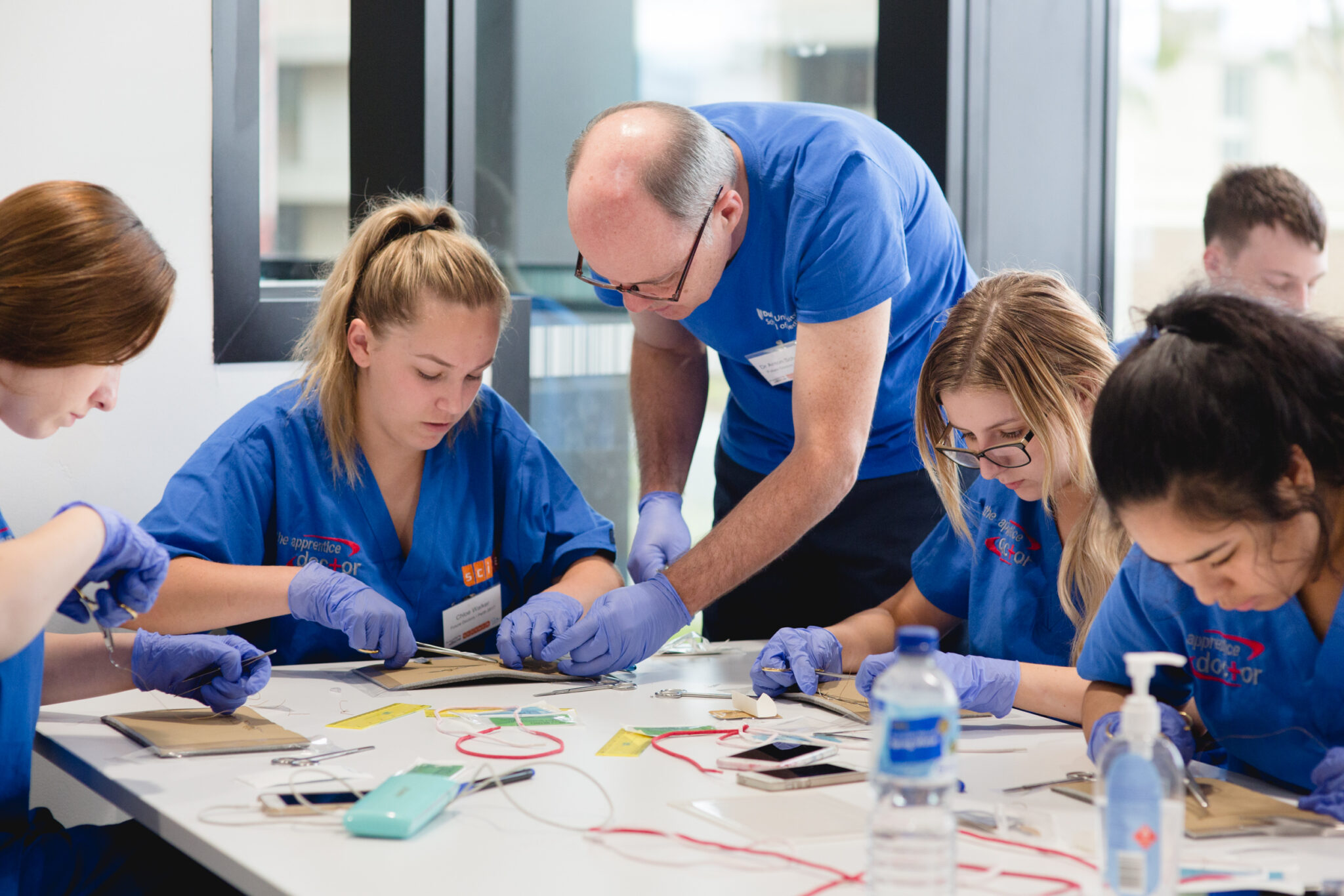
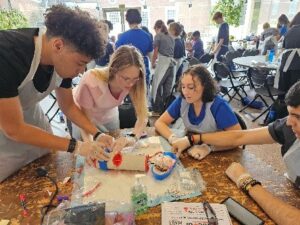
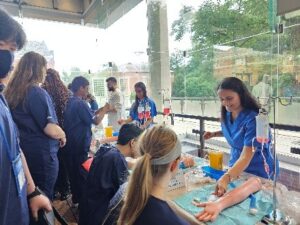
A Suturing practice simulation pad An advanced trauma simulator (manikin) Simulate a mass-casualty scene using volunteers


My own experience: Apprentice Doctor® Events


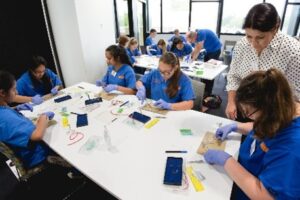
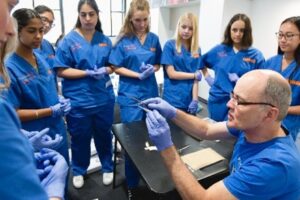
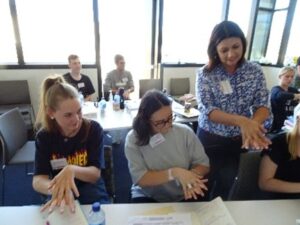
Since the establishment of the Apprentice Corporation in 2007, I have had the privilege of hosting dozens of Apprentice Doctor® Events all over the world. Whether in the US, Australia, South Africa, or Bulgaria, the experience has always been rewarding.

The sparkle in the eyes of a student when they hear their own heart sounds for the first time, or the brightening of their face when they master a complex suturing technique, are brain engram photos that will never be erased from my mind.

To see multitudes of attendees proclaim enthusiastically that they are now certain medicine is for them, or the occasional student who realizes the contrary to be true (I also find this a highly favorable outcome), has been an incredibly fulfilling journey. I am looking forward to see these programs replicated all over the world.

Dr. Anton Scheepers, The Apprentice Doctor®


Vision: The Apprentice Doctor® endeavors to be a positive influence in the lives of future medical professionals worldwide and to enthuse these aspiring medical professionals to reach their goals and dreams.

Mission: The Apprentice Doctor® aims to assist medical professionals globally, whether aspiring, in training, or practicing, with suitable medical and surgical simulation training resources and events.


I really want to become a Doctor – Is there anything I can do straight away?

Check out the Foundation Medical Course on Apprentice Doctor Academy.

Also, explore the Future Doctors Kit on Apprentice Doctor Kits.


10 Questions to Consider Before Applying to a Graduate Healthcare Program

Deciding to pursue a graduate degree in healthcare is a major step that requires careful thought. It’s not just about the time and money you’ll invest—it’s about choosing a career path that will define how you help people for years to come. Asking yourself these key questions can help you pick a program that fits your goals and lifestyle while avoiding potential missteps.

1. What Role Do I Want in Healthcare?

Healthcare offers a wide range of careers, each with its own focus. A nurse practitioner might spend their days working directly with patients, building relationships over time, while a healthcare administrator focuses on managing systems and staff. A medical doctor diagnoses and treats complex conditions, whereas a public health professional might analyze data to improve community health. To figure out what suits you, try shadowing professionals, volunteering in healthcare settings, or talking to recent grads about their daily work. This will help you confirm whether a role truly excites you or just sounds good on paper.

2. Am I Ready for the Academic and Time Demands?

Graduate healthcare programs are intense. Whether it’s a physician assistant program, nursing specialization, or medical school, expect full-time study, clinical rotations, and tough coursework. These programs are designed to prepare you for high-stakes responsibilities, so they’re not forgiving if you’re unprepared. Reflect on your study habits—can you juggle demanding classes and long hours? If you’re unsure, consider taking a tough science course to gauge your readiness. The jump from undergrad to grad school in healthcare is a big one.

3. How Will I Pay for It?

These programs aren’t cheap, and costs go beyond tuition. You’ll need to cover books, equipment, exam fees, and living expenses, often while working little or not at all due to the program’s intensity. Look into federal aid, scholarships, or employer tuition programs. Some healthcare organizations offer loan forgiveness if you commit to working for them after graduation. Check starting salaries for your chosen field to make sure the debt you take on is manageable.

4. Do I Meet the Program’s Requirements?

Every program has specific prerequisites, like certain courses, a minimum GPA, or test scores. Some also require healthcare experience or volunteer hours. Missing even one can push your application back a year. Make a checklist of requirements—prerequisite classes, entrance exams, recommendation letters, and personal statements. Start early to address any gaps, like retaking a course or gaining clinical experience.

Photo by Nappy on Unsplash

5. Does the Program Fit My Learning Style and Goals?

Not all programs teach the same way. Some focus on research, others on hands-on clinical work. Online options offer flexibility but might limit networking, while campus programs build stronger connections but may require you to relocate. Look at class sizes, clinical placement options, and specialization tracks. Check the program’s licensing exam pass rates and job placement stats. Talking to current students can give you a feel for the program’s vibe and whether it suits you.

6. Where Do I Want to Work After Graduation?

Where you study can impact where you practice. Licensing rules differ by state, and some programs tailor their training to local regulations. Rural areas have different healthcare needs than cities, and job markets vary too—hospitals employ 31% of healthcare workers, while physician offices cover 17%. Think about where you want to live, considering factors like cost of living or family ties. Choosing a program with strong local connections can boost your job prospects.

7. What Specialties Interest Me?

Many healthcare fields let you specialize, which can require extra training. For example, a nurse practitioner might focus on family care or mental health, while a physician assistant could work in surgery or emergency medicine. Explore specialties early to find programs that offer relevant tracks or prepare you for your chosen path. Knowing your interests helps you avoid programs that are too general or too niche for your goals.

8. How Much Work-Life Balance Do I Need?

Healthcare jobs vary in their demands. Emergency medicine often means unpredictable hours and high stress, while outpatient roles might offer regular schedules. Think about your priorities—do you want a steady routine, or are you okay with nights and weekends? Your preferences will guide you toward a career and practice setting that fits your life.

9. What Support Do I Have?

Graduate school is tough, both mentally and emotionally. You’ll need a solid support system to get through long study sessions, clinical challenges, and stressful moments. Consider your financial stability, family support, or access to childcare if needed. Clinical rotations can be emotionally heavy, so having mentors, counselors, or peers to lean on is crucial.

10. Am I Truly Committed to Helping Others?

Healthcare is about serving people, often in their toughest moments. It demands compassion, resilience, and the ability to handle tough situations.

Reflect on why you’re drawn to this field. Are you ready to manage stress, deliver hard news, or work with difficult patients? Volunteering in healthcare can help you test your commitment. A genuine passion for helping others will carry you through the challenges of training and beyond.

Taking the time to answer these questions honestly will help you choose a program that sets you up for a fulfilling career. Healthcare is a big commitment, but for those ready to make a difference, it’s incredibly rewarding.

I really want to become a Doctor – Is there anything I can do straight away?

Check out the Foundation Medical Course on Apprentice Doctor Academy.

Also, explore the Future Doctors Kit on Apprentice Doctor Kits.


Preparing for Your Phlebotomy Exam with Practice Tests

Stepping into the world of phlebotomy means more than just mastering techniques. It’s about staying calm, sharp, and ready under pressure. Your certification exam is the gateway to a fulfilling career, and the key to unlocking that door lies in the preparation. Whether you’re someone who thrives on routine or feels a rush of nerves thinking about tests, the journey ahead requires focus, smart strategies, and practice.

Understanding the Phlebotomy Exam Structure

Phlebotomy certification exams are divided into two main parts: a written exam and a practical exam.

The written section for the exam to become a certified phlebotomist covers theoretical knowledge, with questions focusing on venipuncture techniques, human anatomy, infection control, and lab safety protocols. This ensures that candidates have a thorough understanding of how to perform their roles safely and effectively.

On the practical side, you’ll be tested on your ability to perform venipuncture, handle blood samples, and maintain professional interactions with patients.

Certification bodies like the National Healthcareer Association (NHA) and the American Society for Clinical Pathology (ASCP) may have slight variations in exam content, but both focus on ensuring you’re fully prepared to work in a clinical environment.

The Role of Practice Tests in Your Preparation

Practice tests are a powerful tool for getting comfortable with the format and content of the phlebotomy exam. By simulating the actual exam environment, they give you a clearer understanding of what to expect, helping you to better manage your time and reduce stress. Practice tests also allow you to pinpoint specific areas that may need more focus, such as anatomy, lab safety, or venipuncture techniques.

Including practice tests in your study routine helps you reinforce knowledge while tracking your progress. As you review your results, you can adjust your study plan to target weaker areas, ensuring a more well-rounded preparation. To access useful resources for preparation, you can visit PhlebotomyPracticeTest.net, where a variety of exams are available to help you refine your skills.

Another advantage of practice tests is that they train you to work within time constraints, a common challenge during exams. Being able to complete questions within the allocated time frame is crucial, and practice tests can help you build this pacing skill. Over time, you’ll notice an improvement in your response accuracy and speed, boosting your confidence as you approach the actual exam.

Focus on Practical Aspects

The practical portion of the phlebotomy exam is where your hands-on skills truly matter. Being proficient in venipuncture and patient interaction is crucial for this section. Practicing with mannequins or using simulation kits can help you refine your technique, from inserting needles smoothly to handling blood samples correctly. These experiences build confidence and ensure you’re prepared for real-world scenarios.

In addition to mastering venipuncture, focus on maintaining sterility and following safety protocols. Proper technique is essential, but understanding the patient’s needs, communicating effectively, and adhering to infection control measures will also be evaluated. Regular practice and feedback from instructors or peers can help you develop the precision needed to pass the practical exam with ease.

Review and Reinforce Key Concepts

In the final stages of your preparation, it’s essential to revisit the key theoretical concepts that underpin your practical skills. Reviewing areas like blood anatomy, specimen handling, and safety protocols will ensure that your foundational knowledge is solid. Using flashcards or summarizing notes is a great way to reinforce these key points, making them easier to recall during the exam.

Group study sessions or peer discussions can also be highly beneficial. Engaging with others in a learning environment allows you to test your knowledge, clarify doubts, and gain new insights. Reinforcing these concepts will give you a well-rounded understanding and help you approach your phlebotomy exam with greater confidence.

Staying Calm Under Exam Pressure

Managing stress is just as important as mastering the material for your phlebotomy exam. Many candidates struggle with test anxiety, especially during the practical portion. Practicing mindfulness techniques, such as deep breathing or progressive muscle relaxation, can help you stay calm and focused under pressure. Visualizing success and approaching the exam with a positive mindset can also reduce nervousness.

Simulating real exam conditions by timing yourself during practice tests will help you become comfortable with the pacing and time constraints. Break large tasks into smaller steps, and remind yourself that thorough preparation will help you confidently handle any challenges on exam day. Staying calm and collected is key to performing your best during both the written and practical sections of the exam.

Wrapping Up

Success in your phlebotomy exam lies in thorough preparation and consistent practice. By using practice tests, refining your practical skills, and reinforcing key theoretical concepts, you build both knowledge and confidence. Staying calm and focused during the exam is just as important as studying, and mastering stress management techniques can help you perform at your best.

Approach your exam with a clear plan and trust in your preparation. With the right mindset, you’ll be well-equipped to pass the certification and take the next step in your phlebotomy career.

I really want to become a Doctor – Is there anything I can do straight away?

Check out the Venipuncture & Phlebotomy Course on Apprentice Doctor Academy.

Also, explore the Venipuncture & IV Phlebotomy Practice Kit on Apprentice Doctor Kits.


The Essential Role of Clinical Social Workers in Modern Medicine: What Aspiring Medical Professionals Need to Know

As medicine advances, so does the need for a multidisciplinary approach to patient care, making the collaboration between clinical social workers and other medical professionals essential. Aspiring medical professionals must understand that clinical social workers play a crucial role in this collaborative environment.

For aspiring doctors, understanding how to work seamlessly with clinical social workers can significantly improve patient outcomes and enhance the care experience.

In this article, we will explore how doctors and social workers collaborate in healthcare settings and the importance of this partnership.

Understanding the Collaborative Environment

While physicians focus on diagnosing and treating medical conditions, clinical social workers address the psychosocial factors that affect patient well-being. It might include mental health issues, family dynamics, financial problems, or community resources that can either hinder or support recovery.

Thus, clinical social workers undergo extensive training and education to develop the skills required for such a multifaceted role. The training typically involves earning a Master of Social Work (MSW) degree, which includes coursework in areas like mental health counseling, community resources, and family dynamics, as well as hands-on clinical experience through supervised internships.

Once they have completed their academic requirements, aspiring clinical social workers must follow the state licensing process to practice professionally. This process varies by state but generally includes passing a licensing exam, completing supervised clinical hours, and maintaining continuing education.

Certification ensures that clinical social workers can handle the complex emotional, social, and ethical challenges in healthcare settings, enabling them to collaborate effectively with physicians and other healthcare professionals.

This collaboration entails the following:

Interdisciplinary Communication

Effective communication between doctors and clinical social workers is vital. Medical professionals often rely on social workers to provide insights into the emotional and social state.

For example, if a patient is not adhering to prescribed medication, the reason may not be medical. It could stem from financial limitations, a lack of understanding of the prescription, or even psychological resistance to treatment. In such cases, clinical social workers can provide valuable context that helps the doctor adjust the treatment plan.

Doctors can also benefit from the ability of a social worker to coordinate with outside agencies. Whether securing long-term care for a patient after discharge or connecting them with mental health services, social workers are the liaisons who ensure that patients continue to receive support once they leave the healthcare facility. Hence, aspiring doctors should expect to interact with clinical social workers regularly, particularly in complex, ongoing care.

Navigating Ethical Challenges Together

Another interaction between doctors and social workers revolves around ethical dilemmas. Clinical social workers learn how to advocate for a patient’s overall well-being, which sometimes means navigating complex ethical scenarios that may not be solely medical. For instance, a social worker might be concerned about the mental competency to make informed medical decisions, a situation where their expertise is invaluable to the treating physician.

Social workers and doctors can approach these ethical challenges from medical and psychosocial perspectives, whether in end-of-life care, mental health interventions, or addressing potential abuse cases.

Facilitating Patient-Centered Care

The primary goal of both doctors and social workers is to ensure that patient care is holistic and centered around the needs and circumstances. Clinical social workers contribute to this by conducting assessments beyond medical history. They examine environmental factors, family situations, and emotional well-being to create a comprehensive picture of what support the patient might need.

Therefore, aspiring medical professionals must understand that patient-centered care is not limited to what happens inside the clinic or hospital. Home life, social networks, and access to community resources can influence recovery and overall health.

Hence, social workers often take the lead in addressing these aspects, coordinating services that might include counseling, support groups, and financial assistance. Working closely with social workers allows doctors to ensure patients receive the most appropriate, well-rounded care possible.

Bridging Gaps in Patient Education

Doctors often have limited time during consultations, making patient education challenging. Thus, clinical social workers can assist when patients need more detailed guidance or support to understand their diagnosis, treatment options, or long-term care plans. They are skilled in providing education in an accessible and culturally sensitive way, ensuring that patients fully comprehend the medical advice given.

For future doctors, working with social workers can be a way to ensure that patients leave consultations with prescriptions or recommendations and a clear understanding of what steps they need to take next. It is especially critical for patients with chronic illnesses or complex medical conditions that require ongoing self-management.

Supporting Mental Health and Emotional Well-Being

Integrating mental health services into general medical practice has gained prominence in recent years, and clinical social workers have been at the forefront of this movement. Many patients who seek medical care are dealing with underlying psychological or emotional issues, which can complicate their treatment. Clinical social workers offer critical support by identifying these issues and helping to integrate mental health care into the overall treatment plan.

As an aspiring medical professional, recognizing the mental health component of patient care and collaborating with social workers to address it is increasingly important. Whether the issue is depression, anxiety, or coping with a chronic illness, social workers provide the psychological support that patients need to adhere to their medical treatment plans.

Conclusion

Clinical social workers play an indispensable role in modern medicine. They support patients and enhance the care medical professionals provide by addressing the psychosocial aspects of health. Therefore, aspiring medical professionals should learn how to interact and collaborate with social workers for better patient outcomes and a more holistic approach to healthcare.

One practical step for aspiring medical professionals is to engage with social workers early in the training, whether through case studies or clinical rotations. Observe how they interact with patients, assess needs, and coordinate care.

In addition, learn about the resources they commonly use, such as community support services and mental health networks, to know how to integrate their expertise into your future practice.

I really want to become a Doctor – Is there anything I can do straight away?

Check out the Human Behavior in Medicine: Foundations for Future Physicians on Apprentice Doctor Academy.


Embarking on Your Medical School Journey: Navigating the First Year

The journey to becoming a medical professional begins with a crucial first step: embarking on medical school. This pivotal period requires meticulous planning and preparation, as the landscape of medical education is rapidly evolving. A significant surge in interest has been observed, with the Association of American Medical Colleges reporting an 18% increase in applicants in 2021 compared to the previous year.

The acceptance into medical school marks a joyous occasion for many, heralding the start of a challenging yet rewarding journey. The first year serves as the foundation of this voyage, demanding diligent schedule management and adaptability. To assist in this transition, we will explore the common challenges faced during the first year, offer strategies for overcoming these hurdles, and provide practical tips for starting strong. Additionally, we’ll highlight pitfalls to avoid, setting you on the path to success.

Understanding First-Year Challenges

The initial year of medical school can be both exhilarating and daunting. Many students find themselves relocating to new cities or states, requiring adjustments to unfamiliar environments. Unlike undergraduate programs, medical school schedules are tightly structured by the administration, leaving little room for extracurricular engagements.

Students will find their days filled with lectures on fundamental subjects such as anatomy, basic human physiology, biochemistry, and histology. Anatomy, in particular, presents an intriguing yet demanding aspect of the first year, involving extensive lab time with cadavers to understand the intricacies of the human body.

The transition from college to the rigorous curriculum of medical school can be challenging. Medical colleges, aware of these difficulties, employ various strategies to alleviate student burdens. Beyond academics, developing clinical skills becomes a priority, with students learning patient interaction in diverse settings like outpatient clinics and emergency rooms.

Maintaining a balanced schedule amidst these demands may seem overwhelming, but we’re here to provide tips and tricks to navigate these challenges effectively.

Strategies for Success in Your First Year

Forge Connections: Building friendships is crucial for support and collaboration throughout the challenging journey of medical school. Align yourself with peers who share your goals and vision.

Never Skip Classes: Consistent attendance is vital. While the material may initially seem daunting, continuous engagement will foster understanding over time.

Connect with Faculty: Developing relationships with your professors can ease academic pressures. They can offer guidance and insights, enhancing your learning experience.

Organize Your Life: Before the semester starts, arrange your finances, accommodation, and study materials. A clear focus on academics is easier to maintain when other aspects of your life are in order.

Prioritize Well-being: Your health is paramount. Ensure adequate sleep, maintain a nutritious diet, and exercise regularly. Mental health is equally important, so find activities that relax and rejuvenate you.

Common Pitfalls to Avoid

The first year is ripe for mistakes due to the pressures of academics and adapting to new environments. Awareness of these pitfalls can help you steer clear:

Underutilizing Resources: Medical school offers a wealth of opportunities. Embrace this time fully by engaging with your peers, learning broadly, and enjoying the experience.

Sacrificing Sleep: Avoid the temptation of all-nighters. Consistent study and understanding of material trump last-minute cramming.

Overburdening Yourself: Attempting to juggle too many tasks can dilute your focus. Prioritize and tackle objectives one at a time, especially if your primary focus is academic success.

Conclusion: Maximizing Your Medical School Experience

Medical school is not just a pathway to becoming a physician; it’s a transformative phase that shapes your character and professional ethos. By making the most of your first year, you lay the groundwork for a successful and fulfilling career in medicine. Armed with the right strategies, you can navigate the challenges of medical school while maintaining your well-being and enjoying the journey.


I really want to become a Doctor – Is there anything I can do straight away?

Check out the Foundation Medical Course on Apprentice Doctor Academy.

Also, explore the Future Doctors Kit on Apprentice Doctor Kits.


Reference Links:

https://blog.amopportunities.org/2020/10/06/what-to-expect-your-first-year-of-medical-school/

https://www.entnet.org/resource/medical-school-101-tips-for-surviving-your-first-year/

https://labblog.uofmhealth.org/med-u/advice-for-first-year-medical-students-5-takeaways-from-michigan-m2s

https://www.ama-assn.org/residents-students/medical-school-life/4-tips-hit-ground-running-1st-year-medical-student

https://www.amsa.org/10-cardinal-rules-surviving-first-year/


Beyond Borders: My Journey to Becoming a Doctor

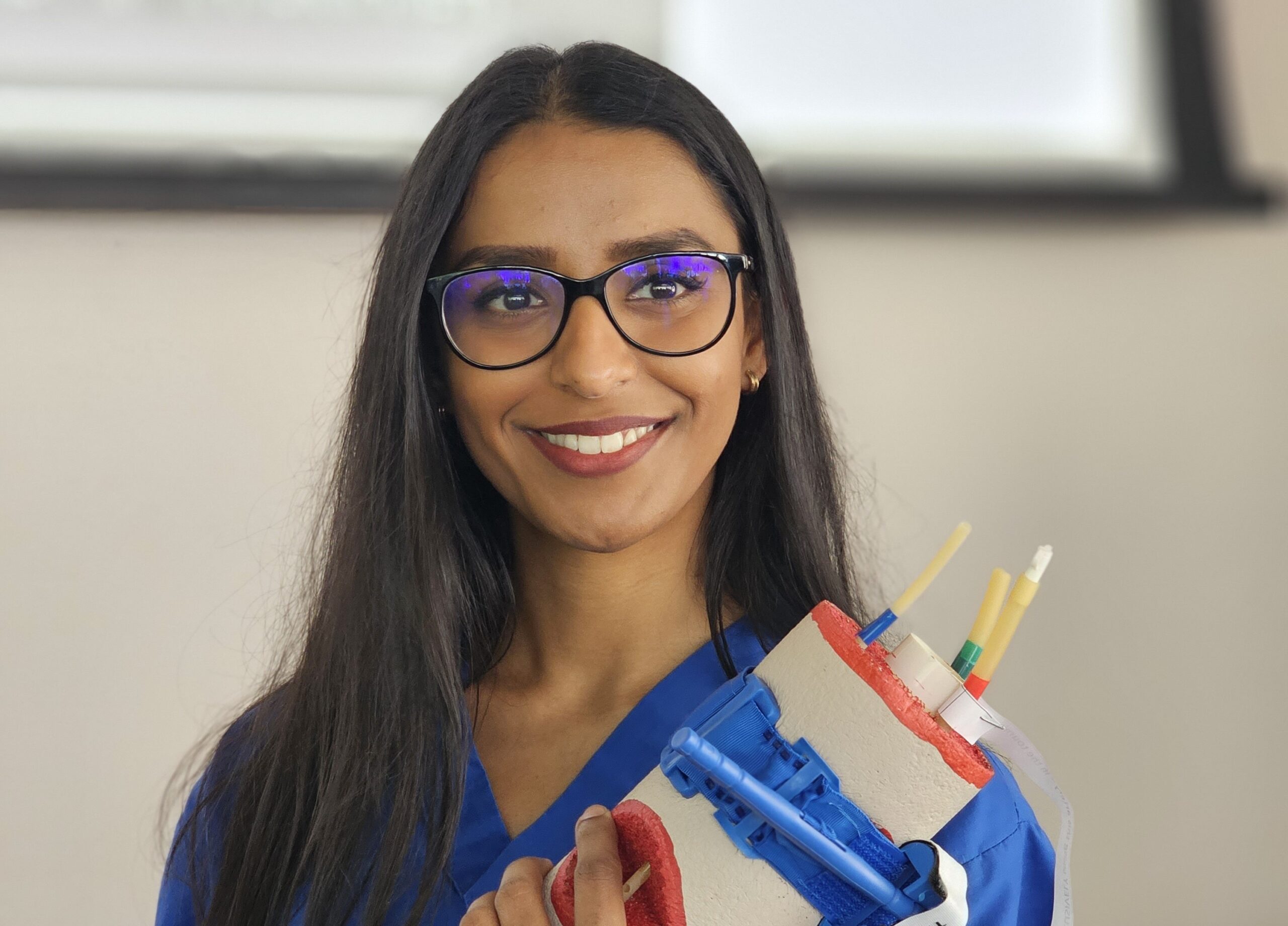
My name is Raman Preet Kaur, and I am currently a 6th-year medical student at the Medical University of Sofia. My journey to medical school and my aspirations to become a doctor have been a unique and culturally enriching experience filled with both challenges and triumphs. I would like to share my journey, one where determination and dreams play a pivotal role.

I was born in India, and my life took a significant turn when I moved to Germany at the age of 13. The cultural shock was profound, transitioning from a small Indian town to a new and unfamiliar environment. However, I adapted, learned the language, and found friends who helped me integrate into German society.

Ever since I was a child, I dreamt of becoming a doctor. Little did I know that this dream would take me on a path filled with challenges and adventures.

After completing my A-Levels, I set my sights on fulfilling my dream of attending medical school in Germany. However, there was a long waiting list, so I decided to pursue a career in nursing. Although I acquired valuable experience, my unwavering passion for becoming a doctor remained. I wanted more from my career. So, I reapplied to medical schools in Germany multiple times but had no success.

As another year passed without acceptance into medical school, I broadened my horizons beyond Germany. I also applied in Austria, but the waiting list was another year long, so I had to find another alternative. At that time, I was facing personal hardships, which made the whole process of rejection more frustrating and challenging. Nevertheless, I remained determined to find a way to achieve my dream.

It was during this challenging time that a friend studying dentistry in Sofia, Bulgaria, introduced me to the Medical University of Sofia. The university offered medical degrees in English, which was a game-changer for me. This opportunity meant that I could study in a language that opened doors internationally. After conducting my research, I applied and, to my delight, got accepted.

**A Fresh Start in Bulgaria:**

Moving to Bulgaria was a major step, but it was one I needed to take to pursue my dream career. Leaving behind my family and hometown was difficult, but it allowed me to grow as a person and expand my horizons.

Bulgaria surprised me with its rich history and diverse culture. One aspect I truly cherished was the multicultural environment at the university, where I met people from all corners of the world. The convenience of direct flights from my home city made the transition smoother, and affordable taxis were a pleasant surprise. The availability of Indian restaurants and vegetarian-friendly options brought a taste of home to Sofia. The city’s numerous shopping malls and book cafés became some of my favorite spots.

**Giving Back Through Volunteering:**

Throughout my medical journey, I had a strong desire to engage in volunteer work within the medical field. I joined Medipath International, a remarkable non-profit organization dedicated to supporting medical students in their educational and professional endeavours. Medipath International regularly organizes symposiums, lectures, and workshops, all designed to enhance our practical skills and expand our medical knowledge. These events bring together experts from various medical fields, creating a platform where students can learn from the best and stay updated with the latest developments in healthcare.

**An Unforgettable Experience:**

Through Medipath, I had the honour of participating in one of The Apprentice Doctor’s teaching programs at Johns Hopkins University in Baltimore. During my time there, I had the privilege of working alongside renowned maxillofacial surgeon Dr. Anton Scheepers. The experience was unparalleled, providing me with insights into advanced medical practices and the opportunity to collaborate with exceptional doctors and aspiring medical professionals. Sharing my experiences and knowledge with future medical professionals was truly fulfilling.

This experience has left an indelible mark on my medical journey. It has broadened my horizons, exposed me to cutting-edge medical techniques, and connected me to a network of passionate medical professionals. The knowledge and inspiration gained from this opportunity have undoubtedly propelled me forward in my pursuit of becoming a doctor.

**In Conclusion: What I Want You to Know**

As I look back on my journey from India to Germany and now to Sofia, I am grateful for the diverse experiences that have shaped me as an individual and as a future healthcare provider. For aspiring medical professionals, pursuing a medical career is no easy feat, and many students face hurdles to gain admission to medical schools. I want to emphasize that the path to achieving your dreams is not always straightforward. My journey involved unexpected twists and turns, but each experience has contributed to my growth and determination. It has been an incredible journey, and I’m ready to embrace the next chapter as a doctor.

**My advice to you is simple:** Never limit yourself. Sometimes, stepping out of your comfort zone is necessary to achieve your dreams. In the words from my favorite quote by Paulo Coelho, “If you want something, the whole universe conspires to achieve it.” So, don’t give up on your dreams. Seize every opportunity that comes your way and go after your goals with unwavering determination. You can have it all.

Thank you for joining me on my journey, and I hope my story inspires you to passionately pursue your own dreams.

I really want to become a Doctor – Is there anything I can do straight away?

Check out the Foundation Medical Course on Apprentice Doctor Academy.

Also, explore the Future Doctors Kit on Apprentice Doctor Kits.


Become a Medical Doctor | How-To Guide

Introduction:

If you are interested in a career in medicine, becoming a doctor is a rewarding but challenging process. It is important to be aware of the challenges involved and how to overcome them. 

The biggest challenge facing aspiring doctors is the rigorous academic process. In order to become a doctor, you must first complete high school, then attend college and medical school, and finally complete a residency. This process can take many years, and it is important to be prepared for the challenges involved.

Why Being A Doctor Is Important In The World Today

Becoming a doctor is important in the world today because they play a critical role in society. They are responsible for caring for patients and helping to maintain the health of the population. Additionally, doctors are often at the forefront of research, working to find new treatments and cures for diseases. Doctors are essential to the well-being of society and deserve our respect and admiration.

The process of becoming a doctor is not an easy one. It requires years of schooling and training. However, it is a rewarding career that offers many opportunities to help others.

 If you are considering a career in medicine, here are the steps you need to take to become a doctor.

  1. Get a bachelor’s degree: In order to become a doctor, you must first obtain a bachelor’s degree from an accredited university. During your undergraduate years, you will take courses in biology, chemistry, physics, and math. These courses will prepare you for the rigors of medical school.
  2. Take the MCAT: The Medical College Admission Test (MCAT) is a standardized test that all prospective medical students must take. The MCAT measures your knowledge of the sciences and helps to ensure that you are prepared for the challenges of medical school.
  3. Attend medical school: After you have completed your undergraduate degree and taken the MCAT, you will need to attend an accredited medical school. During your time in medical school, you will take classes such as anatomy, physiology, and pharmacology. You will also complete clinical rotations, which will give you hands-on experience in the field.
  4. Obtain a medical license: In order to practice medicine, you must obtain a medical license from your state’s Board of Medicine. To be eligible for a medical license, you must pass the United States Medical Licensing Examination (USMLE).
  5. Complete a residency: Once you have obtained your medical license, you will need to complete a residency. A residency is a postgraduate training program that lasts for three to seven years. During your residency, you will receive training in a specific medical specialty.
  6. Pass board exams: After you have completed your residency, you will need to take and pass board exams in order to become certified in your specialty.

These exams are administered by the American Board of Medical Specialties (ABMS).

  1. Start practicing medicine: Once you have completed all of the steps above, you will be ready to start practicing medicine. You can choose to work in a private practice, hospital, or clinic. 

Top 10 Reasons to Become a Doctor

Becoming a doctor is a very rewarding experience that comes with many benefits. Here are the top 10 reasons to become a doctor:

  1. The Medical Field is Exciting. There are always new things to learn in the medical field. The body is a complex machine, and there are infinite ways to help people heal and feel better.
  2. Helping people in a meaningful and significant way. Doctors are some of the most highly respected and trusted members of society. People rely on them to make life-or-death decisions and to help them through difficult times.
  3. Have a sense of trust and honor in your community. A career in medicine is a calling, and those who choose it do so out of a sense of duty and service to others. It is an incredibly rewarding profession.
  4. Become a person of influence and respect. Doctors have a tremendous amount of influence over the lives of their patients. They are able to help people when they are at their lowest point and make a real difference in their lives.
  5. Opens the door for other exciting opportunities. A career in medicine provides many opportunities for specialization, which can lead to interesting and varied work paths.
  6. You get to build meaningful relationships with patients. One of the most rewarding aspects of being a doctor is the relationships you build with your patients. You get to know them on a personal level and help them through some of the most difficult times in their lives.
  7. Better Job stability. The medical field is one of the most stable industries, which provides a great deal of job security.
  8. Higher compensation compared to other professions. Doctors are among the highest-paid professionals in the world.
  9. Requires analytical thinking and other skills. Medicine is a demanding profession that requires both intellectual rigor and practical skills. It is constantly evolving, which keeps doctors on their toes and allows them to use their creativity to solve problems.

The Biggest Trends in 2022 for Becoming a Doctor

The world of medicine is ever-changing, and in order to stay ahead of the curve, aspiring doctors need to be aware of the latest trends. 

Here are some of the biggest trends that will be seen in 2022:

  1. Increased focus on preventative care.

Preventative care has been gaining traction in recent years, and this trend is only going to continue in 2022. Doctors will increasingly focus on helping patients maintain their health rather than just treating them once they become ill. This means that aspiring doctors will need to be knowledgeable about how to promote good health habits and how to identify risk factors for illness.

  1. Increased use of technology.

Technology has already had a significant impact on the medical field, and this trend is only going to continue in the coming years. From virtual reality simulations to diagnostic tools, technology is being used more and more in doctors’ offices and hospitals. Aspiring doctors will need to be comfortable with using technology in order to keep up with the latest advancements.

  1. A focus on holistic care.

Patients are becoming increasingly interested in holistic care, which focuses on treating the whole person rather than just their symptoms. In 2022, doctors will place more emphasis on providing comprehensive care that takes into account a patient’s physical, mental, and emotional well-being. Aspiring doctors will need to be familiar with various holistic treatment modalities in order to meet the demands of patients.

  1. A move towards personalized medicine.

With the advent of new technologies, personalized medicine is becoming more and more possible. In 2022, doctors will increasingly tailor treatments to each individual patient based on their unique genetic makeup. Aspiring doctors will need to be comfortable with using new technologies in order to provide the most effective care possible.

  1. An emphasis on global health.

In recent years, there has been a greater focus on global health issues such as pandemics and epidemics. In 2022, this trend will continue as doctors increasingly work to address health concerns that span the globe. Aspiring doctors will need to be knowledgeable about global health issues in order to be prepared for this type of work.

  1. An increase in telemedicine.

With advances in technology, telemedicine is becoming more and more common. In 2022, doctors will increasingly use video conferencing and other remote technologies to consult with patients. Aspiring doctors will need to be comfortable with using these technologies in order to provide care to patients who are not able to come into the office.

  1. A focus on population health.

As the world population continues to grow, there is an increasing focus on population health. In 2022, doctors will work to improve the health of populations by addressing factors such as poverty, access to healthcare, and environmental issues. Aspiring doctors will need to be familiar with these issues in order to be prepared for this type of work.

Becoming a doctor is a demanding process, but it can be immensely rewarding. By keeping up with the latest trends, aspiring doctors can position themselves for success in this ever-changing field.

The Biggest Fears About Becoming a Doctor

There are many fears that students have about becoming doctors. One of the biggest fears is that they will not be able to handle the stress of the job. Another fear is that they will not be able to complete the schooling required to become a doctor. Some students are also worried about how much money they will need to borrow in order to pay for medical school. And finally, some students are concerned that they will not be able to find a job after they graduate from medical school.

Fortunately, there are steps that students can take to ease their fears about becoming doctors. One of the best ways to handle the stress of medical school is to develop a support system of friends and family members who can help you through tough times. Additionally, it is important to remember that medical school is not impossible to complete – thousands of students do it every year. And while the cost of medical school can be daunting, there are many financial aid options available to help students pay for their education. Finally, job prospects for doctors are good – in fact, the demand for doctors is expected to continue to grow in the coming years.

So if you’re interested in becoming a doctor, don’t let your fears hold you back. Take the first step today and begin exploring what it takes to make your dream a reality.

How to Cope and Overcome Fear of Being a Doctor

The fear of being a doctor is common, but it’s important to remember that it’s natural to feel this way. After all, you’re about to embark on one of the most challenging and rewarding careers imaginable. However, with the proper preparation and mindset, you can overcome any fear you may have and thrive in your chosen field.

Here are a few tips for coping with and overcoming the fear of being a doctor:

  1. Make a plan: It’s important to have a clear plan of action before entering into any new experience. This will help to ease your mind and give you a roadmap to follow. When it comes to becoming a doctor, make sure to research the process thoroughly and map out how you will complete each step.
  2. Talk to others who have been through it: One of the best ways to cope with fear is by talking to those who have been through it before. Ask them about their experience and find out what challenges they faced along the way. This can be an invaluable source of information and support.
  3. Prepare for challenges: Becoming a doctor is not easy – there will be challenges along the way. However, if you’re prepared for them, they won’t seem so daunting. Make sure to study hard and know what to expect before taking on any new challenges.
  4. Seek support: If you’re feeling overwhelmed, seek out support from family, friends, or a professional counselor. Talking to someone who understands what you’re going through can be incredibly helpful.
  5. Take things one step at a time: Don’t try to do everything all at once – it’s important to take things slowly and steady yourself as you go. This will help you avoid getting overwhelmed and stressed out.
  6. Believe in yourself: Perhaps the most important thing of all is to believe in yourself. You can overcome any obstacle if you have the confidence and determination to do so. Remember that you are capable of anything you set your mind to.
  7. Seek professional help: If you find that you’re struggling to cope with the fear of becoming a doctor, don’t hesitate to seek professional help. A therapist or counselor can provide you with the tools and support you need to overcome your fears and succeed in your chosen career.

3 Biggest Mistakes Students Make When Trying to Become a Doctor

The biggest mistake students make when trying to become a doctor is not doing enough research.

They may not know what steps they need to take, or how long the process will actually take.

Students also often fail to plan ahead and don’t think about how they will finance their education.

Without a clear plan, it can be easy to get sidetracked and give up on your dream of becoming a doctor.

If you’re interested in becoming a doctor, the best thing you can do is research the steps you need to take and make a plan. Start by talking to your guidance counselor or researching online.

You should also reach out to doctors in your community and shadow them to get a better sense of what the job entails. 

Here are 3 mistakes to make sure you avoid:

Not doing enough research

Becoming a doctor is a long and challenging process that requires a lot of time and effort. Unfortunately, some students do not do enough research and end up dropping out or failing to complete the process. Here are some tips to avoid this from happening to you.

First, make sure you are really interested in becoming a doctor. This is a long and difficult journey, and it’s important that you are motivated the entire way through. If you’re only doing it because you think it’s the “right” thing to do, you’re going to struggle.

Second, make sure you know what the process of becoming a doctor entails. There are many steps involved, and it’s important that you are aware of them all before starting down this path. You don’t want to get overwhelmed or discouraged halfway through.

Finally, make sure you are willing to put in the hard work. Becoming a doctor is not easy; it takes dedication, passion, and perseverance. If you’re not willing to put in the effort, then this may not be the right career for you.

Not taking the necessary steps

It is vitally important to take the necessary steps to become a doctor. Failure to do so could result in a suboptimal outcome for the aspiring doctor. The following are some of the most important steps to becoming a doctor:

1) Get good grades in high school and college. This is especially important if you want to get into a good medical school.

2) Become familiar with the MCAT. This is the test that all aspiring doctors must take before they can be accepted into medical school.

3) Shadow a doctor. This will give you a good idea of what it’s like to be a doctor and whether or not this is the right career for you.

4) Get involved in research. This will show medical schools that you are serious about becoming a doctor and that you have the potential to be successful in this field.

5) Join a pre-med club or society. This will give you access to resources and networking opportunities that will be invaluable as you pursue a career in medicine.

6) Volunteer at a hospital or clinic. This will allow you to gain experience in the medical field and may help you land your dream job after graduation.

7) Be prepared for a long and challenging journey. Becoming a doctor is not easy. It takes many years of hard work and dedication. But, if you are willing to put in the effort, it can be an incredibly rewarding career.

Failing to plan ahead

It is important for students interested in a career in medicine to plan ahead and make sure they are taking the right steps to become a doctor. However, even with careful planning, there can be bumps in the road. 

One common mistake students make is not anticipating how long the process of becoming a doctor will take. For example, many students assume they can complete their pre-med requirements in just two years when in reality it often takes four or five years. Additionally, there are many other steps along the way, such as taking the MCAT and applying to medical school, that also require time and planning.

Students who start planning early and take all the necessary steps are much more likely to become doctors. However, even if someone falls behind or makes a mistake along the way, it is not impossible to still achieve their goal. The most important thing is to never give up and to keep working towards their dream.

There are 7 common steps to becoming a doctor:

  1. Get a bachelor’s degree: In order to become a doctor, you will need to first earn a bachelor’s degree from an accredited university. While you can technically major in any subject, it is recommended that you choose a pre-med track or something similar that will help prepare you for medical school. Additionally, most medical schools require students to have completed certain prerequisite courses, such as biology, chemistry, and physics.
  2. Take the MCAT: The next step is to take the Medical College Admissions Test (MCAT). This exam is required for admission into nearly all medical schools in the United States. It covers topics such as biology, chemistry, physics, and psychology.
  3. Apply to medical school: Once you have completed your undergraduate degree and taken the MCAT, you can begin applying to medical schools. The admissions process is competitive, so it is important to put your best foot forward. Make sure to research each school you are interested in and tailor your application accordingly.
  4. Complete medical school: After being accepted into medical school, you will need to complete four years of training. During this time, you will take classes and rotate through different hospitals or clinics, gaining hands-on experience in a variety of medical fields.
  5. Pass the United States Medical Licensing Examination (USMLE): In order to practice medicine in the United States, you must pass the USMLE. This three-part exam tests your knowledge of medical science and clinical skills.
  6. Complete a residency: Once you have passed the USMLE, you will need to complete a residency in order to specialize in a particular area of medicine. Residencies typically last four years, although some may be longer or shorter depending on the specialty.
  7. Get licensed: The final step is to obtain a license to practice medicine in your state. In most states, this requires passing another exam, called the state medical licensing examination (MLE). Once you have passed the MLE, you will be able to officially start practicing medicine!

Becoming a doctor is a long and difficult process, but it is one that can be immensely rewarding. If you have a passion for helping others and want to make a difference in the world, then medicine may be the perfect career for you. Just remember to take your time, plan ahead, and never give up on your dreams.

Once you have a good understanding of what it takes to become a doctor, you can start taking the necessary steps to make your dream a reality.

The process of becoming a doctor can seem daunting, but if you’re willing to put in the work, it can be an incredibly rewarding career

The 5 Steps to Becoming a Doctor from High School to Finishing Your Residency

Step 1: What to do in High School

If you’re interested in a career in medicine, pursuing a pre-med major in college is the first step. However, to become a doctor, you need to start preparing in high school. Here are the seven steps you need to take:

  1. Take the right courses. In order to pursue a pre-med major, you need to take the right courses in high school. This includes the sciences, such as physics and chemistry; math, including calculus and statistics; and even English. You should also aim to take rigorous AP, Honors or IB courses.
  2. Get good grades. To be accepted into a good medical school, you need excellent grades. So make sure you study hard and get the best grades possible.
  3. Get experience in the sciences. To be a successful doctor, you need experience in the sciences. Make sure to do plenty of experiments and labs in high school so that you have a strong foundation in these subjects.

Step 2: How to Prepare in College for Medical School

If you are interested in a career in medicine, one of the best things you can do is start preparing for medical school while you are still in college. Here are some tips on how to make the most of your time and set yourself up for success:

  1. Be aware of what classes to take. Most medical schools require certain core classes, such as biology, chemistry, and physics. Make sure you are taking the appropriate courses to prepare you for medical school.
  2. Practice good study habits. It is important to develop good study habits early on so that you can be successful in medical school. Make a study schedule and stick to it, get plenty of rest, and take breaks when needed.
  3. Plan for studying and taking the MCAT seriously. The MCAT is one of the most important exams you will take as a pre-med student. Make sure you are well-prepared for it and that you have enough time to study for it.
  4. Gather as much relevant and useful experience as you can. This can include doing volunteer work at a hospital or clinic, working as a lab assistant, or participating in research studies. Any experience you can gain in the medical field will be beneficial.
  5. Stay healthy and fit. One of the best things you can do for your future career is to take care of your health now. Eat a healthy diet, exercise regularly, and get enough rest.
  6. Get involved in extracurricular activities. In addition to your academic work, get involved in extracurricular activities that interest you. This can help you develop leadership skills and make connections with others who are interested in medicine.
  7. Be prepared for the application process. The process of applying to medical school can be competitive and time-consuming. Start gathering the materials you need (transcripts, letters of recommendation, etc.) well in advance so that you can put your best foot forward.

Following these tips will help you prepare for medical school and set you up for success.

Step 3: Medical School

  1. Understand the purpose of clinical rotations. Clinical rotations are an important part of medical school, and you should take them seriously. They provide you with the opportunity to experience different areas of medicine, as well as to learn from experienced doctors.
  2. Commit to each rotation. It is important to be focused and committed during each clinical rotation. This is your chance to learn as much as possible and to get the most out of the experience.
  3. Keep an open mind. Be open to new experiences and new ways of doing things. You never know what you might learn during a clinical rotation.
  4. Focus on each patient first, the preparations second. It is important to remember that you are working with real patients during clinical rotations. The focus should always be on providing the best possible care for each patient.
  5. Be professional. Always remember to act and dress in a professional manner. This is a crucial part of being a doctor.
  6. Be prepared. Make sure you are well prepared for each clinical rotation. This includes being familiar with the patients you will be seeing and the procedures you will be performing.
  7. Take advantage of the resources available to you. During clinical rotations, you will have access to a variety of resources. Use them to your advantage and learn as much as you can.

Step 4: Clinicals

If you’re interested in becoming a doctor, there are certain steps you need to take to make your dream a reality. Pursuing a career in medicine is a demanding process, but if you’re passionate about helping others and saving lives, it will all be worth it in the end.

To help you on your journey, we’ve put together a guide with the 7 essential steps you need to take to become a doctor. So if you’re ready to start your medical career, read on!

  1. Arrive on time and be prepared: When you’re shadowing or working in a clinic, punctuality is important. You should also come prepared with any questions you might have, so that you can make the most of your time there.
  2. Dress professionally: First impressions are everything, so it’s important to dress in a way that shows you’re serious about becoming a doctor. Wear clothes that are clean and wrinkle-free, and avoid wearing anything too casual or revealing.
  3. Be familiar with the clinic’s policies and procedures: Before you start shadowing or working in a clinic, take some time to familiarize yourself with their policies and procedures. This way, you won’t be caught off guard if something comes up during your shift.
  4. Take notes during the clinic: One of the best ways to learn while you’re shadowing or working in a clinic is to take notes. This way, you can refer back to them later when you have questions or want to review what you’ve learned.
  5. Ask questions when you don’t understand something: It’s okay to not know everything – that’s why you’re shadowing or working in a clinic in the first place! If there’s something you don’t understand, don’t be afraid to ask questions. The staff and doctors will appreciate your curiosity and willingness to learn.
  6. Stay focused during the clinic: It can be easy to get distracted when you’re shadowing or working in a clinic, but it’s important to stay focused on what you’re doing. This is a great opportunity to learn, so make sure you’re paying attention and absorbing as much information as you can.
  7. Thank the staff and doctors for their time: Last but not least, don’t forget to thank the staff and doctors for their time when you’re finished shadowing or working in the clinic. A simple “thank you” goes a long way, and it shows that you appreciate their help in your journey to becoming a doctor.

Following these steps will put you on the right track to becoming a doctor. Just remember to stay dedicated and never give up on your dream, no matter how challenging the process may be. With hard work and determination, you can make your dream of becoming a doctor a reality.

Step 5: Residency

  1. First, it is important to understand what a residency is. A residency is a three- to seven-year training program in the United States that follows medical school. It is required in order to become a licensed doctor. There are many different specialties you can choose from during residencies, such as family medicine, pediatrics, surgery, or psychiatry.
  2. The next step is to choose a successful residency program. When you are looking at programs, it is important to look at the pass rates of the residents, how many residents go on to do fellowships, and what the job placement rates are after graduation.
  3. Once you have found a few programs you are interested in, the next step is to maximize your chances of getting accepted. This means having a strong GPA, MCAT score, and letters of recommendation.
  4. The fourth step is to complete your residency and do very well. This means working hard and being dedicated to your patients and learning as much as you can.
  5. The fifth step is to finish strong. This means completing your residency on time and passing all of your exams.
  6. The sixth step is to get a job. This means finding a job that you love and are passionate about.
  7. The seventh and final step is to be a successful doctor. This means being a great doctor and helping your patients.

The Secret to Becoming a Successful Doctor and Practicing Medicine

Doctors are some of the most highly trained professionals in the world. They undergo years of schooling and training in order to be able to diagnose and treat medical conditions. But what is the process of becoming a doctor? And how can students interested in a career in medicine make sure they complete medical school on time and by following a plan?

The process of becoming a doctor is both long and competitive. It typically takes around 11 years to complete, including four years of undergraduate study, four years of medical school, and three years of residency training. In order to be accepted into medical school, students must first complete a rigorous undergraduate program and take the Medical College Admission Test (MCAT).

Once in medical school, students will spend their first two years completing coursework and taking exams. They will then enter into clinical rotations, where they will gain hands-on experience treating patients in various medical settings. After completing medical school, graduates must then complete a three-year residency program in order to be licensed to practice medicine.

How to Finish Your Journey to Becoming a Doctor Strong and Find a Branch of Medicine you can Grow and Thrive in.

Becoming a doctor is no easy task. It takes years of hard work and dedication to finish the journey and become a licensed physician. But once you reach that point, the real journey begins. You must find a branch of medicine that interests you and one in which you can see yourself thriving. There are many different branches of medicine to choose from, each with their own unique set of challenges and rewards. 

The most important thing is to find one that you can see yourself growing in and becoming the best doctor you can be. So if you’re finishing up your journey to becoming a doctor, make sure to choose wisely and thrive as a Doctor!

RECAP: Here are the 7 steps to becoming a doctor:

  1. Get a Bachelor’s Degree
  2. Attend Medical School
  3. Complete Your Residency
  4. Get Board Certified
  5. Find a Branch of Medicine You’re Interested In
  6. Thrive in Your New Career
  7. Never Stop Learning

Becoming a doctor is a long and difficult journey, but it is one that is well worth it in the end. These seven steps will help you finish strong and find a branch of medicine in which you can thrive and grow as a physician. So if you’re interested in becoming a doctor, make sure to follow these steps and never stop learning. You’ll be glad you did!

We would like to hear from you!

If you’re looking to become a doctor, we hope you found our Guide helpful! This is just the beginning of your journey, and we want to encourage you to pursue your dream. We would love to hear from you – let us know what you think about our Guide, ask us questions, and share your success stories.

Thank you for choosing to pursue a career in medicine – we know you will make a difference in the lives of many patients. We are here to support you every step of the way. Contact us anytime if you need help getting from where you are to where you want to be. becoming a doctor.

Not Sure How To Get Started?

  • Visit our Shop for Kits, Products, and Courses
  • Take Our Quiz, to see Your Biggest Challenges to becoming a doctor and get Your Free Report, “Which Branch Of Medicine Should I Choose?”
  • Sign Up for One of Our Virtual Programs: Jumpstart | Dream | Prestige (Take the quiz)
  • Visit an In-Person event
Resources:

Quotes from Famous Doctors.

https://www.thequint.com/lifestyle/20-quotes-on-national-doctors-day-to-honor-physicians

https://www.hcplive.com/view/15-great-quotes-by-physicians

https://kidadl.com/quotes/best-doctor-quotes-for-budding-physicians

https://www.quote.cc/medical-quotes/

https://www.mdlinx.com/article/10-quotes-every-enlightened-physician-should-live-by/lfc-3587

The Importance of Doctors in Society- Research:

https://work.chron.com/importance-doctors-society-19333.html

https://ilshospitals.com/blog/importance-role-doctor-society/

https://www.publichealth.com.ng/10-importance-of-a-doctor-in-a-society/

https://www.prospectivedoctor.com/reasons-to-be-a-doctor/

https://scopeblog.stanford.edu/2010/05/06/why_become_a_doctor/?gclid=CjwKCAjwt7SWBhAnEiwAx8ZLan1dQNvZ5muWmmlKM9t8_lWbVlJixTSI-DqKBEe7ttqeiWK1QBgVxRoCt74QAvD_BwE

https://www.sgu.edu/blog/medical/why-become-a-doctor/

https://www.indeed.com/career-advice/finding-a-job/reasons-to-become-doctor

https://bestaccreditedcolleges.org/articles/how-to-become-a-doctor.html

https://www.indeed.com/career-advice/career-development/how-to-become-a-doctor

https://blog.prepscholar.com/how-to-become-a-doctor

https://www.usnews.com/education/best-graduate-schools/top-medical-schools/articles/how-to-become-a-doctor-a-step-by-step-guide

https://jobs.lovetoknow.com/career-fields/steps-become-doctor

How to get into Med School.

https://www.shemmassianconsulting.com/blog/how-to-get-into-medical-school

https://uofuhealth.utah.edu/innovation/blog/aamc/2013/aamc2013marissaweber.php

https://aspiringdocsdiaries.org/fears-about-medical-school/

https://bmcmededuc.biomedcentral.com/articles/10.1186/s12909-021-03032-9

Research: Challenges to becoming a doctor:

https://www.mdlinx.com/article/the-7-greatest-challenges-of-being-a-doctor-today/lfc-4972

https://www.theclassroom.com/hard-become-doctor-7386970.html

https://www.laumed.org/3-challenges-faced-by-the-budding-doctors

https://www.laumed.org/3-challenges-faced-by-the-budding-doctors

Challenges in Med School.

https://www.healthactioncampaign.org.uk/mental-health/challenges-for-medical-student/

https://canadiem.org/3-biggest-challenges-medical-school-overcome/

https://www.teenlife.com/blog/pre-med-high-school-how-prepare-medical-career/#:~:text=To%20prepare%20for%20a%20pre,for%20the%20highest%20grades%20possible.

https://www.thebalancecareers.com/tips-for-high-school-students-who-want-to-be-a-doctor-2059733

https://www.unr.edu/admissions/blog/how-to-become-a-doctor

https://www.sgu.edu/blog/medical/preparing-for-medical-school-in-college/

https://www.amsa.org/10-cardinal-rules-surviving-first-year/

https://acoep-rso.org/the-fast-track/how-to-survive-the-first-two-years-of-medical-school/

https://students-residents.aamc.org/medical-school-survival-tips/tips-surviving-medical-school

https://www.practicematch.com/physicians/articles/5-tips-to-help-you-survive-the-stress-of-medical-school.cfm

https://opmed.doximity.com/articles/a-graduating-med-student-gives-advice-on-thriving-in-med-school

https://www.ama-assn.org/residents-students/residency/10-keys-m4s-should-follow-succeed-during-medical-residency

https://www.sgu.edu/blog/medical/doctor-advice-for-clinical-rotations/

https://medical.rossu.edu/about/blog/tips-for-med-school-clinical-experience

https://www.centrastatejobs.com/how-to-survive-clinical-rotations/

https://www.ama-assn.org/medical-students/preparing-residency/4-tricks-successful-residency-program-search

https://www.statpearls.com/ExamPrep/medical-student-resources/how-do-i-maximize-my-chances-of-getting-into-a-residency-program-of-choice

https://www.linkedin.com/pulse/10-tips-having-successful-residency-application-jowhar-phd-m-d/?trk=articles_directory

https://www.aafp.org/students-residents/medical-students/begin-your-medical-education/Succeed-in-Medical-School-Webinar.html

https://www.ama-assn.org/medical-students/preparing-residency/4-tricks-successful-residency-program-search

https://www.linkedin.com/pulse/10-tips-having-successful-residency-application-jowhar-phd-m-d/?trk=articles_directory

https://www.sgu.edu/blog/medical/residency-interview-preparation-tips/

I really want to become a Doctor – Is there anything I can do straight away?

Check out the How to Suture Wounds Course and the Foundation Medical Course on Apprentice Doctor Academy.

Also, explore the Future Doctors Kit on Apprentice Doctor Kits.


How to Become a Medical Assistant

From doctor’s offices to clinics to hospitals, medical assistants provide backbone support for the delivery of medical care while ensuring that offices and clinics run smoothly. For those interested in this career field, the following guide will outline the responsibilities of a medical assistant, the education and training required to become one, potential career paths, and earnings and employment potential. Take the first step toward entering this career by learning more about the options.


What Does a Medical Assistant Do?


Medical Assistant Basics

Medical assistants are allied health professionals who perform administrative and basic clinical tasks to support physicians and similar healthcare professionals. With their dual skill set, they provide foundational support in medical offices, clinics and hospitals.

Medical Assistant In-Depth

Medical assistants have two primary roles. One is to provide clinical support to doctors and physicians. This typically includes doing routine medical tasks, such as taking patients’ vital signs, recording their medical histories, administering drugs, prepping exam rooms, assisting during basic exams, drawing blood, and removing sutures. This clinical support is done under the direct supervision of a doctor or other medical professional. Medical assistants also act as patient liaisons, ensuring that patients feel comfortable at all times and explaining the uses of medications or physicians’ instructions to patients and their loved ones. The second primary role is to provide administrative support by filling out paperwork, managing correspondence and billing, updating patient records, answering phone calls and scheduling medical appointments.

There are no formal educational requirements to become a medical assistant, although a high school diploma is usually needed. Most medical assistants possess a postsecondary certificate or diploma, which can be obtained from a vocational school or community college.

Medical assistants do not need a license or certification. However, being certified can improve job prospects, as it verifies that one has acquired essential skills and knowledge.


Steps to Becoming a Medical Assistant


Step 1: Get the necessary education

A medical assistant must obtain the requisite education before moving into an entry-level job. Though the bare minimum is a high school diploma or equivalent, medical assistants who earn a degree or certification through a postsecondary program dedicated to medical assisting might find it easier to obtain employment.

There are many accredited postsecondary medical assisting programs. Most are offered at community colleges and vocational schools, and award a certificate, diploma or associate degree upon completion. A diploma or certificate can usually be obtained in a year or so, while an associate degree can be earned in about two years. The longer track of the associate degree allows for more advanced medical training and can be used as a stepping stone to a bachelor’s degree.

Medical assistants can also choose to specialize, as some schools offer certificates in either clinical or administrative assisting. The clinical certificate provides extra training and education for “back office” medical assisting work such as collecting medical specimens, measuring patients’ vital signs, and doing laboratory testing. The administrative certificate is designed to train medical assistants who will work predominately in the front office, performing administrative and billing tasks.

Accreditation is an important to any program, as most employers will only hire medical assistants who have graduated from an accredited program. There are two accreditation organizations for medical assisting: the Accrediting Bureau of Health Education Schools and the Accreditation of Allied Health Education Programs.

Step 2: Build experience

Real-world experience is crucial to becoming a good medical assistant. Depending on the program, some experience can be obtained while in school, since many medical assisting programs require hands-on experience at a medical office, clinic or hospital in order to graduate. During these rotations, medical assisting students will help medical personnel with collecting samples for testing, measuring vital signs, administering medical tests, managing the front desk, and taking part in other administrative duties.

Step 3: Earn certification

In some states, medical assistants must be certified in order to work in a medical office. Even in states that do not require it, many employers prefer to hire certified medical assistants. By becoming certified, medical assistants can show that they have gained a minimum amount of medical assisting knowledge. Below is a list of some of the available certifications and who offers them:

  • The National Healthcare Association offers the Certified Clinical Medical Assistant and the Certified Medical Administrative Assistant certifications.
  • The American Association of Medical Assistants offers the Certified Medical Assistant certification.
  • American Medical Technologists offers the Registered Medical Assistant certification.
  • The National Center of Competency Testing offers the National Certified Medical Assistant certification.

Requirements vary depending upon the organization, but generally speaking, receiving a certification requires graduating from an accredited program and passing an examination.


FAQs on Becoming a Medical Assistant


How do you become a medical assistant? Most employers seek medical assistants who have graduated from an accredited medical assistant program. You can complete one of these programs at a vocational school or community college.

How much does a medical assistant make? Medical assistant salaries typically range from around $30,000 to $41,000 a year. The average salary for a medical assistant is $36,930, according to the BLS.

How long does it take to become a medical assistant? An accredited medical assistant program takes about a year to complete

How much does it cost to become a medical assistant? Medical assistant programs range in price from about $2,000 to $15,000.

Are there medical assistant programs online? Yes, you can find accredited medical assistant programs online. However, you will most likely have to also complete a practicum, or field work, to graduate.


Become a Successful Medical Assistant: Skills, Tools, and Technology


Medical Assistant Skills

An aspiring medical assistant must possess a number of skills in order to be successful. Some of these include:

Great communication: Medical assistants are often on the front lines of medical care, interacting directly with patients. From asking the right questions about a patient’s needs to accurately explaining how to properly measure a medication dosage, medical assistants need to be able to effectively communicate.

Attention to detail: The wide range of job duties entrusted to medical assistants translates to many potential opportunities for mistakes. Checking the wrong box when taking a patient’s medical history could have serious consequences later. Improper processing of insurance, billing or scheduling documents can mean bills don’t get paid and patients make wasted trips to the office. Medical assistants must pay attention to details, and double-check their work.

Technical skills: While working in the front office, medical assistants need excellent computer and technology skills in order to handle largely computerized administrative tasks. In the back office, they’ll need to properly utilize medical instruments and equipment when taking vital signs or administering medication.

Ability to Multitask: Most medical assistants are assigned a variety of administrative and clinical tasks, and need to be able to handle either—or both—on a moment’s notice. For example, a medical assistant may take a patient’s vital signs, give an injection, and schedule an appointment over the course of just a few minutes. Being able to transition between tasks smoothly is necessary for the safe and effective running of a medical facility.

Medical assistants have a full range of certifications available to them. The National Commission for Certifying Agencies (NCCA) recognizes the following medical assisting certifications:

  • The American Association of Medical Assistants (AAMA) offers the Certified Medical Assistant certification. Only those previously certified as a Certified Medical Assistant, or who have graduated from an accredited medical assisting program, are eligible to sit for the exam.
  • The American Medical Technologists (AMT) offers the Registered Medical Assistant certification. Graduates from an accredited program, and those with extensive experience in practicing or teaching medical assisting, are eligible to take the exam.
  • The National Healthcareer Association (NHA) offers both the Certified Clinical Medical Assistant and the Certified Medical Administrative Assistant certifications. To be eligible to take either exam, applicants must have a high school diploma or GED and either: have completed a medical assisting program or have at least one year of work experience in a relevant medical assisting field.
  • The National Center for Competency Testing (NCCT) offers the National Certified Medical Assistant certification. Exam candidates must be graduates or current students in a medical assisting program, received medical assisting training during U.S. military service, or have at least two years of medical assisting experience.

Tools and Technology for Medical Assistants

Medical assistants must be proficient with a wide variety of technology and equipment. On the administrative end, they must know how to use bookkeeping, billing, scheduling and word processing software, as well as specialized software designed for use in medical offices. These include programs for electronic health records and patient management, and are especially important since electronic medical records are now required under the Affordable Care Act.

On the clinical side, medical assistants will need to know how to use various types of medical equipment, of which even the most basic—such as thermometers or blood pressure cuffs—are now electronic. Other equipment might include scales, hypodermic needles, autoclaves, blood glucose monitors, and centrifuges.


Career Trends in Medical Assisting

The demand for healthcare in the United States is rising, and with that comes the need for medical assistants. The aging population will require more medical care in years to come, and the Affordable Care Act makes access to medical care—especially preventive care—much easier to obtain and often more affordable. With more patients seeking preventive and routine medical care, doctor’s offices will need a support staff to handle the increase in both clinical and administrative duties.


Related Careers


Phlebotomist: Phlebotomists are skilled medical professionals who specialize in drawing blood for various medical and diagnostic purposes Job growth is projected to be 27% between 2012 and 2022.

Job growth is projected between 2012 and 2022: 27%


Nursing assistant: Nursing assistants directly interact with patients as they perform daily tasks such as serving food, cleaning and bathing patients, assisting them with using the bathroom, and sometimes taking vital signs. Job growth is expected to be 21% between 2012 and 2022.

Job growth is expected between 2012 and 2022: 21%


Home health aide: Home health aides assist patients who are physically or mentally challenged, usually from illness or disability; they work in the patient’s own home. In addition to helping patients take medications and use medical equipment, home health aides sometimes assist with household chores and make logistical decisions regarding doctor’s visits and the like. Job growth from 2012 to 2022 is anticipated to be 48%.

Job growth from 2012 to 2022 is anticipated: 48%


Pharmacy technician: Pharmacy technicians work closely with pharmacists to fill prescription medications. They might work in a medical facility or retail pharmacy. Job growth is projected to be 20% from 2012 to 2022.

Job growth is projected from 2012 to 2022: 20%


Health information technician: Health information technicians manage healthcare and patient data for insurance, billing, research, and treatment purposes. Job growth is expected to be 20% between 2012 and 2022.

Job growth is expected between 2012 and 2022: 20%


Dental assistant: Dental assistants help dentists and/or dental hygienists in providing dental care. This can include taking X-rays, sterilizing instruments, and maintaining dental records. Dental assistant jobs are expected to grow 25% from 2012 to 2022.

Job growth is expected between 2012 and 2022: 25%


Those who are interested in becoming a medical assistant might also find the following hot careers appealing.


Pharmacy Technician 2014 Median Salary: $29,810
Without pharmacy technicians, pharmacists would be unable to handle the volume of prescriptions ordered on a daily basis. Pharmacy technicians perform an array of tasks; this includes filling prescriptions, although a pharmacist will oversee the technician to ensure the prescription is properly filled and the patient can take the medication with no unintended consequences.Becoming a pharmacy technician generally requires on-the-job training, graduation from a pharmacy technology postsecondary program, taking a license examination and passing a criminal background check.

Nursing Assistant 2014 Median salary: $25,100
Nursing assistants work directly with patients to provide daily living care, such as assistance with eating, bathing and getting dressed. They might also take a patient’s vital signs and dispense medications. Because of the close nature of care provided, nursing assistants have ample opportunity to get to know their patients very well. Most nursing assistants work in nursing homes and hospitals.Becoming a nursing assisting requires completing a state-approved nurse assistant program. Licensure will then be needed, with each state having its own licensing requirements.

Dental Assistant 2014 Median salary: $35,390
The job duties of dental assistants can include making casts of patients’ teeth, applying sealant or fluoride treatment, and doing administrative tasks such as patient and insurance billing. Dental assistants often work directly with patients during the preliminary stages of treatment.In order to be a dental assistant, most states require certification, which in turn requires completion of an accredited dental assisting program. Depending on the type of program, education can take one to two years.


Medical Assistant Job Growth, Prospects, and Outlook


Medical assisting is expected to grow 29 percent in the United States between 2012 and 2022. Short-term growth is expected to be substantial as well, with some states seeing particularly high levels of growth. Arizona and Texas, for example, are anticipated to have more than a nine percent increase in medical assistants by 2016.

This job growth is expected due in part to the higher demand for medical care, especially routine and preventive care provided in doctor’s offices and clinics, which in turn is being driven by an aging population. In 2013, people 65 and older constituted about 14 percent of the U.S. population. By 2040, that demographic is expected to constitute over 21 percent of people in the U.S.

Another factor contributing to job growth is the increased access to medical insurance due to the passage of the Affordable Care Act. Since the ACA became law in 2010, the number of insured Americans (who previously had no insurance) has risen by 16.4 million.


Credit: This article in its original page – copied here on permission (https://www.learnhowtobecome.org/medical-health-careers/medical-assistant/)

I really want to become a Doctor – Is there anything I can do straight away?

Check out the Decoding Medicine: Mastering the Language of Healthcare on Apprentice Doctor Academy.

Also, explore the Medical Assistant Practice Kit on Apprentice Doctor Kits.


How to Go Directly From High School to Medical School

Although some people only discover their passion for medicine a bit later on in life, some of us know that we want to devote our lives to medicine from a very young age. If you already know that you want to become a doctor during your high school years, you may be wondering whether it’s possible to go straight from high school and into medical school.


Is it possible to go directly from high school to medical school?

Technically, no. In the United States, you must finish a Bachelor’s degree before you can start medical school. Typically, medical school aspirants need to apply to medical school once they complete certain requirements, such as obtaining their Bachelor’s degree, passing certain pre-requisite classes, and taking the MCAT.

But there is another path to medical school available for high school graduates who have already decided that they want to pursue a career in medicine. A BS/MD program allows high school seniors to accelerate their admission into medical school, but this doesn’t mean that they won’t need to get a Bachelor’s degree first.. Read on to learn more about these programs and how to get admitted into one of them.


What is a BS/MD program?

A BS/MD program, or direct medical program, is a program that combines admissions to a Bachelor’s degree and medical school into one. There are also some BA/MD programs available.

Despite the fact that they ultimately offer the same goal — a medical degree —, these programs can be very different from each other. Some give students more freedom regarding the majors and classes they can choose, whereas other programs offer only certain majors and classes.

BS-BA/MD programs may do away with the need to apply for medical school after completing your Bachelor’s degree, but you will still need to get good grades during your pre-medical years in these programs.

Direct medical programs require that students complete certain pre-requisite classes, just like any other pre-medical student. The programs also have GPA requirements that students need to maintain throughout their Bachelor’s degree in order to be eligible for a spot in their medical school program. Some programs waive the MCAT entirely, but others require that students get a minimum grade in the MCAT to continue on to medical school.

Most BS/MD programs take 8 years, which is the same amount of time that it would normally take you to complete a regular Bachelor’s degree followed by medical school; however, some BS/MD can be completed in 6 or 7 years. 6 year direct medical programs are becoming rare, though, since they require students to complete requirements at a very fast pace.


How difficult is it to get into a BS/MD program?

The admissions process for BS/MD and BA/MD programs is very different from regular medical school admissions. Acceptance into these programs is highly competitive, since there aren’t many spots available each year.

Of course, BS/MD programs won’t be looking for stats such as MCAT scores, since you can’t take this exam right out of high school. Instead, direct medical programs will consider other factors, such as a student’s:

  • Class rank
  • SAT score
  • Extracurriculars
  • Personal statement

In order to be a competitive applicant for a BS-BA/MD program, you’ll need to achieve a SAT score that’s on the 95th percentile or higher. Some programs have specific SAT or SAT Subject Tests score requirements and cutoffs. You’ll also need to graduate near the top of your class and maintain a high GPA during high school.

Extracurricular activities are also important. As a high school student, you may be limited in the type of clinical volunteering activities that you can perform, but you can still seek out different options. Anything from volunteering at a hospice to shadowing a local physician can work, as long as you engage in activities that demonstrate your interest in healthcare.

Letters of recommendation (LOR) also play a role in the application process. As a high school student, you can get LORs from your teachers or from members of the organizations where you have volunteered for your extracurricular activities.

Many BS/MD programs will also require supplemental essays, which will give you the opportunity to explain the reasons behind your love of medicine and why you would be an ideal candidate. Make sure your personal statement and essays are strong and compelling by having a skilled writer review them and provide feedback and edits.


How can I start preparing for medical school if I don’t get accepted into a BS/MD program?

Most medical students go through the regular process of getting a Bachelor’s degree before applying to medical school. Some students even get additional degrees before applying to medical school!

Once you begin your pre-medical years, it’s very important to maintain the highest possible GPA. Your GPA will be one of the main factors that admissions committees will consider when reviewing your application, and a high GPA will indicate a strong academic performance. Pursue a major in a field that you are interested in to make it easier to stay motivated, and make sure you take all your pre-requisites before you finish your degree.

Additionally, you can also start working on your extracurricular activities long before you apply to medical school. A successful medical school application will usually contain different extracurricular activities, such as volunteering or research experience.

Getting an early start will allow you to accumulate plenty of hours working on your extracurriculars, which can be a great advantage once you apply. Devoting a significant amount of hours to volunteering or clinical/research experiences will also tell admission committees that you are consistent and willing to work hard to achieve your goals.

It may be a good idea to leave preparing for the MCAT and writing your personal statement for your final years of undergraduate education, since focusing on too many things at once could negatively impact your academic performance and GPA. Instead, focus on your classes and extracurriculars at first. You can even branch out into activities that aren’t related to medicine — this will give you a more diverse profile that could be more attractive to medical schools.


The following resources are not associated with Apprentice Doctor but we think you may benefit from them…

At Medlearnity, they offer consulting services for your medical school application. Their team can help you craft a compelling personal statement, guide you while you prepare your application, and perform mock interviews, among other services that will give you the best possible chance of getting into your dream program. Educators at Medlearnity are committed to working with medical students and physician trainees at all levels to excel on their MCAT, USMLE, COMLEX, Shelf/NBME, and Residency Board Exams. We have guided several doctors into successful careers over the past nine years.

Also, read the guide on preparing for the MCAT test. Written with individuals preparing for their MCAT test in mind, this in-depth guide delves into the characteristics of the test and what to expect. It offers practical advice on creating a successful study plan and answers the most frequently asked questions about MCAT and the exam preparation. https://www.studocu.com/blog/en/study-tips-for-mcat


I really want to become a Doctor – Is there anything I can do straight away?

Check out the Foundation Medical Course on Apprentice Doctor Academy.

Also, explore the Future Doctors Apprentice Doctor Kit on Apprentice Doctor Kits.


Becoming a Trauma Surgeon

trauma surgeon, trauma surgery, surgeon, suture, ER doctor, emergency surgeryStory at a Glance

Is there a difference between an ER doctor and a trauma surgeon? Yes, there is. When becoming a trauma surgeon, you enter a highly specialized field, interacting with patients facing life-threatening injuries. This article reveals:

  • The unique skill sets of a trauma surgeon.
  • A brief history of trauma surgery.
  • The education necessary to become a trauma surgeon.
  • Some career options and advancement opportunities for this surgical specialty.

The other day a billboard for a local emergency room went up in my neighborhood. It has a Waiting Time clock on it. That’s a puzzling concept because if you ever need to go to an emergency room, it may not be when the waiting time is only a few minutes.

Most people feel as if their wait time in an ER is hours. That’s probably because an allied health professional has assessed your ailment and determined it isn’t life-threatening. If it is, you’ll be seen immediately and possibly encounter a trauma surgeon.

Both a trauma surgeon and an ER doctor are vital to the controlled chaos associated with the environment of an emergency room. And both respond to emergencies at hand. But since their skill sets are different, their roles are distinct.

A Trauma Surgeon’s Unique Skill Sets

An ER doctor will treat any patient who enters the emergency room, regardless of their presenting condition. One of their primary skills is to stabilize individuals while making decisions about next steps in their care. The majority of patients who have experienced minor trauma, such as cuts and bruises from a fall will see an ER doctor. Once you’ve been released, or even admitted, you’ll usually be assigned to another doctor and not see the ER physician again.

On the other hand, if you fall into a specific medical category, a trauma surgeon enters the scene. Events necessitating a trauma surgeon can range from a serious car accident to a gunshot wound. They are life-threatening because those injuries could affect internal organs. Immediate treatment is necessary by a doctor specially trained to rapidly assess and make decisions about what to do. Trauma surgeons must have confidence in their decisions since often they work with incomplete information.

Although both trauma surgeons and ER doctors must treat patients with compassion and empathy, a trauma surgeon deals with high levels of emotion as well severe physical injuries.

For example, people in terrible car accidents are frequently panic-stricken and confused. Often they go into shock and could be unable to identify everything that’s wrong with them. It’s possible they may not be able to communicate at all. Depression can enter the emotional mix if they feel responsible for the accident, especially if other people were hurt. As a trauma surgeon applies medical knowledge and experience, he or she must also deliver a high amount of emotional support, which requires extraordinarysocial skills.

A trauma surgeon must also think linearly. While assessing a patient, the surgeon treats wounds and injuries in a particular order. Bleeding is stopped first. Next, any potential threat of contamination from open wounds is eliminated. Then a decision about surgery has to be made. Is surgery immediately called for, or is the patient stable enough to transport to intensive care for further treatment and observation? The trauma surgeon must treat injuries while simultaneously thinking three or four steps ahead. Saving a life and preventing permanent damage are the primary objectives. A misstep could be costly.

Common surgeries performed by trauma surgeons include:

  • Colon
  • Pancreas
  • Spleen
  • Stomach

The Beginnings of Trauma Surgery

The first trauma surgeon in the United States was Dr. George E. Goodfellow, although he didn’t start out with that in mind. In November 1880, he opened up a general medical practice in Tombstone, which was, at that time, located in what was known as the Arizona Territory.

On July 13, 1881, a miner suffered a gunshot wound that perforated his small and large intestines as well as his bowel. Dr. Goodfellow sutured six holes in his organs. The miner survived due to the quick thinking and immediate surgical intervention by Goodfellow.

Throughout the ensuing years, Goodfellow performed trauma surgery on many notorious outlaws as well as Deputy U.S. Marshall Virgil Earp and his brother, Assistant Deputy U.S. Marshall Morgan Earp, who both suffered gunshot wounds at the O.K. Corral in October of 1881.

Through his many emergency surgical experiences, Goodfellow pioneered the use of sterile techniques in treating gunshot wounds. He ultimately became known as a gunfighter’s surgeon and became the leading authority on managing this type of traumatic injury. His method of what is now known as a laparotomy has become the standard of care associated with penetrating injuries to the abdomen.

Steps to Becoming a Trauma Surgeon

There are multiple steps to becoming a trauma surgeon and you’ll spend 12-15 years in school.

  • Step 1 – Obtain a bachelor’s degree in biology, pre-med or another science-based discipline.
  • Step 2 – Complete a doctor of medicine (MD) program, which includes two years of clinical practice.
  • Step 3 – Enter a medical residency program. If you aspire to become a trauma surgeon, secure one in general surgery so you’re exposed to a variety of surgical procedures. Expect the residency to last 4-5 years.
  • Step 4 – Complete a 1-2 year fellowship program. During this time you’ll focus on trauma surgeries and receive instruction in follow-up care to patients.

Licensing and Certification

Once you have all the necessary education, you must become licensed and certified. A license is required by law. Certification adds value to your degree and license because an independent third-party has assessed, and approved, your skill level.

You want to pass these assessments the first time you face them. So take the time to study and take practice tests. All the practice you had in medical school allows you to have automatic responses in an emergency. Test practicing gives you the same advantage when answering questions and can reduce any anxiety you may have.

  • Step 1 – Take the U.S. Medical Licensing Examination (USMLE). This assessment helps state licensing boards evaluate your skills and knowledge. Check with your state for further details.
  • Step 2 – Although voluntary, you can become certified in General Surgery which requires five years of surgical training before certification is granted by the American Board of Surgery.
  • Step 3 – Once you receive your certification in general surgery, you can also obtain a subspecialty certification from the American Board of Surgery. They offer five subspecialty certificates, but the best one for trauma surgeons is the Surgical Critical Care certificate. A surgeon specifically trained in this area has skills in diagnosing and treating trauma victims with severe infections and organ injuries.

Acute Care Surgery

The American Association for the Surgery of Trauma defines Acute Care Surgery (ACS) as a developing area of medicine consisting of three components – trauma, critical care and emergency surgery. The need for trauma and emergency surgical care has increased over time, requiring improved, formal education covering both areas. As a result, the Trauma and Acute Care Surgical specialty emerged. Your formal trauma education may incorporate this ever-growing concentration.

Continuing Education

trauma surgeon, trauma surgery, surgeon, suture, ER doctor, emergency surgeryIn the field of medicine, continuing education is mandatory. Trauma surgeons must stay abreast of advancements in surgical techniques. The better the methods and tools, the less risk there is to patients. Educational content varies depending on a doctor’s specialty. However, the surgical material is more complicated. Minimal requirements for continuing education are ten hours of participation in an accredited continuing medical education program. The American Medical Association (AMA) is a source of information for CEUs.

Career Advancement

Trauma surgeons are nearly at the top of their field. However, depending on your years of experience and the competency of your skills, you may be asked to participate in research and development. R&D tends to focus on the advancement of surgical procedures and techniques. You may also elect to mentor and teach medical residents just starting out on their career path.

Career Options for Trauma Surgeons

Although you may consider a hospital as the only place that employs trauma surgeons, there is a vital need for them elsewhere. Becoming a member of the military or naval medical staff, are career options. Unfortunately, injuries to soldiers are often traumatic, and skilled surgeons capable of remaining calm and effectively performing in high-stress situations are always needed.

Entering the field of medicine can be a gratifying career. But the role of a trauma surgeon is one where your intervention means the difference between the life, and death, of an individual.

Can you begin your career in trauma surgery today?

Indeed yes!

The Apprentice Doctor® Academy has developed and perfected an Online Course for Future Doctors to assist them towards fulfilling their dreams of becoming great medical professionals. The For Future Doctors Foundation Medical Online Course with accompanying Medical Kit has helped launch the career of thousands of want-to-be doctors!

The Apprentice Doctor® Suturing Course and Kit is a resource that will teach you how to suture wounds in a couple of hours! If you want to become a Surgeon – why not learn how to suture wounds now?

If you’re interested in medical school and becoming a doctor or surgeon, these articles may be of interest to you:

Is Your High School Curriculum Preparing You for a Medical Career?
Become a Medical Doctor (General Practitioner); A How to Guide
Path to Becoming a Neurologist or Neurosurgeon
How to Become a Surgeon
How to Become a Cardiothoracic Surgeon

I really want to become a Doctor – Is there anything I can do straight away?

Check out the Control Bleeding on Apprentice Doctor Academy.

Also, explore the Suture/Fracture Reduction Kits Bundle on Apprentice Doctor Kits.


IMPORTANT! A major website update has been made. Any issues, notify us instantly by pressing the "Quick Help" button and leaving a short description of what you experienced.