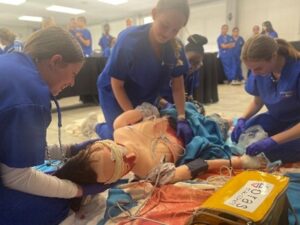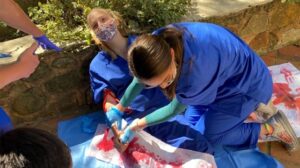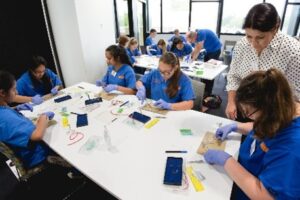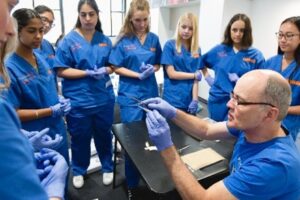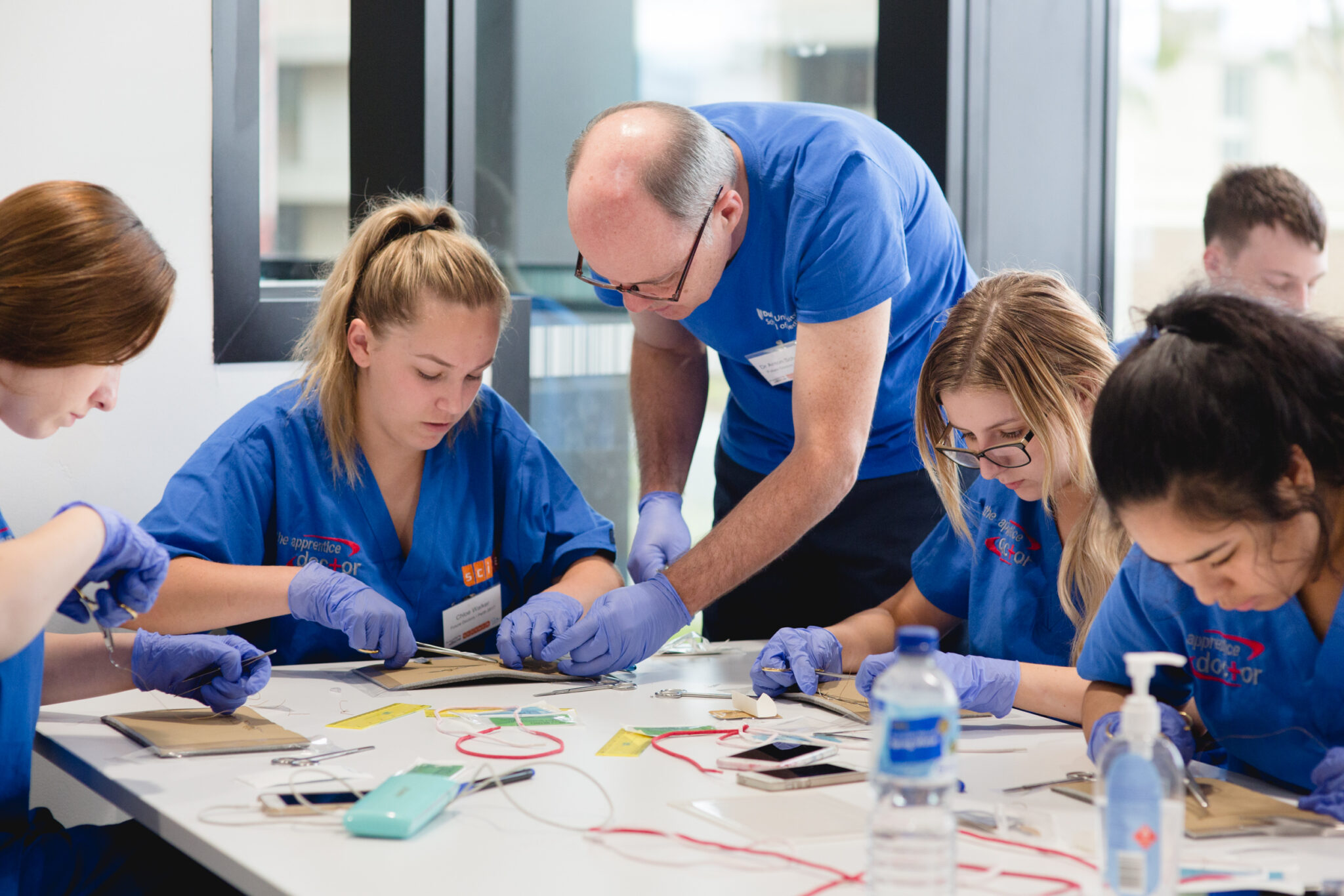
The Importance of Simulation Training in *Medicine

*The term “medicine” equally refers to “emergency medicine” and “surgery.”


1989: Reporting for duty!


As a Maxillofacial and Oral Surgery Registrar, I can remember as if yesterday the words of my senior registrar when I walked into the OR on my first day of training. Dr. Thomas Johnston said, “I am going to teach you surgery by SEE ONE – DO ONE – TEACH ONE”, and that is exactly what he did. The first week he operated and I assisted. The next week I operated and he guided me while assisting. Then, by the beginning of the next month, a new junior registrar entered the OR, which made me the senior registrar, and I explained to him how things are going to work: “I am going to teach you surgery by SEE ONE – DO ONE – TEACH ONE!”

This is, of course, the Apprentice Teaching Model, which has been used by barbers over the centuries, teaching their apprentice barbers the finer details of hairdressing, shaving, etc. This is also an indication of the roots of surgery – not in medicine – but in the barber industry during the European Middle Ages*.


*The “era of barber surgeons” generally refers to the period from the 12th to the 18th centuries in Europe, where barbers and surgeons were often the same individuals. They performed a range of tasks, from basic barbering (haircuts, shaves) to more complex medical procedures like bloodletting, wound treatment, and even tooth extraction. This combined role was common due to the lack of formalized medical training and the need for practical medical care, especially in less populated areas.


Starting a new venture in 2007


Let’s fast forward to 2007, and the educational scene for surgeons has changed dramatically!  It is also the year when The Apprentice Corporation was formally established.

Surgical training has now moved to primarily simulation training, instead of apprentice-style teaching. Yes, the surgical fraternity has learnt from the aviation industry. Pilots learn to fly and perfect their skills in a simulator. Only when they have perfected their skills and proved that they can handle a variety of emergencies will they be moved to the cockpit of an airplane, of course, under strict supervision and guidance by an experienced senior pilot.

Imagine getting into a large passenger plane and the pilot proudly announces, “Ladies and gentlemen, I have seen how to fly a plane a couple of times, and today I am going to fly this plane for the first time”. Surely, you will be looking for the closest exit door!


The rationale of simulation training

Memory

The three broad categories of human learning based on sensory perception are visual, auditory, and kinesthetic (or tactile/motor) learning. Most medical skills, including surgical skills, fall in the latter category: kinesthetic learning. One cannot learn these skills out of a handbook, and even virtual and augmented reality (while having a role to play) falls short of the goals of learning skills. Motor memory is something that musicians understand a lot better than most other people. Muscles, aided by the supplying motor nerves, will – through training – remember a sequence of functions, and eventually, it will become automated. The constant sensory feedback is of utmost importance.

Learning in a simulation environment takes advantage of kinesthetic learning. It allows the student to reach a certain level of proficiency before being allowed into the clinical setting, like in the ER or OR. It also offers the mentor (I intentionally use the term “mentor” instead of “teacher”) the opportunity to objectively assess the level of proficiency in mastering a particular skill that the student has reached. This gives both the student and the mentor an indication of readiness to begin working on actual patients.


The opportunity to make as many mistakes as you wish!


The simulation environment has another significant advantage: it is super-forgiving! It allows the student to make any number of mistakes on a simulator rather than on an actual patient.

I did my first wound suturing on a patient many years ago, and that was not ideal. Firstly, I was super nervous, and I am sure my patient perceived this. So, I did my best – but it was a far cry from the level of excellence that I wanted to offer my patient. Students should practice their suturing techniques repeatedly, reaching a high level of proficiency, before working on animal or human patients.


Automated response and automated roles


If I wake you up at 3 am and ask you the question: “How do you stop a bleed in an emergency scene?” You should immediately answer: “pressure, packing, tourniquet!” and then sleep further.

Why do one need to learn a relatively straightforward sequence of actions like those used in Cardio-Pulmonary Resuscitation (CPR) and Stop the Bleed (STB) in a simulation setting?

These types of emergencies may be common to the emergency medicine practitioner (EMT/Paramedicine/Emergency Room Physician and Trauma Surgeon). Still, for most other medical and Healthcare Professionals, these types of medical emergencies may never present themselves, or only a few times over a lifetime. To be prepared and to do the right things in the correct sequence, one needs to have automated the response. This only happens by repetition and actual simulation of the emergency in a simulation environment.

In a team setting, each team member also needs to know their specific role and the procedures to follow, and the order in which they should be done. I like to remind my students: Leadership is not taking over – it is ensuring each role player knows what to do and when to do it (and that includes you as the team leader).


Types of medical simulation


There are essentially three types of medical simulation applications:

  • Simulation using a basic simulator
  • Simulation using an advanced (intelligent/AI-enhanced) simulator
  • Simulate the scene using volunteers
 
A Suturing practice simulation pad An advanced trauma simulator (manikin) Simulate a mass-casualty scene using volunteers


My own experience: Apprentice Doctor® Events


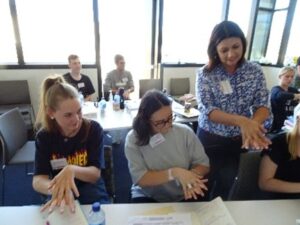
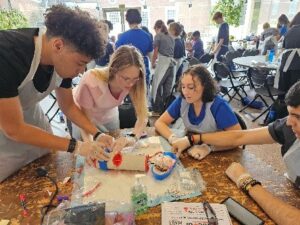
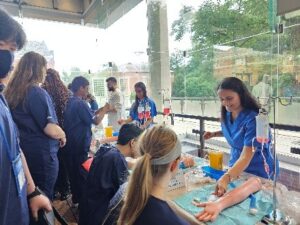
Since the establishment of the Apprentice Corporation in 2007, I have had the privilege of hosting dozens of Apprentice Doctor® Events all over the world. Whether in the US, Australia, South Africa, or Bulgaria, the experience has always been rewarding.

The sparkle in the eyes of a student when they hear their own heart sounds for the first time, or the brightening of their face when they master a complex suturing technique, are brain engram photos that will never be erased from my mind.

To see multitudes of attendees proclaim enthusiastically that they are now certain medicine is for them, or the occasional student who realizes the contrary to be true (I also find this a highly favorable outcome), has been an incredibly fulfilling journey. I am looking forward to see these programs replicated all over the world.

Dr. Anton Scheepers, The Apprentice Doctor®


Vision: The Apprentice Doctor® endeavors to be a positive influence in the lives of future medical professionals worldwide and to enthuse these aspiring medical professionals to reach their goals and dreams.

Mission: The Apprentice Doctor® aims to assist medical professionals globally, whether aspiring, in training, or practicing, with suitable medical and surgical simulation training resources and events.
 

I really want to become a Doctor – Is there anything I can do straight away?

Check out the Foundation Medical Course on Apprentice Doctor Academy.

Also, explore the Future Doctors Kit on Apprentice Doctor Kits.



Locum Tenens and Telemedicine: Flexible Career Options for Modern Doctors

The traditional medical career path is changing rapidly. After spending 15 years as an emergency medicine physician in Boston, Dr. Sarah Jeffries knew she needed a change. “I was burning out fast,” she admits. “The 12-hour shifts and constant pressure were taking a toll on my health and family life.” Her solution came from an unexpected conversation with a colleague who had embraced locum tenens work.

Today’s physicians increasingly reject the notion that success means a single practice for decades. Instead, doctors like Jeffries are crafting careers that adapt to their changing priorities, whether that’s raising children, pursuing research, or simply preventing burnout in a high-stress profession.

What Is Locum Tenens and Why Do Physicians Choose It?

Locum tenens—Latin for “placeholder”—offers physicians the opportunity to work temporary assignments ranging from weekend coverage to months-long positions. These roles fill critical staffing gaps for healthcare facilities while giving doctors unprecedented control over their schedules.

“My first locum assignment was covering a two-week vacation for a rural clinic doctor in Maine,” says Dr. Michael Chen, a family practitioner who transitioned to full-time locum work three years ago. “I was hooked immediately. The paperwork was minimal, the patients were grateful, and I made more in those two weeks than I would have in a month at my previous practice.”

The financial benefits can be substantial. Locum physicians typically earn 30-50% more than their permanent counterparts, with agencies often covering malpractice insurance, travel expenses, and housing. This arrangement allows doctors to work intensively for periods, then take extended breaks—something rarely possible in traditional settings.

But challenges exist. Dr. James Wilson, who alternates between locum assignments and medical volunteer work abroad, notes the professional isolation that can occur. “You’re always the new doctor, which means building relationships from scratch each time. It takes a certain personality to thrive without a consistent team.”

Telemedicine: Medicine’s Digital Frontier

While Dr. Wilson was adapting to life as a locum physician, Dr. Elena Rodriguez was pioneering another flexible approach—building a telemedicine practice specializing in dermatology.

“I started seeing virtual patients one day a week while maintaining my brick-and-mortar practice,” Rodriguez explains. “Within six months, my telemedicine patient load had grown enough that I could reduce my in-office days to three weekly. My commute went from 45 minutes each way to the fifteen steps to my home office.”

The COVID-19 pandemic transformed telemedicine from a convenient option to an essential service almost overnight. For many specialists, remote consultation proved surprisingly effective for conditions ranging from mental health to post-surgical follow-ups. Chronic disease management, in particular, has benefited from the consistent touchpoints telemedicine enables.

Psychiatrist Dr. Robert Thomas found that his therapy patients actually preferred virtual sessions. “The comfort of their own environment seems to encourage openness,” he observes. “And for patients with anxiety disorders, eliminating the stress of traveling to appointments removed a significant barrier to care.”

The technology learning curve can be steep, especially for mid-career physicians. Dr. Margaret Walsh, an internist with 22 years of experience, initially resisted telemedicine. “I was convinced I couldn’t properly evaluate patients without a physical exam,” she recalls. “But necessity forced me to adapt during the pandemic, and I’ve been surprised by how much can be accomplished virtually. The key was finding the right balance—knowing when a patient needs to be seen in person versus when a video visit will suffice.”

Creating a Hybrid Career: Combining Approaches

Increasingly, physicians are blending these approaches. Dr. Kevin Patel works three months annually as a locum hospitalist in Alaska, provides telemedicine consultations three days weekly from his Arizona home, and spends the remainder of his time conducting clinical research.

“This combination gives me everything I want,” Patel says. “The intense, hands-on hospital work keeps my clinical skills sharp. Telemedicine lets me maintain patient relationships without geographic limitations. And my research satisfies my academic interests while advancing my specialty.”

This career mashup isn’t without complications. Multi-state licensing remains cumbersome despite recent interstate compacts designed to streamline the process. Technology failures can disrupt telemedicine sessions, particularly in rural areas where physicians are most needed. And the irregular income patterns of locum work require disciplined financial planning.

Making Flexible Medicine Work: Practical Advice

Physicians who’ve successfully navigated these waters offer consistent advice for colleagues considering the transition:

Dr. Lisa Huang, who coordinates rural telemedicine outreach while taking quarterly locum assignments, emphasizes relationship-building. “I maintain contact with three reliable recruiting agencies rather than jumping at every offer. They know my preferences and schedule, which means less time sorting through mismatched opportunities.”

For telemedicine practitioners, technical preparation proves essential. “Invest in reliable internet with a backup option, quality audio equipment, and good lighting,” advises Dr. Thomas. “Patients quickly lose confidence if they can’t see or hear you clearly.”

Financial planner Jessica Martinez, who specializes in physician finances, recommends creating a six-month expense cushion before transitioning to variable income models. “Locum work can be seasonal, with more opportunities during summer vacation periods and fewer around holidays. Planning for these fluctuations prevents panic decisions.”

Many successful physicians maintain credentials at a “home base” facility, working minimal shifts to preserve benefits while pursuing external opportunities. This approach provides security during transitions and keeps doors open for future changes.

The Future of Flexible Medicine

As healthcare systems struggle with physician shortages and burnout, administrative attitudes toward flexible work arrangements are evolving. Dr. William Foster, chief medical officer at Regional Health Network, has embraced hybrid staffing models. “We’ve found that physicians who work locum assignments or split time with telemedicine actually bring fresh perspectives and renewed energy to our permanent team.”

Medical schools are beginning to acknowledge these career paths, too. Dr. Jennifer Adams, who directs physician career development at Eastern Medical University, notes increasing student interest in non-traditional trajectories. “We’re incorporating telemedicine training and locum tenens education into our career counselling. Today’s medical students expect optionality in their careers.”

For physicians seeking to break free from conventional practice without abandoning medicine altogether, locum tenens and telemedicine represent viable paths forward. As Dr. Jeffries reflects on her career transformation: “Medicine is still my calling, but now it’s on my terms. That makes all the difference in the world.”

I really want to become a Doctor – Is there anything I can do straight away?

Check out the Human Behavior in Medicine: Foundations for Future Physicians on Apprentice Doctor Academy.


Using Engineering in Surgery

robotics, stretchable electronics, surgical gloves, medical engineers

Becoming a Surgeon and An Engineer

Article at a Glance

The blending of surgery and engineering isn’t unheard of, although rare. But it’s clear that engineers and surgeons are working together to make miraculous progress in the field of medicine. These advances are making surgeries shorter with less risk to patients.

This article gives you a snapshot of a few engineering advances making positive changes in surgical procedures:

Stretchable electronics.
Electronic surgical gloves and finger sleeves.
Needlescopic surgery.
Robotic surgery.

If you are interested in becoming a medical engineer, you’ll also find information on that fast-growing career.


Becoming a surgeon and an engineer so that they blend into a single career is an interesting proposition. The advantages seem clear, but the concept isn’t straightforward. Being a surgeon can enhance medical engineering research and surgical advances. The critical thinking and problem solving skills of an engineer are similar to those needed by a surgeon. Although years of education are required to secure both degrees, the knowledge of one can complement the knowledge of the other. I’m aware of one doctor who holds a degree in electrical engineering as well as in otolaryngology, neurological surgery and urologic surgery.

If you have ever considered a dual title such as medical-surgical engineering, you’ll have to know as much about medicine and medical practice as you will about electronics, biomedical technology and chemical engineering.

When surgeons and engineers work cooperatively, yet independently, here is a snapshot of what they’ve been able to accomplish.

Types of Engineering Technology Used in Surgery

Stretchable Electronics

What they are: Although stretchable electronics can be used in a variety of industries, in the medical industry they perform like adhesive bandages. They can bend, stretch and otherwise mold themselves around multiple surfaces. The sensors embedded in them can send data from the human body back to the surgeon or other healthcare professional.

The initial challenge: To develop “stretchy electronics” so a single surgical instrument could be used in open heart surgery instead of three, reducing the risk to the patient. During open-heart surgery, surgeons often have to utilize multiple balloon catheters with different functions. Because they all have to be inserted sequentially, surgeries are long, complicated and sometimes painful. The longer the surgery, the higher the risk to the patient. Currently three different devices have to be used. The first maps the heart’s signals so the problem area can be identified. The second one controls the positions of therapeutic actuators and their contact with the epicardium. The third is used to burn away damaged tissue.

The initial solution: Development of a multifunctional balloon catheter that stretches up to 300%, inflating or deflating as needed in the surgical procedure. It operates reliably without any changes in properties.

Advantages/Applications:

  • Delivery of high-quality information such as temperature and blood flow to surgeons in real time.
  • Neuroscience research.
  • Performs corrections on heart tissue during surgery through the use of radio signals to heat and kill cells.
  • Physical rehabilitation.
  • Preemie monitoring.
  • Provides fast, high-resolution mapping.
  • Quickly diagnoses and treats the causes of irregular heartbeats.
  • Spinal surgery.
  • Sun exposure monitoring

Future Adaptations:

  • Biodegradable implants to monitor cranial pressure and temperature.
  • Collection of bodily fluids to monitor electrolytes and glucose levels.
  • Monitor the risk of asthma attacks in the lungs.
  • Monitor the stretch and flow of bladder functions.
  • Real-time mapping of electrical activity in the brain during epileptic seizures.

Electronic Surgical Gloves and Finger Sleeves

stretchable electronics
Image: John Rogers/University of Illinois

What they are: Similar to stretchable electronics, semiconductors embedded in soft, flexible surgical gloves allow cardiac surgeons to feel everything they do with their fingertips.

The initial challenge: Reduce the size of current technology, which is large and bulky. There was a need for a simple technology that could measure the stress and strains during surgery through the fingertip(s). With electrotactile simulation surgeons could monitor and detect medical information from the skin.

The initial solution: Integration of ultra-thin and stretchable silicon-based electronics and sensors with artificial skin that can be slipped on hands or fingertips.

Advantages/Applications:

  • Performs ultrasound imaging of tissue upon touch.
  • Performs surgery by heat-induced local ablation.
  • Precisely removes tissue using local ablation.
  • Relays information such as temperature, conductivity, etc. to the skin.
  • Senses the electrical properties of tissue.

Future Adaptations:

  • Application of sensors to flexible surfaces to provide a sense of touch to prosthetic limbs.
  • Measuring motion and temperature.
  • Softer robotic interactions with surroundings.
  • Wrapping the surface of the heart with sensors to diagnose and treat cardiac arrhythmia.

Needlescopic Surgery

What it is: Minimally invasive, needlescopic surgery uses instruments with a diameter 10,000 times thinner than a strand of hair. The incisions can be sealed with surgical tape. Scars are small if they exist at all.

The initial challenge: Reduce the invasiveness of surgeries through the use of needle-sized instruments that current robotic technologies can’t accomplish.

The initial solution: Provide needlescopic surgical instruments that possess more dexterity, thereby broadening potential applications.

Advantages/Applications:

  • Laparoscopic surgery.
  • Less postoperative pain.
  • Minimally invasive surgeries in small areas such as the ears, nose and throat.
  • Shorter hospital stays.
  • Transnasal brain surgery.

Future adaptations:

  • Currently very few surgeons in the world use needlescopic surgery. As more surgeons incorporate it into their practices, future adaptations can be better identified.

Robotic Surgery

What it is: Robotic surgery is another type of minimally invasive surgery. Through the use of miniaturized surgical instruments mounted on one of four robotic arms, it allows surgeons a maximum range of motion and precision.

The initial challenge: Provide surgeons a way to perform complex procedures with more precision, flexibility and control than is possible with conventional techniques.

The initial solution: The creation of a robotic surgical system controlled by surgeons at a computer console near the operating table. The two most well-known systems are the da Vinci and Zeus.

Advantages/Applications:

robotic surgery
Robotic surgical system on a test medical stand
  • Clearer visual field.
  • Fewer complications, such as surgical site infection.
  • Greater flexibility and precision during surgery.
  • Increased mobility without tremors.
  • Less pain and blood loss.
  • Perform surgeries previously too high risk with current techniques.
  • Quicker recovery.
  • Smaller incisions and scarring.

Future Adaptations:

  • Expanded opportunities for teaching and assessment of new surgeons.
  • Integration of new and current technologies used in surgical procedures.
  • Long-distance intraoperative consultation or guidance.
  • Preoperative and intraoperative video image fusion to better guide surgeons in dissection and identifying pathology.
  • Rehearsal of complex procedures before performing them on patients.

Medical Engineers

Blending engineering and surgery into one role is possible, but takes many, many years of schooling. As an alternative, if you want to work in medicine with an engineering degree, you may be interested in becoming a Medical Engineer.

Medical engineers apply engineering principles from technical sources to solve clinical problems. As you have read in this article, they have created medical products that combine anatomy and physiology with technology. The result is higher quality healthcare for surgical patients. Future research shows similar advances in all areas of medicine.

As a medical engineer, you can go in any number of directions. Research, development and quality assurance represent only three areas. The development and evaluation of medical devices is another. You can help hospitals and medical clinics with the latest purchases in biomedical technology by evaluating their needs against what’s available. You can also specialize in nanotechnology, stem cell research, or other areas of cutting-edge medicine. The avenues that combine healthcare with electronics are expanding all the time.

To be successful in the field of medical engineering, you must be able to give attention to detail, creatively solve problems, and apply analytical thinking. Because you’ll be working with others, you must be able to easily integrate yourself into a team by expressing ideas and listening to others. More often than not you will have to be a leader.

To enter this field you must obtain a bachelor’s degree in engineering, physics or related program. You will need to go on to graduate with a master’s or Ph.D. in medical engineering.

Would you like to start learning surgical skills today? You can!

Would you like to develop the skills used by a surgeon or medical engineer? There’s no need to wait until you get into a post-secondary or graduate program. You can begin right now.

The Apprentice Doctor® Academy has developed and perfected an Online Course for Future Doctors to assist them towards fulfilling their dreams of becoming great medical professionals. The For Future Doctors Foundation Medical Online Course with accompanying Medical Kit has helped launch the career of thousands of want-to-be doctors!

The Apprentice Doctor® Phlebotomy Course and Kit is a resource that will teach you how to confidently perform phlebotomy procedures in a couple of hours! If you want to perfect that skill, why not learn how to perform venipuncture procedures now?

The Apprentice Doctor® Suturing Course and Kit is a resource that will teach you how to suture wounds in a couple of hours! If you think may be drawn to direct-patient care, why not perfect suturing techniques now?

If you’d like information about becoming a surgeon, you may be interested in the following articles:

How to Become a Medical Doctor in the United States.
How to Become a Cardiothoracic Surgeon.
What’s the Difference Between a Neurologist and a Neurosurgeon?

______________________

References
Kim D.-H. et al. Nature Materials advance online publication doi:10.1038/NMAT2971 (2011).
Borghino, D. Electronic Fingertips could lead to smart surgical gloves (2014).
Robotic Surgery Center. What is Robotic Surgery?
Anthony R. Lanfranco, BAS, Andres E. Castellanos, MD, Jaydev P. Desai, PhD, and William C. Meyers, MD Robotic Surgery, A Current Perspective.

I really want to become a Doctor – Is there anything I can do straight away?

Check out the Orthopedic Fracture Reduction on Apprentice Doctor Academy.

Also, explore the Orthopedic Practice Kit on Apprentice Doctor Kits.


Value-Based Medicine: healthcare’s future


Story-at-a-glance

  • Value-based medicine is an upcoming healthcare delivery system centered on the patient, and patient outcomes.
  • The goals, gender, age, and even culture of the individual are taken into account.
  • Volume-based care, our current system of fee for services rendered, will be replaced over time.
  • Five factors drive value-based medicine. A primary one is the demand by patients to be more involved in the decisions affecting their health and wellness.
  • It’s expected that value-based care will result in better healthcare at lower costs.
  • The shift to value-based medicine has already started. For example, by 2018 the Department of Health and Human services plans on moving 50% of traditional Medicare payments to value-based models.
  • Implementation of value-based care will require a shift in how we think about and approach healthcare.


Value-based medicine is changing the landscape of the healthcare delivery system. It focuses on the goals of the patient and their perception of the value of care they receive. Payment to providers is based on how well they adhere to delivering value to the patient. As value-based healthcare takes root, medical professionals will be expected to provide evidence of outcomes before being paid.

Why change to value-based medicine?

In the United States and in many countries across the world, the value of the healthcare delivery system is proving inadequate to meets the needs of its primary constituency – the patients. This inadequacy is not malicious or intentional. Instead, it’s because over time, layers and layers of outdated systems have lagged behind trends and an ever-growing population. Even obsolete technology plays a factor. The result is skyrocketing costs for patients, healthcare professionals and medical organizations.

Currently, we operate in a volume-based healthcare system. In other words, we pay for individual services. For every visit, test, medication, and treatment we receive, we are charged. It is a reactive system centered on illness rather than wellness. Little attention is paid to outcome measures. Payment is made regardless of how the patient perceives or experiences the outcome.

What does volume-based healthcare look like? A case study

Let’s review an actual case study. In 2017 Sally went to her primary care physician for her annual physical. The sequence of events that followed was not only expensive, but kept her on the sidelines.

After a panel of blood work, Sally’s physician was concerned about a sluggish thyroid. To rule it out, or confirm it, he referred her to an endocrinologist.

The endocrinologist reviewed Sally’s blood work and dismissed the thyroid condition. But he noted she had low salt, something Sally had lived with her entire life without negative impact. The endocrinologist believed one of her medications was the cause. Over the next 21 days he switched her prescription three times. Over the same period of time the symptoms the original medication controlled all returned.

The continued changes in medication overloaded Sally’s body and landed her in the hospital for a 24-hour stay. When she was released, the hospital doctor put her back on her original pharmaceutical with the following advice, “Don’t fix what isn’t broken.”

From start to finish, Sally waded through 19 different services and seven different care providers. None of the medical professionals in Sally’s case intended the ineffective outcome. Each believed they were doing what was best for Sally. The real culprit was the disjointed care. No one person knew what the other was doing and Sally trusted that each step was necessary.

If the professionals had interacted with one another, Sally’s $10,000 hospital stay might have been avoided. Multiply that cost by thousands of people across the health care system experiencing the same type of disconnected care and you’ll end up with a staggering number. That’s the cost of volume-based case. In other words, each additional service anyone receives from allied health professions increases the amount, or volume of care, and the price tag.

Sally is not alone. The core of the healthcare delivery structure is not negligence. It is working within, and navigating a broken system built on lack of coordinated, patient-centered care.

How does value-based medicine differ from volume-based medicine?

Let’s continue with Sally’s scenario. In value-based care, Sally would have gone to her physical and had the lab work done. She may have been referred to an endocrinologist. However, at that point rather than paying for each service separately, Sally may have been quoted a bundled or an episode-payment. This is an all-inclusive reimbursement model where the initial visit, the services, and any subsequent visits would have been one fee. Complications resulting from a decision to switch out her medications three times would have been absorbed by him – not Sally and her insurance company.

Let’s take a look at a more straightforward scenario. If an orthopedic surgeon determines a patient needs a knee replacement, in value-based medicine, a single fee for all the services associated with the knee replacement is quoted to the patient. The cost pays for the surgery, the pre- and post-operative visits, the physical therapy, hospital stay, tests, etc. If something happens and the patient has to be readmitted (within a specific and reasonable length of time), the additional cost is on the provider – not on the patient. Payment is not based on each service, but instead upon ensuring the patient is well and returned to the best state of health possible. The health of the individual is the evidence-based outcome measure, which has high value, especially to the patient. The individual gets the best health care at the lowest cost. When the focus is on the individual and their needs rather than on multiple services, patient satisfaction increases and outcomes improve. Costs decrease.

The shift to value-based medicine is driving both public and private payers to redesign payment models. There are several options under review, but all stress accountability for high quality care and lower healthcare costs.

The Boston Consulting Group created an engaging, five-minute video presenting what healthcare looks like now and compares it to the value-based care of the future. Take a look here: Value in Healthcare – A Case for Change.

What is driving value-based medicine?

Five factors are contributing to the shift into value-based medicine.

  • Advocacy – Patients want to be more involved in managing their healthcare. Healthcare specialists must take time to listen to their patients and respond to them with all the information available.
  • Demographics – There is an increase in the number of people 65 and older (baby boomers) who need healthcare.
  • Diseases – An increase in chronic diseases and conditions around the world requires better delivery of healthcare.
  • Resources – Lack of resources, or inadequate resources drive up costs while pressure is applied to keep them down. Overall there is a shortage of skills and healthcare staff such as nurses.
  • Trust – Currently patients trust their healthcare professionals less and less. Fewer and fewer patients are willing to follow instructions blindly. As adults, and the ones footing some of the bills, they want rationale.

What does value-based medicine mean for patients?value-based medicine patient focus

Although no system is perfect, the current system can improve. Value-based healthcare is seen as a step in the right direction. A more patient-centric approach will result in:

  • Better healthcare for you and your family.
  • Clear and more transparent communication with you.
  • Closer attention to you as an individual. Consideration is given to your culture, gender and age. Healthcare is no longer one-size-fits-all.
  • Focused insistence on proper nutrition. Better nutrition leads to healthier lifestyles, generating improved health outcomes.
  • Healthcare teams managed by coordinators. You’ll no longer have to coordinate everything yourself.
  • Lower costs for everyone.
  • Partnerships between you and your healthcare provider(s).
  • Technology that connects your medical records with other allied health professions involved in your care.

Can value-based care be delivered in a volume-based system?

Medical professionals, and patients, can achieve a measure of value-based care in today’s service-rich system. High-value care can be delivered without fixing the entire system.

For physicians, focusing on the patient requires thoughtful intention. Although there are many ways a patient-centered approach can be accomplished, here are three.

  1. Include the patient in the standard of care – Involve the individual in decisions. Listen to what she or he has to say. Take into consideration gender, culture, and even personal preferences.
  2. Coordinate medical services centrally – Help patients navigate the system by assisting them with the coordination of multiple services and care providers. An integrated effort facilitated by someone in the medical system improves the quality of care. It also may return patients to the best level of health possible in less time.
  3. Be transparent – Many times patients feel they don’t have all the information. Provide honest, clear communication on their status, progress, and prognosis. Promote prevention when possible.

Thoughtful intention is also required by patients. Here are four ways individuals can help.

  1. Be ready with your questions – Be specific when possible.
  2. Ensure you have your answers – Leaving a doctor’s office without them creates unnecessary frustration and may result in additional visits.
  3. Move on with your day – Once you know your next steps, it’s important to exit. It may be tempting to socialize, but you’re partnering with your doctor in a professional capacity, not as a close friend.
  4. Follow through – Embrace wellness by following through with medical advice and recommendations. You’ll feel better and may need to see a medical professional less.

Value-based medicine is a partnership. Physicians and patients have to work together as a team toward the common goal of better outcomes. With better outcomes, everyone wins.

value-based medicine patient outcomeWhat does value-based medicine mean for next-generation doctors?

Value-based medicine will change the future of healthcare. It is likely that future doctors will work in some kind of value-based medical system. For example, by 2018 the Department of Health and Human Services plans to move 50% of traditional Medicare payments to value-based models.[1] By 2020 Aetna plans on having more than 75% of their reimbursements going to doctors and hospitals practicing value-based care [2]. Even medical education will train both students and faculty in quality and safety improvements as well as the broader implications of value-based medical management. Future doctors will need to:

  • Act with the highest levels of integrity, keeping the patient in the picture.
  • Communicate with transparency to the patient and the patient’s family.
  • Embrace the use of technology and analytics.
  • Encourage innovation and keep striving for it.
  • Expect higher levels of accountability for outcomes. Doctors will sign off on results rather than number of services.
  • Form improved and more effective partnerships between the public and private sectors. Consider retailers, and financial and IT organizations as viable healthcare partners.
  • Improve upon the value, cost and quality of healthcare.
  • Lead cross-disciplinary teams.
  • Promote wellness and prevention, including a stronger focus on nutrition as prevention.
  • Seek additional education to keep up with skills, technology and other advances in medicine.
  • Try new ideas.
  • View continued education as a way to genuinely improve skills rather than CEU boxes to be checked.

To see how an IT entrant into the field of medicine is approaching value-based healthcare through technology, take a look at Forward in Silicon Valley. The levels of individual, patient-centric care they achieve through the use of high tech may surprise you.

Where does value-based medicine go from here?

Value-based care is not bad news. It merely means that the primary focus of healthcare shifts to high quality and wellness care, including prevention, rather than illness. It also redefines the use of medical technology outside hospitals. Acceptance of new players into the healthcare field is a must.

Perhaps the first step and one today’s doctors can take immediately includes gaining the cooperation of the patient. By establishing bona fide partnerships with each individual in their care, physicians can improve what is now fading trust. Trust is one of the primary pillars of strong healthcare values.

If you’d like to see how a hospital organization transformed their system from volume-based care into value-based care, take a look at what Sweden’s Karolinska University Hospital did. Karolinska’s New Operating Model – Value-based care.

Do you want to become an allied health professional? But you don’t know if your current high school curriculum is preparing you, read Is Your High School Curriculum Preparing You for a Career in the Medical Field?

Can you begin your career to becoming a value-based medicine health professional today?

Indeed yes!

The Apprentice Doctor® Academy has developed and perfected an Online Course for Future Doctors to assist them towards fulfilling their dreams of becoming great medical professionals. The For Future Doctors Foundation Medical Online Course with accompanying Medical Kit has helped launch the career of thousands of want-to-be doctors!

Launch your medical career today!

The Apprentice Doctor® Suturing Course and Kit is a resource that will teach you How to Suture Wounds in a couple of hours! If you want to become a Surgeon or other medical professional – why not learn how to suture wounds now?


The Apprentice Doctor® Phlebotomy Course and Kit
is a resource that will teach you how to confidently perform phlebotomy procedures in a couple of hours! If you want to become a great medical professional – why not learn how to perform venipuncture procedures now?


The Apprentice Doctor’s Venipuncture Practice Arm
helps you gain the experience needed to become a Phlebotomist. The phlebotomy training simulation arm is perfect for phlebotomy instruction and student use for real hands-on learning with phlebotomy procedures.


_______________________
References:
[1] What are value-based programs? November 9, 2017 https://www.cms.gov/Medicare/Quality-Initiatives-Patient-Assessment-Instruments/Value-Based-Programs/Value-Based-Programs.html.

[2] Value-based care: A new, patient-centered approach to health care, October 11, 2017 https://news.aetna.com/2017/10/value-based-care-new-patient-centered-approach-health-care/.

I really want to become a Doctor – Is there anything I can do straight away?

Check out the Human Behavior in Medicine on Apprentice Doctor Academy.


IMPORTANT! A major website update has been made. Any issues, notify us instantly by pressing the "Quick Help" button and leaving a short description of what you experienced.