So, You Want to Become a Max Fax?

Before continuing, please note that this article contains very graphic images


Oral and Maxillofacial Surgery is a unique specialty that brings together medicine and dentistry. Its uniqueness in combining these fields makes it one of the most competitive and rewarding specialties that exist.

The extensive range of services provided by Oral and Maxillofacial Surgeons, as well as the drastic changes in the form and function of patients, makes it a very worthwhile career.

The length of training to become an OMFS varies from 10 to 14 years (including dental and medical schools), depending on the degrees awarded and the subspecialty training.

Like any other surgical residency, training in Oral and Maxillofacial Surgery is demanding. Night shifts and being on call at any hour of the day are major challenges.

A hierarchical structure is a crucial part of surgical training:

Level 1: Medical Student

Level 2: Intern

Level 3: Resident

Level 4: Fellow (optional)

Level 5: Attending Physician

This hierarchical structure brings another challenge to the residency. People who cannot handle negative feedback and a stressful environment might feel discouraged initially. So, candidates who enter the residency must bear in mind that the training is tough.

The hierarchical structure of training is not new in medicine. Medical education has historically been characterized by a master-apprentice relationship. Sir William Osler was the one who developed the idea of residency (specialty training) and the pyramidal structure it encompasses in the early 20th century at Johns Hopkins Hospital.

Also, for Oral and Maxillofacial Surgery, this system survives today in most teaching hospitals. As a junior resident, you are exposed to oral surgery, which includes teeth extractions and simple trauma cases. Being in charge of dental students and interns is also a duty of junior residents. Senior residents handle most of the complex tasks such as orthognathic surgery and major trauma cases. The seniors and so-called “attendings” are responsible for the clinical competence of juniors. Your responsibilities grow as you gain experience and earn seniority.

Being an operator in the operating room is the most satisfying thing you can imagine. Generally, during surgery, you can enter the psychological state called “flow”, in which a person performing some activity is fully immersed in a feeling of energized focus, full involvement, and enjoyment in the process of the activity. This creates a sensation that time is standing still, removing any feeling of fatigue which can occur when one is standing for hours performing an operation.

As a Maxillofacial and Oral Surgeon, no day is ever boring, and no two patients are alike. Working with people’s mouths while they are still conscious most of the time is tough. But as you get into the field and start gaining responsibilities along the way, the enjoyment grows exponentially, similar to the stress levels. As a unique surgical specialty, its scope of practice ranges from simple tooth extractions and implant surgery to head/neck cancer surgery with microvascular reconstructions. Sedative procedures—local and general anesthesia—are an essential part of the training in most countries.


Oral Surgery
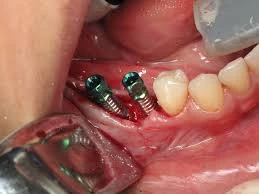

Wisdom Teeth Extraction is an oral surgical intervention where the surgeon removes teeth that cannot erupt properly. These are referred to as impacted teeth. Its complexity varies depending on the type of impaction.

Implant surgery is a straightforward surgical procedure designed to restore oral form and function following tooth extractions. Patients dissatisfied with their removable dentures can opt for fixed prostheses, with implants serving as replacements for their natural teeth.

Implants require a certain level of bone density to ensure they do not come loose. Patients with insufficient bone density for implant treatment may require advanced bone augmentation procedures, such as grafting and sinus floor elevation.


Maxillofacial Surgery

Graphic images below. Click to view
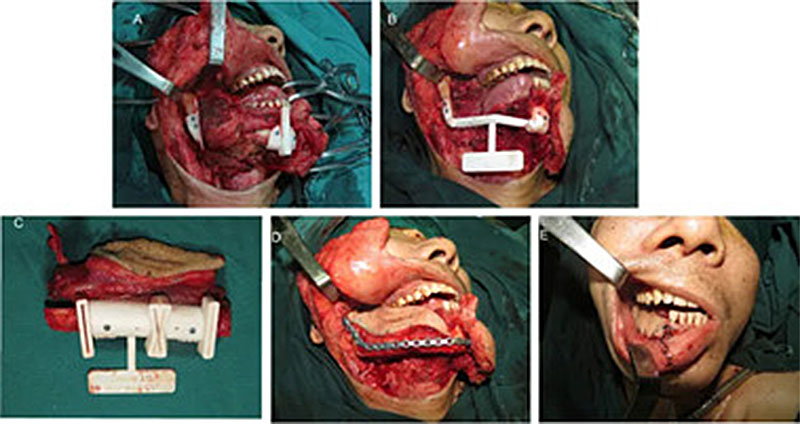
Maxillofacial and Oral Surgery

Mandibular reconstruction with a vascularized fibula flap (skin taken from the calf part of the leg) is a procedure to restore lost tissues after the removal of benign tumors and malignancies. This challenging surgery lasts between 4 to 10 hours, depending on the case’s complexity. Generally, a multidisciplinary approach is employed, involving an otolaryngologist and/or a plastic surgeon.

Surgeons who wish to advance their specialty may subspecialize in fields such as craniofacial surgery (cleft lip and palate restorations) and microvascular oncologic surgery (head and neck cancer surgery).

In cases of cleft lip and palate, patients and surgeons embark on a lengthy journey together. Patients undergo multiple surgeries throughout their lives. This path is both emotionally challenging and rewarding for the patients’ families and the surgeons.

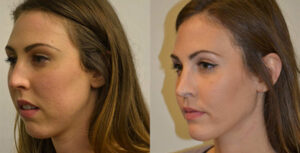
Orthognathic surgery is another area of interest within the specialty. This procedure includes jaw surgeries aimed at correcting congenital (present from birth) and acquired facial deformities. Patients experience significant improvements in their facial structure and respiratory pathways. After the surgery, patients not only gain increased confidence in their appearance but also enjoy improved functions such as chewing, swallowing, and breathing.
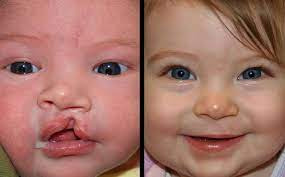
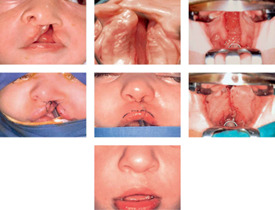
Cleft Lip and Palate Patients – Before and After

Orthognathic Surgery Patient – Before and After

In terms of compensation, OMFS ranks as the fifth highest-paying job according to usnews.com.

Private practice and academic surgery are the primary paths available for junior surgeons. In an office-based private practice, a surgeon might treat impacted wisdom teeth or perform bone grafts and dental implants. In a hospital setting, a surgeon might handle major cases like head, neck, or oral cancer, or perform cleft lip and palate surgery.

Furthermore, oral and maxillofacial surgeons working in hospitals often see patients who arrive at the emergency room with multi-system trauma.

Applicants aspiring to be the next generation of oral and maxillofacial surgeons must be enthusiastic about the field and committed to lifelong learning, as there are no boundaries to the science of OMFS. This pursuit requires considerable courage and sacrifice.
I really want to become a Doctor – Is there anything I can do straight away?

Check out the Orthopedic Fracture Reduction Course on Apprentice Doctor Academy.

Also, explore the Apprentice Doctor – Suture/Fracture Reduction Kits Bundle on Apprentice Doctor Kits.


What is Orthopedics? (Also: Orthopaedics)

What is Orthopedics?

Orthopedics is the medical specialty that focuses on the diagnosis and treatment of the musculoskeletal system. An Orthopedic Surgeon treats patients who suffer from disorders of the bones, joints, muscles and associated structures like ligaments, tendons, nerves, bones and skin. They diagnose and treat a wide range of bone and skeletal problems, from performing minor surgery like treating minor injuries e.g. a broken toe and the repair of a lacerated tendon to major surgery e.g. performing a knee replacement procedure and lumbar spine surgical procedures. Thanks to doctors specialized in this area of medicine, patients suffering from injuries and diseases of the musculo-skeletal system can be rehabilitated so they can move, work and lead an active life.

 Orthopedics icons

What do Orthopedic Surgeons do?

Orthopedic Surgeons endeavors to improve mobility by:

  • Examining, evaluating and diagnosing injuries or disorders of the musculoskeletal system.
  • Restoring patient’s strength and movement.
  • Developing and recommending treatment plans (including medication, exercise, and/or orthopedic surgery).
  • Tailoring physical therapy to each patient’s condition.
  • Informing people about the prevention of bone and joint injuries.
  • Contributing to patient’s rehabilitation.
  • Halting or slowing disease progression and taking steps to prevent/minimize complications.
  • Discussing treatment options with patients and helping them choose the best treatment plan to regain health, mobility, function and maximize independence.

Orthopedic Areas of Expertise

Orthopods can choose general orthopedics or may specialize in one or several areas, such as:

  • Spine Care – Treatment of back and neck pain, as well as all types of spine disorders.
  • Hand and Upper Extremity – Treats conditions affecting the hands, arms, elbows, wrists and shoulders due to injuries, trauma, arthritis or congenital malformations.
  • Toe, Foot and Ankle – Focuses on injuries or conditions including cartilage injuries, fractures, tendon ruptures, arthritis, osteoarthritis.
  • Joint Care and Replacement – Addresses patients suffering from degenerative joint diseases which can include hip or knee replacement and arthroscopy.
  • Trauma or Sports Medicine – Concerns the prevention, treatment and rehabilitation of sports injuries.
  • Pediatric Orthopedics – Provides diagnosis, nonsurgical and surgical care for newborns and children up to teenagers.
  • Physical Medicine and Rehabilitation – Restores the health and lost body functions following sports injuries, amputation, joint replacement or spinal disorders.
  • Orthopedic Oncology – Treats benign and malignant bone or soft-tissue tumors.

The Career Path of an Orthopedic Surgeon

Orthopedic surgeons have to keep up with the development of noninvasive diagnostic methods and advances in the treatment of musculoskeletal diseases and injuries. Mastery in this field is accomplished through extensive training, research and continuous improvement of orthopedic skills and knowledge. In general, Orthopods complete up to 14 years of formal medical education. According to the American Academy of Orthopaedic Surgeons (AAOS), this includes:

  • 4 years of college or university.
  • 4 years of medical school.
  • 5 years of orthopedic residency at an approved academic training hospital.
  • 1- 3 years of specialized education (optional).

Certified Orthopedic Surgeons are required to pass oral and written exams as well as practical and clinical evaluations, all of which are organized by The American Board of Orthopedic Surgery. If you’re not sure if becoming an orthopedic surgeon is the right field for you, an inexpensive orthopedic kit and course can help you find out before you invest a lot of time and financial resources.

Career Opportunities

Orthopods have the opportunity to work alongside other health care professionals by joining multidisciplinary teams that treat complex multi-system trauma (poly-trauma) cases. They can serve as team physicians and orthopedic consultants or provide highly specialized orthopedic care for professional or high school sports teams and Olympic athletes. Orthopedic doctors also play a crucial role in managing and delivering emergency care.

Learn Initial Orthopedic Skills today!

Get practical experience and insight into basic orthopedic surgical principles. Suture the surgical wound in layers. Practice various open and closed reduction methods. Practice at home or wherever you are.

Our kit provides illustrated examples of hands-on basic surgical skills and an orthopedic course with accompanying simulation kit. Use the orthopedic kit to complete the online future doctor’s orthopedic course! Gain dozens of basic surgical & orthopedic skills. The Future Doctors Academy Orthopedic Course and Fracture Reduction Kit are ideal for basic surgical skills workshops’ to train a wide variety of medical professionals.

With the kit, lay a solid foundation for these surgical skills:

  1. Basic surgical principles.
  2. Sterility and aseptic technique.
  3. Good lighting.
  4. Sharps safety.
  5. Scalpel holds.
  6. Incision
  7. Dissection and hemostasis.
  8. Wound closure in layers.
  9. Suturing and knot tying techniques.
  10. Wound dressing.
  11. Orthopedic principles.
  12. Reduction, fixation and immobilization.
  13. Casts, splints and slings.

I really want to become a Doctor – Is there anything I can do straight away?

Check out the Orthopedic Fracture Reduction on Apprentice Doctor Academy.

Also, explore the Orthopedic Practice Kit on Apprentice Doctor Kits.


IMPORTANT! A major website update has been made. Any issues, notify us instantly by pressing the "Quick Help" button and leaving a short description of what you experienced.