So, You Want to Become a Max Fax?

Before continuing, please note that this article contains very graphic images


Oral and Maxillofacial Surgery is a unique specialty that brings together medicine and dentistry. Its uniqueness in combining these fields makes it one of the most competitive and rewarding specialties that exist.

The extensive range of services provided by Oral and Maxillofacial Surgeons, as well as the drastic changes in the form and function of patients, makes it a very worthwhile career.

The length of training to become an OMFS varies from 10 to 14 years (including dental and medical schools), depending on the degrees awarded and the subspecialty training.

Like any other surgical residency, training in Oral and Maxillofacial Surgery is demanding. Night shifts and being on call at any hour of the day are major challenges.

A hierarchical structure is a crucial part of surgical training:

Level 1: Medical Student

Level 2: Intern

Level 3: Resident

Level 4: Fellow (optional)

Level 5: Attending Physician

This hierarchical structure brings another challenge to the residency. People who cannot handle negative feedback and a stressful environment might feel discouraged initially. So, candidates who enter the residency must bear in mind that the training is tough.

The hierarchical structure of training is not new in medicine. Medical education has historically been characterized by a master-apprentice relationship. Sir William Osler was the one who developed the idea of residency (specialty training) and the pyramidal structure it encompasses in the early 20th century at Johns Hopkins Hospital.

Also, for Oral and Maxillofacial Surgery, this system survives today in most teaching hospitals. As a junior resident, you are exposed to oral surgery, which includes teeth extractions and simple trauma cases. Being in charge of dental students and interns is also a duty of junior residents. Senior residents handle most of the complex tasks such as orthognathic surgery and major trauma cases. The seniors and so-called “attendings” are responsible for the clinical competence of juniors. Your responsibilities grow as you gain experience and earn seniority.

Being an operator in the operating room is the most satisfying thing you can imagine. Generally, during surgery, you can enter the psychological state called “flow”, in which a person performing some activity is fully immersed in a feeling of energized focus, full involvement, and enjoyment in the process of the activity. This creates a sensation that time is standing still, removing any feeling of fatigue which can occur when one is standing for hours performing an operation.

As a Maxillofacial and Oral Surgeon, no day is ever boring, and no two patients are alike. Working with people’s mouths while they are still conscious most of the time is tough. But as you get into the field and start gaining responsibilities along the way, the enjoyment grows exponentially, similar to the stress levels. As a unique surgical specialty, its scope of practice ranges from simple tooth extractions and implant surgery to head/neck cancer surgery with microvascular reconstructions. Sedative procedures—local and general anesthesia—are an essential part of the training in most countries.


Oral Surgery
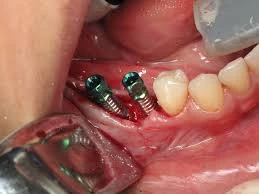

Wisdom Teeth Extraction is an oral surgical intervention where the surgeon removes teeth that cannot erupt properly. These are referred to as impacted teeth. Its complexity varies depending on the type of impaction.

Implant surgery is a straightforward surgical procedure designed to restore oral form and function following tooth extractions. Patients dissatisfied with their removable dentures can opt for fixed prostheses, with implants serving as replacements for their natural teeth.

Implants require a certain level of bone density to ensure they do not come loose. Patients with insufficient bone density for implant treatment may require advanced bone augmentation procedures, such as grafting and sinus floor elevation.


Maxillofacial Surgery

Graphic images below. Click to view
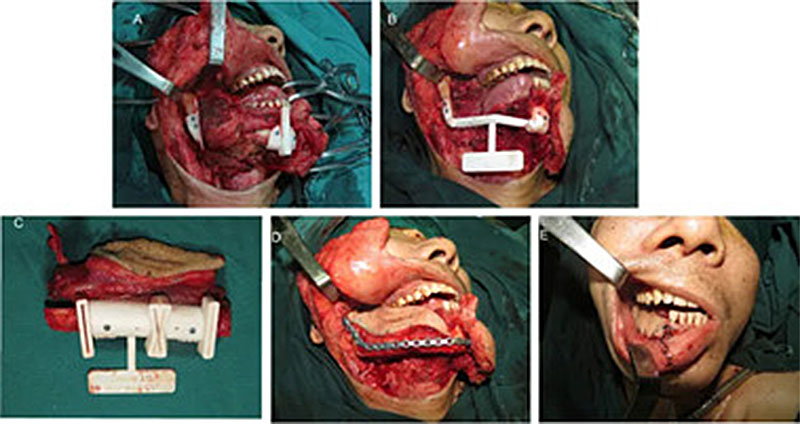
Maxillofacial and Oral Surgery

Mandibular reconstruction with a vascularized fibula flap (skin taken from the calf part of the leg) is a procedure to restore lost tissues after the removal of benign tumors and malignancies. This challenging surgery lasts between 4 to 10 hours, depending on the case’s complexity. Generally, a multidisciplinary approach is employed, involving an otolaryngologist and/or a plastic surgeon.

Surgeons who wish to advance their specialty may subspecialize in fields such as craniofacial surgery (cleft lip and palate restorations) and microvascular oncologic surgery (head and neck cancer surgery).

In cases of cleft lip and palate, patients and surgeons embark on a lengthy journey together. Patients undergo multiple surgeries throughout their lives. This path is both emotionally challenging and rewarding for the patients’ families and the surgeons.

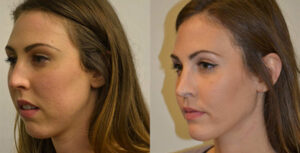
Orthognathic surgery is another area of interest within the specialty. This procedure includes jaw surgeries aimed at correcting congenital (present from birth) and acquired facial deformities. Patients experience significant improvements in their facial structure and respiratory pathways. After the surgery, patients not only gain increased confidence in their appearance but also enjoy improved functions such as chewing, swallowing, and breathing.
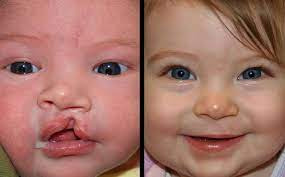
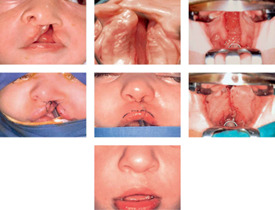
Cleft Lip and Palate Patients – Before and After

Orthognathic Surgery Patient – Before and After

In terms of compensation, OMFS ranks as the fifth highest-paying job according to usnews.com.

Private practice and academic surgery are the primary paths available for junior surgeons. In an office-based private practice, a surgeon might treat impacted wisdom teeth or perform bone grafts and dental implants. In a hospital setting, a surgeon might handle major cases like head, neck, or oral cancer, or perform cleft lip and palate surgery.

Furthermore, oral and maxillofacial surgeons working in hospitals often see patients who arrive at the emergency room with multi-system trauma.

Applicants aspiring to be the next generation of oral and maxillofacial surgeons must be enthusiastic about the field and committed to lifelong learning, as there are no boundaries to the science of OMFS. This pursuit requires considerable courage and sacrifice.
I really want to become a Doctor – Is there anything I can do straight away?

Check out the Orthopedic Fracture Reduction Course on Apprentice Doctor Academy.

Also, explore the Apprentice Doctor – Suture/Fracture Reduction Kits Bundle on Apprentice Doctor Kits.


How to Become a Dentist

What is a Dentist?

A dentist can be described as a super medical specialist dedicated to the care of the teeth, mouth, jaws and surrounding organs. They have studied the physiological and disease processes affecting structures in this region, and they understand the principles of diagnosis and the management of diseases and abnormalities affecting teeth, gums and surrounding structures and uses cutting edge (pun intended!) technology to treat these conditions.

How to become a dentist

How can I become a dentist?

If you are still in high school, it is essential that you excel in following subjects:

  • Mathematics
  • Science (physics and chemistry)
  • Biology

Additional optional subjects to study:

  • Psychology.
  • A business subject
  • Communication
  • Art

Prepare and submit an application to the dental school of your choice. Remember that it is advisable to forward an application to a number of dental schools at the same time, so make sure to pick out more than one that you would be keen on studying at. In some countries there are dedicated organizations who can assist you with this task.

Studies at college/university:

Depending on the state/country you live in, you might need a predental science degree followed by a dental degree. Some dental schools combine these two degrees in one single degree.

What are the attributes that I need to become a dentist?

First of all, you will need a strong desire to become a dentist.
This may sound silly to you, but this is very important. Do not pursue dentistry as a career if you are in any way unsure about your decision.

Here is a list of some attributes and their explanations:

  • Perseverance.
    Embarking on a career that will require formal studies of 6 years or longer will strengthen your ability to persevere.
  • The ability to work under pressure and within strict time constraints produced by appointment time limits.
  • The ability to work as a member of a dental healthcare team.
  • The ability to work for long hours continuously.
  • The ability to keep your concentration for extended periods of time.
  • A fair amount of physical dexterity.
    Dexterity is an acquired skill – although only to a certain extent. If you have 5 thumbs on each hand, do not hope to become a prosthodontist (a specialist restorative dentist)!
  • You need to like working with your MIND and your HANDS.
  • You need to like working with people.
  • You should be both an artistic and practical individual.
  • Intelligence.
    If you really struggle with your studies despite putting in effort daily, you may benefit from submitting yourself for psychological assessment to ascertain if you have the intellectual ability to become a doctor or a dentist.

The History of Dentistry

Egyptians(3000 B.C.)

The first known dentist was an Egyptian named Hesi-Re. He was a physician and the chief “toothist” to the Pharaohs.

Hippocrates (500 B.C.)

The father of modern medicine also appreciated the importance of teeth. He accurately described the technique for reducing a fracture of the jaw and how to relocate a dislocated mandible. Hippocrates accurately described extraction forceps in one of his books, and devoted a complete chapter to teeth. He stated that figs and soft sweets produce putrefaction (decay).
Barber-surgeons (±1200-1745 A.D.)

The Barber-Surgeons practiced dentistry – mainly tooth extractions during the Middle Ages – often plying their trade in public squares.

Dentistry a discipline in its own right (±1700-1900)

By the early 1700’s, dentistry was still considered a lesser part of medicine but by the end of this century it had begun to emerge as a discipline in its own right, probably due to the work and writings of the dental surgeon Pierre Fauchard.

The pain associated with dentistry remained one of the most important factors delaying progress in dentistry. It therefore comes as no surprise that dentists figure prominently in the development of local and general anesthesia. Dr. Horace Wells, a young conscientious dentist, is credited for the discovery of practical anesthesia.

In 1885, Roentgen discovered x-rays, with wide diagnostic applications in the field of dentistry.

From the 1900 to the present time, progress in scientific dentistry was exponential, with advances in the prevention, diagnosis and treatment of the full spectrum of diseases and conditions affecting the teeth and other oral structures. Dentistry has developed into several specialties, with specialists recognized in most countries in the following fields:

Specialities:

  • Prosthodontics (the restoration of lost tooth, oral and facial structures)
  • Periodontics (a specialist in gums and oral diseases)
  • Public health (preventative dentistry and oral health aspects of communities)
  • Pediatric dentistry (children dentistry)
  • Orthodontics (the proper alignment of the teeth and jaws)
  • Emergency dentistry 
  • Endodontics (aspects related to the internal structures of teeth)
  • Oral and Maxillofacial Radiology (radiographic imaging techniques related to the teeth and facial skeleton)
  • Oral and Maxillofacial Surgery (all the surgical aspects related to the jaws, oral and facial structures)
  • Oral pathology (the study of the disease processes affecting the teeth, mouth and jaws)

Benefits of following a dental career

  • Fulfillment. Dentistry offers intellectual and artistic fulfillment in an environment where people are being helped.
  • Flexibility. The opportunity to follow a number of different careers within the general field of dentistry. A researcher at university, a successful private practitioner, a hospital dentist, a dental advisor to a healthcare organization or a dental specialist are just some of the career options that dentistry offers.
  • Financial security. Dentists in most countries worldwide are in the upper 15 percent of earners when compared with other careers and professions.
  • Status. Dentists and doctors enjoy a high level of status in the communities where they work and live.
  • Creativity. Clinical dentistry is a very practical occupation, but it also offers the creative individual a lot of scope in expressing their creativity.
  • Variety. Dentists, as a general rule, do not only fill cavities from the morning to the evening. Dentists are involved in the prevention of oral diseases, the diagnosis of oral lesions, taking and interpreting X-rays, the administration of local anesthesia, performing minor oral surgery, assisting a specialist Maxillofacial and Oral Surgeon, giving oral hygiene instructions, taking impressions of the mouth to manufacture dentures, managing staff and practice – to mention just a few of their daily activities!

Other careers in the field of dentistry

  • Dental hygiene. A dental hygienist assists the dental team with preventative dental tasks, and performs certain therapeutic procedures.
  • Dental assisting. Dental treatment is a team effort, and most dentists rely heavily on an assistant (or two assistants) to maximize the efficiency of their practices.
  • Dental laboratory technology. A Dental Laboratory Technologist manufactures dental crowns, dental bridges, dentures, orthodontic devices and a number of other devices used in dentistry.

Frontiers of Dentistry

  • The “growing” of new teeth.
    Technology is developing that will allow dentists to develop new teeth for patients by implanting cells from a young tooth germ bag, then applying specific proteins to make it grow. A new tooth will painlessly grow where there was once just gum tissue.
  • Ozone
    Technology to painlessly kill all the bacteria in a tooth cavity and then to allow it to remineralize is already available in clinical practice!
    Read this exciting article for more…
  • The development of a vaccine to prevent tooth decay.
    A vaccine to prevent the decay of teeth has been effective in animal studies and may be available in the not-so-distant future!
  • Laser drilling
    New revolutionary LASER-water dental “drills” are replacing the mechanical drills. Treating a tooth with a LASER drill is usually painless and a local anesthetic injection is often not required!
  • Painless local anesthesia (numbness)
    Many people dread receiving the local anaesthetic injection. New painless methods are available e.g. electroanesthesia (an electronic device makes the operative area numb)
  • New “smart fillings”
    Cavities can be filled with biochemical materials similar to a tooth’s enamel thereby avoiding the use of traditional filling materials which contain mercury, such as dental amalgam
  • Dental implants
    Lost teeth can be successfully replaced by titanium dental implants into the jaw bone. A single tooth, or a patient’s full dentition can be replaced using this treatment modality

Dentistry is an exciting field indeed, with new and better ways to prevent, diagnose and treat conditions of the teeth and mouth constantly being researched and discovered.

If you’re interested in what dentists charge in the UK then have a look at this report.


The Apprentice Doctor’s For Future Doctors Course & Kit offers plentiful relevant information together with numerous practical projects, for this very purpose!

  • HOW TO EXAMINE THE MOUTH
    You will learn how to professionally examine the oral cavity using an examination light and a tongue depressor – identifying all the various structures in the mouth!
  • TASTE LABORATORY
    Learn about the special sense of taste in a practical way.
  • LISTEN TO THE SOUNDS PRODUCED BY THE JOINTS OF THE JAW.
    The jaw joint in some people makes a “click” or other noise on opening and closing the mouth. This may pertain to a specific problem in the joint.
  • LEARN HOW TO EXAMINE THE BODY’S LYMPH NODES
    Examine a patient’s lymph nodes – including the lymph glands in the head and neck region.
  • A TECHNIQUE FOR PROPER HAND WASHING
    Learn how to ensure that your hands are hygienically clean to ensure that you do not spread microorganisms from one patient to the next.

Dr. Anton Scheepers, BChD, MDent, FFD(SA), MFOS, President of The Apprentice Corporation

I really want to become a Doctor – Is there anything I can do straight away?

Check out the How to Suture Wounds on Apprentice Doctor Academy.

Also, explore the Deluxe Suture Kit on Apprentice Doctor Kits.


IMPORTANT! A major website update has been made. Any issues, notify us instantly by pressing the "Quick Help" button and leaving a short description of what you experienced.